Home » Jazz Articles » Album Review » Bill Cole & William Parker: Two Masters: Live at the Prism
Bill Cole & William Parker: Two Masters: Live at the Prism
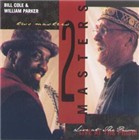
Bassist William Parker, a charter member of the Untempered Ensemble, is certainly familiar with Cole's world view. But while Parker's contribution to Cole's ensemble has been on his primary instrument, he is, in fact, another artist with an interest in cultures abroad. When he played at last year's Ottawa International Jazz Festival, he brought along a shakuhachi, adding an unusual texture to his freewheeling O'Neal's Porch quartet. But on Two Masters: Live at the Prism Parker and Cole get the opportunity to more fully explore a kind of world music-meets-free improvisation aesthetic. The result is a recording that stretches all kinds of boundaries, at the same time retaining the somewhat insulated feeling of two players in deep communion.
Beginning with the tranquil, restorative "Angels in Golden Mud, Cole appears on the Australian didgeridoo and Parker on the harp-like Malian doson ngoni. For nearly nine minutes Cole and Parker create a sound that is transcendent and meditative. Elsewhere, on "Waterfalls of the South Bronx, the exchange becomes more heated, with Parker using his unique double-bow, which allows him to bow on both sides of the bass bridge, to create a greater sense of urgency mirrored by Cole's work on the Chinese double-reed sona.
Two Masters is most interesting because of the wealth of textures and combination of instruments brought together from diverse cultures for perhaps the first time. "Bird and Branch features Parker on an Indonesian flute, while Cole pierces the more peaceful proceedings with another double-reed instrument, the Indian shenai. Parker and Cole put two Indian nagaswarms together on "Election Funeral Dance, possibly the clearest example of just how much these two listen to each other. While the entire programme is freely improvised, it's not without a sense of logic, as each player sometimes reacts, at other times pushing forward and expecting the other to follow.
The set closes with the twenty-minute "Ending Sequence and Sunset, which begins somewhat frantically with Cole on Korean hojok and Parker on dunno (talking drum). The pace winds down in the last five minutes or so, but the shrill nature of the hojok—of all the double-reed instruments Cole uses, for that matter—makes any images of sunset very odd indeed.
With the exception of "Angels in the Golden Mud, listeners will find the music on Two Masters challenging, in no small part due to the harsh nature of Cole's instruments. But that shouldn't frighten the unconventionally-minded from enjoying two masters of improvisation coming together for a spontaneous meeting of the spirits.
Visit William Parker on the web.
 FOLLOW John Kelman
and get notified whenever a new article published.
FOLLOW John Kelman
and get notified whenever a new article published.
With the realization that there will always be more music coming at him than he can keep up with, John wonders why anyone would think that jazz is dead or dying.
Track Listing
Angels in Golden Mud; Ojibwa Song; Waterfalls of the South Bronx; Bird and Branch; Election Funeral Dance; Ending Sequence and Sunset
Personnel
Bill Cole (didgeridoo (Australia), flute (Ghana), voice, sona (China), shenai (India), nagaswarm (India), hojok (Korea)), William Parker (bass, voice, doson ngoni (Mali), flute (Indonesia), nagaswarm (India), dunno (talking drum), whistle)
Album information
Title: Two Masters: Live at the Prism | Year Released: 2005 | Record Label: Boxholder Records
About Bill Cole & William Parker
Tags
PREVIOUS / NEXT

Become a Sustaining Member

Since 1995, All About Jazz has championed jazz as an art form and supported the musicians who create it. Over three decades, it has grown into one of the world's leading jazz resources, serving hundreds of thousands of readers, musicians, presenters and industry professionals each month.
Help Build the Future of All About Jazz
Your support helps us continue building All About Jazz for the next generation—expanding our editorial coverage, preserving jazz history, developing new community features and creating better ways to discover the music and the people behind it.
Become a sustaining member for as little as $20 per year and you'll immediately enjoy an ad-free experience along with access to subscriber features and future articles for a full year.
Together, we're not simply sustaining All About Jazz—we're building its future. Thank you for being part of the journey.