Home » Jazz Articles » Album Review » Owen Howard: Time Cycles
Owen Howard: Time Cycles
The line that intersects through Time Cycles is a multi-part theme, "Kalimba, found here as the second, sixth and final tracks. It acts as a rail switch, subtly shifting the direction of the album away from the other material, which is otherwise uniformly modern swing. The "Kalimba s are where Howard the rhythm maker comes to fore but not in a way that sacrifices musical cohesion for pure bombast. And even more appealingly, this switch can be thrown whenever. During the first set of last month's CD release performance at New York's Cornelia Street Café, "Kalimba 1 opened the proceedings and "2 's firm beat came after two gentle originals also from the album.
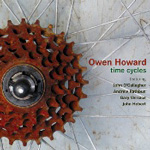
The name of the album and the packaging is based on the theme of bicycles and so it is with this in mind that the listener can identify a certain roundness and smooth motion to the pieces. Here is where the influence of a cerebral player like DeJohnette can be felt even if the thematic material is more solidly anchored in post-bop forms.
Howard, ever self-effacing, is joined by a diaphanous frontline of John O'Gallagher and Andrew Rathbun on saxophones (live the angularity of the former and romanticism of the latter were thrown into stark relief), omnipresent and omniscient pianist Gary Versace (who was replaced at the gig by Henry Hey on electric piano to drastically different effect) and the probing bass of John Hebert. A collection of some of the city's best players, all who haven't forgotten how to ride a bicycle.
 FOLLOW A. Henkin
and get notified whenever a new article published.
FOLLOW A. Henkin
and get notified whenever a new article published.
Track Listing
Derailer; Kalimba 1; Slow Day; Cryptic; Sonny-Side Up; Kalimba 2; Tu-Tone Poem; Giant Steps; Quiet Peace/Piece; Kalimba 3.
Personnel

Owen Howard
drumsOwen Howard: drums; Andrew Rathbun: saxophone; John O'Gallagher: saxophone; Gary Versace: piano; John Hebert: bass.
Album information
Title: Time Cycles | Year Released: 2007 | Record Label: Fresh Sound New Talent
About Owen Howard
Tags
PREVIOUS / NEXT
Become a Sustaining Member

Since 1995, All About Jazz has championed jazz as an art form and supported the musicians who create it. Over three decades, it has grown into one of the world's leading jazz resources, serving hundreds of thousands of readers, musicians, presenters and industry professionals each month.
Help Build the Future of All About Jazz
Your support helps us continue building All About Jazz for the next generation—expanding our editorial coverage, preserving jazz history, developing new community features and creating better ways to discover the music and the people behind it.
Become a sustaining member for as little as $20 per year and you'll immediately enjoy an ad-free experience along with access to subscriber features and future articles for a full year.
Together, we're not simply sustaining All About Jazz—we're building its future. Thank you for being part of the journey.