Home » Jazz Articles » Album Review » Pierre-Antoine Savoyat: Thousand Shades of a Clown
Pierre-Antoine Savoyat: Thousand Shades of a Clown
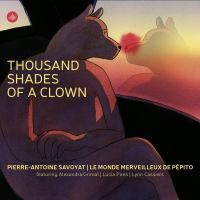
From the outset, Savoyat's trumpet playing reflects this aesthetic. He privileges line over display, shaping phrases that often dissolve into silence rather than resolving emphatically. This is not a polished or glamorous introspection, but one rooted in attentiveness, sound functioning not as a statement, but as a mode of presence. Here, restraint becomes its own form of expression. At times, this restraint borders on elusiveness, asking for a more attentive kind of listening.
At the core of this balance between restraint and underlying intensity is the quartet itself. Pianist Simon Groppe shapes a harmonic space in which melodic lines seem to hover rather than settle, his playing marked by clarity and resonance, while bassist Fil Caporali moves fluidly between roles, linking phrases and guiding transitions with a subtle sense of grounding. Drummer Oscar Georges treats time less as a fixed pulse and more as something to be shaped, working through texture and shifting accents rather than direct propulsion, allowing momentum to emerge from within the group. Together, they create a sense of motion that feels almost inevitable.
Across the album, Savoyat explores a tension between inward reflection and shared experience. Compositions such as "Silent Cry" and "Solitude" inhabit a suspended emotional space, where tempo is deliberately slowed, while "In Good Company" opens outward without slipping into sentimentality. "Life Race," as its title suggests, briefly unsettles this balance, introducing a degree of friction that keeps the music from settling into comfort. Guest musicians expand the ensemble's palette without disrupting its cohesion: saxophonist Alexandra Grimal brings a fuller timbre that contrasts with Savoyat's sound, flautist Lúcia Pires adds lightness and a sense of vertical space, and vocalist Lynn Cassiers is used sparingly, her voice serving as both a storytelling element and an additional sonic layer, woven gently into the ensemble's texture. The album's structure follows the same logic, avoiding sharp contrasts between short and long forms and instead unfolding with a quiet sense of continuity, in which shorter compositions, especially "Interlude with New Friends," serve as subtle mood shifts, guiding the listener through its evolving emotional flow.
Ultimately, it is the refusal to overstate that defines Thousand Shades of a Clown. Savoyat sustains a restrained, carefully measured expressiveness that deepens with time. The album makes an immediate impression, but its value emerges over time through detail, ensemble sensitivity, and compositional patience. Nothing here pushes for attention, but it keeps drawing you back. By choosing nuance over spectacle, Savoyat shows how the music can speak quietly without losing authority. Here, subtlety is not simply an aesthetic choice, it becomes the music's argument.
 FOLLOW Ieva Pakalniškytė
and get notified whenever a new article published.
FOLLOW Ieva Pakalniškytė
and get notified whenever a new article published.
Ieva blends scholarly research and music journalism while reflecting a lifelong passion for music that began with early exposure to jazz.
Track Listing
My Sorrow; Sorry; Keeping the Hope; Silent Cry; Life Race; Solitude; Can We Start to Love? Bastards!; Interlude with New Friends; Epic Short Story; In Good Company.
Personnel

Pierre-Antoine Savoyat
trumpetSimon Groppe
keyboardsFil Caporali
bass, acousticOscar Georges
drumsAlexandra Grimal
saxophone
Lynn Cassiers
vocalsLúcia Pires
fluteAdditional Instrumentation
Compositions by Pierre-Antoine Savoyat, expect "My Sorrow" (Simon Groppe) and "Epic Short Story" (Oscar Georges)
Album information
Title: Thousand Shades of a Clown | Year Released: 2026 | Record Label: Challenges Record
About Pierre-Antoine Savoyat
Tags
PREVIOUS / NEXT
Become a Sustaining Member

Since 1995, All About Jazz has championed jazz as an art form and supported the musicians who create it. Over three decades, it has grown into one of the world's leading jazz resources, serving hundreds of thousands of readers, musicians, presenters and industry professionals each month.
Help Build the Future of All About Jazz
Your support helps us continue building All About Jazz for the next generation—expanding our editorial coverage, preserving jazz history, developing new community features and creating better ways to discover the music and the people behind it.
Become a sustaining member for as little as $20 per year and you'll immediately enjoy an ad-free experience along with access to subscriber features and future articles for a full year.
Together, we're not simply sustaining All About Jazz—we're building its future. Thank you for being part of the journey.