Home » Jazz Articles » Album Review » The Hilliard Ensemble: Thomas Tallis / Christopher Tye /...
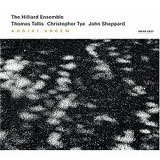
The Hilliard Ensemble: Thomas Tallis / Christopher Tye / John Sheppard: Audivi Vocem
The Gregorian chant is a variety of plainchant originally named for Pope Gregory I. While bearing his name, Gregory did not invent the chant as its use predated his pontificate. Gregory did codify and standardize the use of plainchant throughout Western Christendom, promoting its use in the Roman liturgy. The Catholic Church tacitly required that all music composed for the liturgy to be monophonic, and thus it was until the advent of the English Reformation.
While Henry VIII broke ties with Rome, he remained Catholic in his liturgical preference. Henry's successor, Edward VI, introduced a puritanical Protestant regime having a substantial effect on church music. In a swing of the religious pendulum, Queen Mary restored Catholicism. Only when Elizabeth took the throne in 1558 did a moderately Protestant compromise was reached. Composers at the time thus had to constantly adapt to the liturgical changes, much like trying to hit a moving target.
Thomas Tallis (c. 1505—1585), Christopher Tye (c. 1505—c. 1575) and John Sheppard (c. 1515—1558) were actively composing during this violent era and represented the transition from monophony to polyphony. All used both monophony and polyphony liberally in their compositions. An excellent juxtaposition is illustrated in Sheppard's "Eterne rex" and "Laudate pueri Dominum" where the composer modulates between mono- and polyphony. Sheppard can easily be heard as a backdrop for the dissolution of the monasteries that took place between 1536 and 1541.
Christopher Tye's Parts of the Mass (Gloria, Sanctus, Agnus Dei, and Credo represents a transition in harmonic complexity between Sheppard and, ultimately, Tallis. Tye's musical vision effects quiet majesty of a country church in spring. Thomas Tallis, well, he is something else altogether.
Tallis can be considered the pinnacle of British Renaissance choral music. He wrote for any number of voices and any number of parts as evidenced by his 40-part motet Spem in Alium. His choral music was tidily composed with all of the necessary drama and praise. When listening to these Tallis pieces, one has to believe that these were sounds from Tallis' lips to God's ears.
The Hilliard Ensemble achieves the difficult task of an attractive repertoire balance with an interesting historical program. These composers represent the hinge in Western choral Music where everything was changing. The Hilliard's have no peer in the repertoire nor are likely to gain any. For those listeners who have listened to and are tired of Chant, this is the collection for you.
 FOLLOW C. Michael Bailey
and get notified whenever a new article published.
FOLLOW C. Michael Bailey
and get notified whenever a new article published.
I'm Sanctified and Southern Fried / Mama tried and daddy cried / I tell the truth 'cept when I've lied / And like my huevos on the side.
Track Listing
In ieiunio et fletu; Te lucis ante terminum; Audivi vocem; Omnes gentes; Missa Sine Nomine - Gloria; Gaudete celicole omnes; Beati omnes; Missa Sine Nomine - Credo; Salvator mundi, Domine; Laudate pueri Dominum; Missa Sine Nomine - Sanctus; Eterne rex, altissime; Missa Sine Nomine - Agnus Dei; In pace, in idipsum.
Personnel
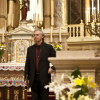
David James: countertenor; Rogers Covey-Crump: tenor; Steven Harrold: tenor; Gordon Jones: baritone; Robert Macdonald: bass.
Album information
Title: Thomas Tallis / Christopher Tye / John Sheppard: Audivi Vocem | Year Released: 2008 | Record Label: ECM Records
About The Hilliard Ensemble
Tags
PREVIOUS / NEXT
Become a Sustaining Member

Since 1995, All About Jazz has championed jazz as an art form and supported the musicians who create it. Over three decades, it has grown into one of the world's leading jazz resources, serving hundreds of thousands of readers, musicians, presenters and industry professionals each month.
Help Build the Future of All About Jazz
Your support helps us continue building All About Jazz for the next generation—expanding our editorial coverage, preserving jazz history, developing new community features and creating better ways to discover the music and the people behind it.
Become a sustaining member for as little as $20 per year and you'll immediately enjoy an ad-free experience along with access to subscriber features and future articles for a full year.
Together, we're not simply sustaining All About Jazz—we're building its future. Thank you for being part of the journey.