Home » Jazz Articles » Album Review » Dan Willis and Velvet Gentlemen: The Satie Project
Dan Willis and Velvet Gentlemen: The Satie Project

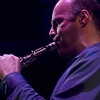
Perhaps it is this, as well as the fact that the music is soothing, yet strangely exciting, that first attract modern musicians and composers such as Dan Willis. Willis was driven to explore Satie further and in depth, resulting in The Satie Project. The album is brimful of remarkable music, played with restraint and, often, high emotion by the ingenious multi-reed player, and a medium-sized ensemble comprising some of the finest musicians on the New York Scene. It must have been a challenging project to undertake, as all of Satie's music interpreted here was essentially composed for the piano. Willis has reinterpreted it for a considerably expanded group that includes trumpet, flugelhorn, trombones, B3 organ and accordion—and, of course, his generous assortment of reeds.
The moods vary, from the gentle and sweet on "I Idylle," to the slow, dolorous and grave, as on the three "Gymnopedie." Willis and his group play the music as Satie intended, largely following the composer's instructions. However, the transposition from piano to woodwinds, brass, strings and percussion is a vast, musically philosophical leap; one that Willis and his Velvet Gentlemen group have made with daring and majesty.
Willis seems to have grown right into the emotion of each piece, enabling him to determine just which reed instrument, from the bevy he brought to the recording, fits which mesmerizing part of the music. On the glassy music of the "Gnossiennes," for instance, Willis dallies often on single reeds like a soprano saxophone, melded in with double reeds including oboe or the Armenian duduk. The burnished glow of the "Gymnopedies" and "Nocturnes" come from risqué flushing of the sound canvas with the growling burble of the B3 organ and the squeezing, shrill whirling of the accordion, with accents from Willis and violinist Antoine Silverman.
The term "complete album" is often rather loosely used, but The Satie Project is one occasion where it is wholly appropriate, as the music passes from one tone poet—the beguiling Satie—to another, the incomparable reeds maestro, Dan Willis.
 FOLLOW Raul d'Gama Rose
and get notified whenever a new article published.
FOLLOW Raul d'Gama Rose
and get notified whenever a new article published.
When you hear great music, be prepared to be touched in your soul.
Track Listing
Second Gymnopedie; Nocturne # 2; I Idylle; Nocturne # 3; Third Gymnopedie; First Gnossienne; Nocturne # 4; First Gymnopedie; III Meditation; Nocturne # 1; II Aubade; Second Gnossienne; Nocturne # 6; Nocturne # 5; Olga Polka.
Personnel

Dan Willis
saxophoneDan Willis: tenor saxophone; soprano saxophone; oboe; English horn; Flute; piccolo, clarinet, bass clarinet, duduk; Chuck McKinnon: trumpet, flugelhorn, electronic pedals; Pete McCann, electric guitar, acoustic guitar; Ron Oswanski: B3 organ, accordion; Kermit Driscoll: electric bass, double-bass; John Hollenbeck: drums, percussion; Jonathan Owens: trumpet; Tim Sessions: tenor trombone, bass trombone; Richard Sosinsky: double-bass (2); Antoine Silverman: violin.
Album information
Title: The Satie Project | Year Released: 2010 | Record Label: Daywood Drive Records
About Dan Willis
Tags
PREVIOUS / NEXT

Become a Sustaining Member

Since 1995, All About Jazz has championed jazz as an art form and supported the musicians who create it. Over three decades, it has grown into one of the world's leading jazz resources, serving hundreds of thousands of readers, musicians, presenters and industry professionals each month.
Help Build the Future of All About Jazz
Your support helps us continue building All About Jazz for the next generation—expanding our editorial coverage, preserving jazz history, developing new community features and creating better ways to discover the music and the people behind it.
Become a sustaining member for as little as $20 per year and you'll immediately enjoy an ad-free experience along with access to subscriber features and future articles for a full year.
Together, we're not simply sustaining All About Jazz—we're building its future. Thank you for being part of the journey.