Home » Search Center » Results: Anatomy of a Standard
Results for "Anatomy of a Standard"
"Close Your Eyes" by Bernice Petkere

by Tish Oney
One of the major challenges of writing this column remains how to choose one song among several by a given composer that I have decided to feature. When determining to include a song by the very talented Great American Songbook composer, Bernice Petkere (1901-2000), two of my favorite songs immediately came to mind: “Close Your Eyes" ...
"Nice Work If You Can Get It" by George and Ira Gershwin

by Tish Oney
George Gershwin and Ira Gershwin represent a quintessential songwriting team laying claim to several early masterpieces included in what we now call the Great American Songbook. Representing the epitome of the “Jazz Age," they worked together from 1924-1937, creating no fewer than twenty-five full musical scores for performance in Hollywood and on the Great White Way. ...
"Desafinado" by Antonio Carlos Jobim, Newton Mendonça and Jon Hendricks

by Tish Oney
There has been a healthy dose of Latin songs that have made their way into the Great American Songbook—after all—Central America and South America are every bit as “American" as the United States. Among the composers of Latin jazz standards, the inimitable guitarist/composer, Antonio Carlos Jobim (1927-1994), stands tall. Jobim composed a great many enduring songs ...
"Ain't Misbehavin'" by Fats Waller and Andy Razaf

by Tish Oney
Legendary pianist and songwriter, Thomas Wright “Fats" Waller (1904-1943), contributed several outstanding gems to what we consider today to be the Great American Songbook. These standards include “Honeysuckle Rose" and “Ain't Misbehavin'" (both from 1929), among others. Waller's all-too-brief career reflected the impressive output of a first-rate musician, and showed him to be a talented radio ...
"Prelude to a Kiss" by Duke Ellington
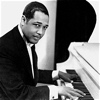
by Tish Oney
Last month's initial installment of this column opened with an introduction to the concept of analyzing jazz standards for the purpose of adding to our understanding about the structure and elements of great songs having enduring qualities. I did not feel it required mentioning that a song's final structure and the process of songwriting were completely ...
"Here's That Rainy Day" by Jimmy Van Heusen and Johnny Burke

by Tish Oney
I am honored to be authoring a new column for All About Jazz revolving around the question, “What makes a song a standard?." Surely there are as many answers to that rhetorical question as there are scholars having opinions about it. My charge, as I accept it, is to provide some analysis of chords, melody, lyrics ...
Album Showcase






Trending
 Interview
Lou Marini: A Solo Career Starting At The Age Of 80
 History of Jazz
John Coltrane in Detroit: A Brief History
 Live Review
The Tension Is Where the Music Lives: Miles Davis at 100,...
 Radio & Podcasts
Sullivan Fortner, Jim Rotondi & Dena DeRose, Ardeshir,...
 Reanimating Conversations Past
Charlie Haden: Anatomy of a Jazz Classic
 Radio & Podcasts
Miki Yamanaka, Stefon Harris, Paul Yonemura, Amber Weeks...
 Profile
The Discreet Charm of Tete Montoliu
VOTE!