Home » Jazz Articles » Album Review » Andy Bey: Shades of Bey
Andy Bey: Shades of Bey
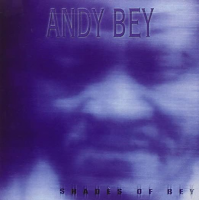
It's a 3 AM mood, quiet and blue and very, very close. Bey doesn't often work by variance of range (although on "The Last Light of the Evening" he makes effective use of his falsetto, in close proximity to phrases in his natural range - he alternates like a reed player). He usually prefers instead to create an intensely intimate atmosphere that glows with passion without slipping into Barry Whitean excess. He can also be exuberant, as on the delightful scatting of "Believin' It," a vocalization of "Half & Half." On that track, as well as on Monk's "Straight, No Chaser" (here "Get It Straight") Bey begins by neatly rapping over the head, and thus strikingly illustrating the continuity between two musical traditions that might at first glance seem worlds apart.
Bey can also play piano, comping sensitively and agilely behind his vocals on "Some Other Time," "Dark Shadows" as well as on the more driving "Midnight Blue," "Believin' It" and Billy Strayhorn's unforgettable "Blood Count" (here rendered as "The Last Light of the Evening." Geri Allen plays on Ellington's "The Starcrossed Lovers" ("Pretty Girl" here) and demonstrates the same keen ear and sensitive adjustment to other musicians that she seems to demonstrate every time out.
Among the instrumentalists, however, the most welcome is Gary Bartz, whose alto is magnificent on "Midnight Blue" and somewhat more restrained but no less precise and enormous on "Dark Shadows" and "The Last Light of the Evening." Bartz and Bey are both true unsung heroes: musicians who have paid their dues for years and never gotten their due. May this fine, intimately crafted disc bring them some of the attention they deserve.
 FOLLOW Robert Spencer
and get notified whenever a new article published.
FOLLOW Robert Spencer
and get notified whenever a new article published.
Bob likes his jazz both inside and out.
Personnel

Andy Bey
pianoAlbum information
Title: Shades Of Bey | Year Released: 1998 | Record Label: CBS/Sony
About Andy Bey
Tags
PREVIOUS / NEXT

Become a Sustaining Member

Since 1995, All About Jazz has championed jazz as an art form and supported the musicians who create it. Over three decades, it has grown into one of the world's leading jazz resources, serving hundreds of thousands of readers, musicians, presenters and industry professionals each month.
Help Build the Future of All About Jazz
Your support helps us continue building All About Jazz for the next generation—expanding our editorial coverage, preserving jazz history, developing new community features and creating better ways to discover the music and the people behind it.
Become a sustaining member for as little as $20 per year and you'll immediately enjoy an ad-free experience along with access to subscriber features and future articles for a full year.
Together, we're not simply sustaining All About Jazz—we're building its future. Thank you for being part of the journey.