
Home » Jazz Articles » Building a Jazz Library » Gershwin's Rashomon
Gershwin's Rashomon
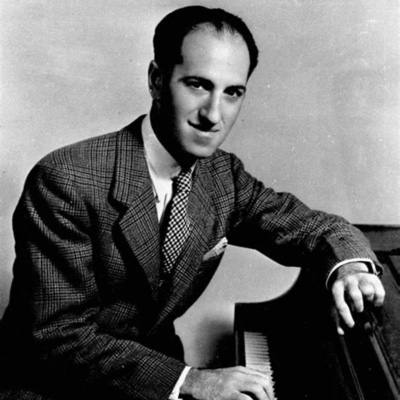 George Gershwin's contribution to the repertoire used by jazz musicians is arguably the most significant ever made by a composer working outside the genre. With the invaluable assistance of his brother Ira Gershwin as lyricist, his songs have been an enduring source of inspiration not only for countless jazz musicians, but also for those working in other genres.
The term "Rashomon effect" refers to the paradox whereby the same event may be described in very different ways by those who witnessed it. Its name derives from Akira Kurosawa's film Rashomon, in which different witnesses to a crime offer sharply contrasting accounts of what occurred, shaped both by their perception of reality and by their own interests and individual perspectives.
Taking this concept as its point of departure, but applying it to the diversity generated by the multiple interpretations of the same musical piece, Gershwin's Rashomon explores some of his most emblematic songs and compositions, following their chronological order of creation or publication, through both their canonical versions and others that are ineffably appealing, unexpectedly curious or irresistibly oblique.
No results found.
Please modify your search criteria or try a tag search.
Tag Search
Find articles, news, musician pages, and more...
Album Showcase





Trending
 Profile
801 Live at 50: A Short-Term Experiment with a Long-Lasting...
 Interview
Enrico Rava: The Secret Corners of a Master
 Opinion
Bomb Shelter Bebop
 Radio & Podcasts
Six new releases from Michael Pagan Big Band, Ron Vincent,...
 History of Jazz
A Chronological History of Jazz
 Interview
Fred Lipsius: The Blood, Sweat & Tears Sax Voice Still...
 Interview
Avishai Cohen on "Jack Johnson"
VOTE!



