Home » Jazz Articles » Album Review » Carlos Henrique Pereira: Northern Readings
Carlos Henrique Pereira: Northern Readings
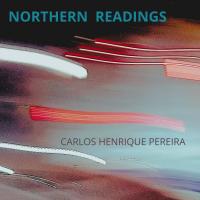
The opening piece, "First Flight," arrives almost tentatively as Pereira sketches melodic fragments over gently suspended harmony. The ensemble seems to hover, gauging the emotional atmosphere before committing fully. Pereira's guitar lines lead the way, with Tolling's violin entering as an extension of his phrasing. Kodheli's cello anchors the music with an earthy resonance. The title track, "Northern Readings," deepens the emotional terrain. Pereira's writing captures the tension between displacement and belonging. The Brazilian rhythmic vocabulary is at the forefront, with syncopations from the piano, electric bass and drums ever-present. As the piece unfolds, the chamber textures soften the pulses, creating a reflective, almost cinematic effect.
The intimate and expansive musical narrative, as designed by Pereira's track list, is not a random selection like a number on a bingo card. The tracks are written as a continuous arc, unfolding like a musical story meant to be experienced in sequence. Alongside his compositions, each musician contributes a fully improvised solo, captured in a single take without revision.
The initial improvised solo "First Moment" is performed by Tolling. It opens with the kalimba (thumb piano) establishing a quiet intimacy, before Tolling's violin lines drift between folk-like simplicity and abstract exploration. It is a reminder that spontaneity can reveal more of reality than composition. "Side by Side" restores the chamber setting that continues to define the music's identity. Pereira's keyboard strikes dance through shifting grooves, while Brandão and Zottarelli lock into a rhythmic conversation, and Kodheli's phrasing adds a shadowy density.
"Second Moment" is Zottarelli's solo contribution, almost architectural in its construction. Rather than delivering a conventional drum feature, he creates texture and space, offering a miniature study in rhythmic colour.
Kodheli's "Third Moment (Green Pearl)" is perhaps the album's boldest foray into abstraction. His cello speaks in resonant drones, alternating between arco and pizzicato, to create a deeply personal meditation that still fits within the album's broader narrative.
"Meridian" returns to Pereira's compositional voice, balancing rhythmic sophistication with melodic accessibility. The ensemble achieves an intimate yet expansive equilibrium, a quality Pereira seems to pursue throughout the recording. "Fourth Moment" features Brandão's improvised acoustic bass solo, which offers warmth and melodic invention. Bass improvisations often become technical displays. Not here. His tone remains rich and human throughout. On "Say it like it is," the ensemble sounds fully liberated from stylistic labels. Jazz, Brazilian, and chamber music are no longer distinct languages. Pereira's guitar lines display elegance and emotional directness, and the ensemble responds with complete trust. The album closes with "Fifth Moment," Pereira's final reflective gesture. This pianistic episode does not conclude the journey; rather, it leaves the door slightly open, inviting further reflection in the final notes.
The album reveals itself as one of the rare contemporary jazz recordings that reward attentive listening.
 FOLLOW Pierre Giroux
and get notified whenever a new article published.
FOLLOW Pierre Giroux
and get notified whenever a new article published.
A former international financial executive with a long term fascination with jazz and its artists
Track Listing
First Flight; Northern Readings; After Sorrow; All of Us; First Moment; Side by Side; Second Moment; Children's Dream; Third Moment (Green Pearl); Meridian; Fourth Moment; Say It Like iIt Is; Fifth Moment.
Personnel

Carlos Henrique Pereira
multi-instrumentalist
Mads Tolling
violin
Rubin Kodheli
cello
Itaiguara Brandao
bass
Mauricio Zottarelli
drumsAdditional Instrumentation
Carlos Henrique Pereira: acoustic guitar and piano; Mads Tolling: violin; Rubin Kodheli: cello; Itaiguara Brandao: bass; Mauricio Zottarelli: drums.
Album information
Title: Northern Readings | Year Released: 2026 | Record Label: Salvaterra Music
About Carlos Henrique Pereira
Tags
PREVIOUS / NEXT


Become a Sustaining Member

Since 1995, All About Jazz has championed jazz as an art form and supported the musicians who create it. Over three decades, it has grown into one of the world's leading jazz resources, serving hundreds of thousands of readers, musicians, presenters and industry professionals each month.
Help Build the Future of All About Jazz
Your support helps us continue building All About Jazz for the next generation—expanding our editorial coverage, preserving jazz history, developing new community features and creating better ways to discover the music and the people behind it.
Become a sustaining member for as little as $20 per year and you'll immediately enjoy an ad-free experience along with access to subscriber features and future articles for a full year.
Together, we're not simply sustaining All About Jazz—we're building its future. Thank you for being part of the journey.