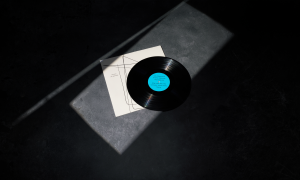
The Complete Clef/Verve Count Basie Fifties Studio Recordings

 Mosaic Records Announces The Release Of The Complete Clef/Verve Count Basie Fifties Studio Recordings
 Count Basie's meteoric rise during the late 1930s as one of the nation's top bandleaders was generated by exciting soloists, unique vocalists, interpretations of the blues and hard swinging riff arrangements fueled by a killer of a rhythm section which was dubbed the All American Rhythm Section. This fiery organization held forth at the Savoy Ballroom and waxed best selling records for a number of labels until, like most bands, economics and other factors forced Basie to give the boys their final notice. A short period then transpired where Basie led a small group but this soon folded as well. It wasn't until 1952 that a new (big) band was formalized.
The Basie band of the period covered by Mosaic's latest boxed set, The Complete Clef/Verve Count Basie Fifties Studio Recordings (# MD8-229, 8 CDs), was dubbed the “New Testament" band. There were many elements of the old Basie band but what made it unique was that it took on a new musical language. Arrangers like Neal Hefti, Ernie Wilkins and tenorman Frank Foster incorporated more dynamics and more attention to the overall tightness of the band as well as adding new voicings. Both Gus Johnson and later Sonny Payne were important elements to the drum kit and set a standard for future Basie bands. Where Lester Young, Herschel Evans, Don Byas and Illinois Jacquet had held important roles in the tenor chair, this time around saw two bright young stars in Frank Foster and Frank Wess. And of course, the minimalist approach to the piano by the leader all contributed to a brilliant new sound. All these were captured by one of the saviors of swing era jazz stars during the '50s, concert promoter and record producer Norman Granz, who gave Basie a recording contract with the new band on Mercury and then with his own labels Clef and Verve.
Another factor in the popularity of the “New Testament" band was a vocalist from Chicago named Joe Williams. He had been around for a spell but this teaming with Basie catapulted him to national attention via his records with Basie that soon found much play on radio and juke boxes. In particular “Everyday I Have The Blues", “All Right, Okay, You Win" and “Smack Dab In The Middle" were all hits and the album Joe Williams Sings, Count Basie Swings became a best seller. Right at the same time these were released, the band had some instrumental hits, in particular, “Shiny Stockings" and “April In Paris" with Basie's now famous “one more time" and “one more once" quotes. Along with other accolades, they were elected as best band in Metronome magazine in 1956 and along with Ella Fitzgerald, the Metronome All Stars 1956 album devoted a full side to Basie.
Like the Basie bands of the '30s and '40s, the personnel heard on The Complete Clef/Verve Count Basie Fifties Studio Recordings is extraordinary: Joe Newman, Benny Powell, Marshal Royal, Ernie Wilkins, Paul Quinichette, Gus Johnson, Eddie “Lockjaw" Davis, Joe Wilder, Henderson Chambers, Frank Wess, Frank Foster, Thad Jones and Sonny Payne. Guest stars Al Hibbler, Ella Fitzgerald, Buddy Rich and Oscar Peterson and his trio add their talents to some of the dates as well. And although many were released on 78 and 45 singles, the albums became classics including the “dance session" albums and The Greatest! Count Basie Plays, Joe Williams Sings Standards. As usual, Mosaic used the original master tapes for the source and have come up with three alternate takes that were not in vaults at Universal Music. In all, there are 146 tracks with six previously unissued alternate takes and one tune never before heard, on 8 CDs.
It is requested that all reviews or articles include the following: “All recordings are available solely through Mosaic Records, 35 Melrose Place, Stamford, CT 06902; (203) 327-7111.
For more information contact All About Jazz.