Home » Jazz News » Performance / Tour
Ornette Coleman, Starring as Himself

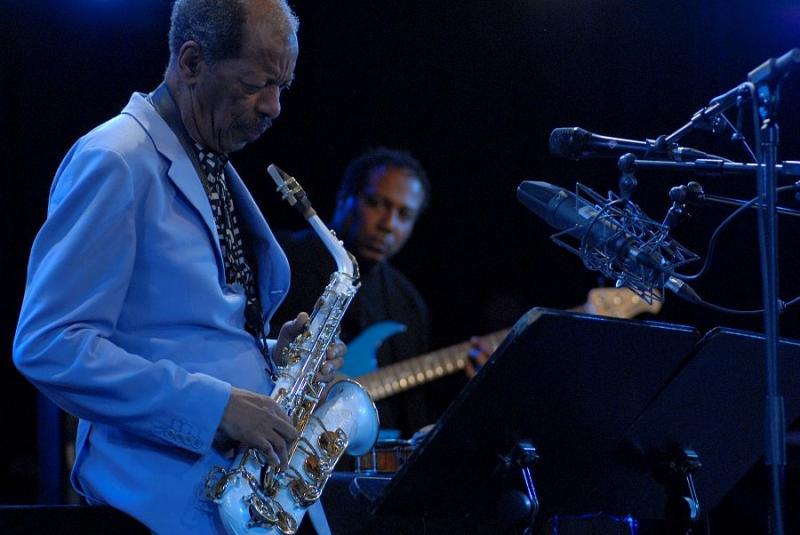
Jazz at Lincoln Center opened its fall season on Saturday night with a repertory tribute to Ornette Coleman.
Not that this sold-out concert, at the Rose Theater, was presented that way: there was no organized script, no resident orchestra, no Wynton Marsalis. The idea, instead, was that Mr. Coleman — the famously inscrutable alto saxophonist, composer and free-jazz pioneer — would make his Jazz at Lincoln Center debut on his own bold terms. He did just that, superbly, but in a way that compressed his musical history, with an emphasis on songs.
Mr. Coleman, 79, has been celebrated for the last 50 years as a paragon of progressivism: in 1959 Atlantic released “The Shape of Jazz to Come,” a shot across the bow of modern-jazz orthodoxy and the album that marked him as a sharply ascendant force. To those who view Jazz at Lincoln Center, incompletely, as a repository of the past, his inclusion might have seemed a benevolent gesture from a reluctant institution. But that’s plainly unfair to both parties, and in any case the evening was a win all around.
Not that this sold-out concert, at the Rose Theater, was presented that way: there was no organized script, no resident orchestra, no Wynton Marsalis. The idea, instead, was that Mr. Coleman — the famously inscrutable alto saxophonist, composer and free-jazz pioneer — would make his Jazz at Lincoln Center debut on his own bold terms. He did just that, superbly, but in a way that compressed his musical history, with an emphasis on songs.
Mr. Coleman, 79, has been celebrated for the last 50 years as a paragon of progressivism: in 1959 Atlantic released “The Shape of Jazz to Come,” a shot across the bow of modern-jazz orthodoxy and the album that marked him as a sharply ascendant force. To those who view Jazz at Lincoln Center, incompletely, as a repository of the past, his inclusion might have seemed a benevolent gesture from a reluctant institution. But that’s plainly unfair to both parties, and in any case the evening was a win all around.