Interview: Irma Curry (Part 1)

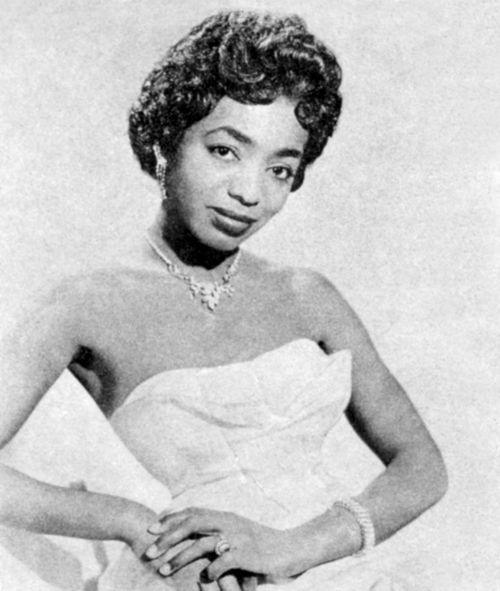
Irma Curry may not be a familiar name to you, but in the early 1950s she was a star vocalist in Lionel Hampton's band. In 1962, she recorded a superb album for Columbia called Love Is a Necessary Evil. The band arranged by Al Cohn and conducted by Don Elliot including Hal McKusick (as), Barry Galbraith and Chuck Wayne (g), Bill Crow (b) and Jo Jones (d).
Irma also recorded several singles with Benny Carter in 1964 and with the Alan Simon Trio in 1985. In between, she performed at clubs in New York and Hollywood. A few weeks ago, when Fresh Sound's Jordi Pujol told me that he was re-issuing Love Is a Necessary Evil and that Irma was still around, I tracked down a number for her and we spent time on the phone. Irma has the most lyrical voice and she is as sweet as can be. All photos or Irma Curry courtesy of Kim Curry, Irma's daughter.
In Part 1 of my conversation with Irma, she talks about her early years, how she came to join the Hampton band and her friendship with Wes Montgomery...
JazzWax: Where did you grow up?
Irma Curry: I was born on Oct. 7, 1928 and raised in Baltimore. I grew up during the Depression, when a lot of people were poor. We were all in the same boat. From the time I could crawl, music was in my life. My parents’ families sang gospel and current songs. My father was a laborer and my mother was a housewife who also did factory work. I had one brother and a sister. I was the middle child, so I often wound up in trouble for someone else’s mischief. Fortunately, my voice was identical to my mother’s. When my brother and sister irritated me, I’d go upstairs and call out to them to do chores, like fold the wash. They thought it was my mother and never knew it was me.
JW: Did you take singing lessons?
IC: I never took a single singing lesson. I never took music lessons, either. I harmonized with my parents and listened to the radio and records of singers like Ella, Billie, Lena Horne, June Christy, Margaret Whiting, Judy Garland, Jo Stafford and the rest.
The oddest thing is I never intend to be a singer. When I was young, I was into detective magazines, and I was set on becoming a criminologist. Music was always in my heart, though. I could play piano by ear. I thought I had my own piano style, but I learned later that what I was doing was called stride. I had seen many pianists going back and forth with their hands, not knowing what they were doing. I made up a lot of songs. At Paul Laurence Dunbar High School, I entered a singing contest and won.
JW: What was your first break?
IC: I was invited to a lot of singing functions by my teachers and the church. One day, when I was at church, a black radio announcer in Baltimore named Chuck Richards was there. He heard me and wanted to manage me. He was a wonderful person. He also had been a vocalist and knew the ropes. When TV arrived in the late 1940s, the local station was holding a big contest. Chuck wanted me to enter and I did. I won for eight weeks straight. One of the prizes was an engagement at Club Astoria, a local nightclub. I wasn’t old enough yet for the nightclub scene, so Chuck had to have a talk with my parents.
My parents eventually agreed that I could take the engagement if I had a chaperone and stayed in the dressing room. A neighbor became my chaperone at the club. I was singing with a four-piece house band at the Astoria, and the place was packed, with the audience standing around the walls. I was a neighborhood kid and had been in the papers for my singing. I was singing standards. I had an ear for the music and could remember a song cold the first time I heard it. I’d go to local confection stores to pick out sheet music of songs I wanted to learn. After my first set, people were yelling, “Encore!” I had no idea what the word meant. A lady in the audience finally yelled, “Honey that just means do another song for us.”
JW: How did you come to join Hampton?
IC: At that time, the Royal Theatre on Pennsylvania Ave. hosted many of the big acts that came through town. During the week I was at the Astoria, Lionel Hampton was at the Royal. A miracle happened. Hamp and some of his musicians stopped by the club after their concert and came back stage after my set. I wasn’t allowed to be on the floor. Chuck brought him back to meet me. Hamp was overjoyed and said he wanted to record me right away. He asked how soon I could get up to New York.
JW: What did you tell him?
IC: I had never been out of town before, so my parents wanted Chuck to go and keep an eye on me. When I arrived in New York and went I into the studio in January 1950, Hamp gave me I’ll Never Be Free. I spent 10 minutes with the pianist, who taught me the song and learned it on the spot. All of the musicians all told me I had terrific ears. [Above, ad for Lionel Hampton's performance in Seattle, Aug. 30, 1951]
After that recording session, Hamp wanted me on the band full time. Gladys, Hamp’s wife, was the manager and was very nice to me. She became a Curry fan immediately. Hamp nicknamed me “Lil’ Bits,” because I was smaller than everyone else. I was 4’ 10½ and weighed about 90 pounds. [Above, Irma Curry in Pittsburgh with the Lionel Hampton band]
After that recording session, I returned home. Hamp called and said he was heading out on the road. I had never been away from home let along on the road. Chuck came over and spoke to my parents and persuaded them to let me go. They didn’t have to worry. They raised me well, and I was a proper young lady. They were just worried about my welfare, but I knew how to take care of myself.
JW: How long did you remain with Hampton?
IC: For three years. The musicians were so great to me. They were protective. Many of those guys like Benny Bailey, Jerome Richardson, Bobby Plater, Al Grey and Milt Buckner became superstars. I was closest with Wes Montgomery, who was in Hamp’s band in 1950. Wes was very compassionate and unpretentious. I don’t think he realized how talented he was. Wes (above) was humble and quiet, and very sweet. We used to sit backstage together, and he’d just wow me with his chord changes. He’s say, “How do you like this chord?” I’d sing really softly into his ear and we would laugh.
I never saw Wes drink but he smoked like a chimney. He’d tilt his head back while he played to keep the ashes falling while he’d finished a phrase. I’d watch his fingers running up and down. One time I said to him, “I wish I could play like you.” He put his guitar in my lap and looked at me and laughed. “Never mind, Lil’ Bits. With you, you need a bigger lap or a smaller guitar.” He was so precious, and we were very close. I really miss him.
JW: Quincy Jones was in that band, too, on trumpet, yes?
IC: Oh, yes. When Quincy came on in 1951, he drew out the talent of other musicians. He came with something unique. He was an extremely gifted trumpet player and arranger. He was a gentleman with a foul mouth. He had to carry on like that, though. He was so skinny and picked on. We both were as skinny as can be. I remember when he first joined Hamp. He was a fierce musical lion. I think he frightened and challenged a lot of musicians. He could blow his behind off. To me, he was futuristic. His arrangements were loud and clear. Hamp was blessed to have some fantastic arrangers. Those guys and their charts was the sound of that band. Trumpeter Ed Mullens did most of my arrangements but got little or no credit.
Everyone loved to tease me. Ed used to sit behind me before Hamp did and Ed would make these popping sounds to distract me and keep me awake. I wasn’t a good sleeper when I got on the band. Adjusting to sleeping in the bus seat was hard for me. I was always bawling him out for teasing me, and that tickled him. Eventually, trombonist Al Grey changed my name to “Leet Beets.” I guess it was easier to say. Benny Powell, saxophonist Johnny Board, Quincy Jones and me were all tight.
JazzWax tracks: You'll find four of Irma Curry's ballads with Lionell Hampton as bonus tracks on the new re-issue of Love Is a Necessary Evil (Fresh Sound) here.
JazzWax clips: Here's Irma Curry singing A Kiss Is Just a Kiss with Lionel Hampton's band in May 1951and an arrangement by Ed Mullens...
Irma also recorded several singles with Benny Carter in 1964 and with the Alan Simon Trio in 1985. In between, she performed at clubs in New York and Hollywood. A few weeks ago, when Fresh Sound's Jordi Pujol told me that he was re-issuing Love Is a Necessary Evil and that Irma was still around, I tracked down a number for her and we spent time on the phone. Irma has the most lyrical voice and she is as sweet as can be. All photos or Irma Curry courtesy of Kim Curry, Irma's daughter.
In Part 1 of my conversation with Irma, she talks about her early years, how she came to join the Hampton band and her friendship with Wes Montgomery...
JazzWax: Where did you grow up?
Irma Curry: I was born on Oct. 7, 1928 and raised in Baltimore. I grew up during the Depression, when a lot of people were poor. We were all in the same boat. From the time I could crawl, music was in my life. My parents’ families sang gospel and current songs. My father was a laborer and my mother was a housewife who also did factory work. I had one brother and a sister. I was the middle child, so I often wound up in trouble for someone else’s mischief. Fortunately, my voice was identical to my mother’s. When my brother and sister irritated me, I’d go upstairs and call out to them to do chores, like fold the wash. They thought it was my mother and never knew it was me.
JW: Did you take singing lessons?
IC: I never took a single singing lesson. I never took music lessons, either. I harmonized with my parents and listened to the radio and records of singers like Ella, Billie, Lena Horne, June Christy, Margaret Whiting, Judy Garland, Jo Stafford and the rest.
The oddest thing is I never intend to be a singer. When I was young, I was into detective magazines, and I was set on becoming a criminologist. Music was always in my heart, though. I could play piano by ear. I thought I had my own piano style, but I learned later that what I was doing was called stride. I had seen many pianists going back and forth with their hands, not knowing what they were doing. I made up a lot of songs. At Paul Laurence Dunbar High School, I entered a singing contest and won.
JW: What was your first break?
IC: I was invited to a lot of singing functions by my teachers and the church. One day, when I was at church, a black radio announcer in Baltimore named Chuck Richards was there. He heard me and wanted to manage me. He was a wonderful person. He also had been a vocalist and knew the ropes. When TV arrived in the late 1940s, the local station was holding a big contest. Chuck wanted me to enter and I did. I won for eight weeks straight. One of the prizes was an engagement at Club Astoria, a local nightclub. I wasn’t old enough yet for the nightclub scene, so Chuck had to have a talk with my parents.
My parents eventually agreed that I could take the engagement if I had a chaperone and stayed in the dressing room. A neighbor became my chaperone at the club. I was singing with a four-piece house band at the Astoria, and the place was packed, with the audience standing around the walls. I was a neighborhood kid and had been in the papers for my singing. I was singing standards. I had an ear for the music and could remember a song cold the first time I heard it. I’d go to local confection stores to pick out sheet music of songs I wanted to learn. After my first set, people were yelling, “Encore!” I had no idea what the word meant. A lady in the audience finally yelled, “Honey that just means do another song for us.”
JW: How did you come to join Hampton?
IC: At that time, the Royal Theatre on Pennsylvania Ave. hosted many of the big acts that came through town. During the week I was at the Astoria, Lionel Hampton was at the Royal. A miracle happened. Hamp and some of his musicians stopped by the club after their concert and came back stage after my set. I wasn’t allowed to be on the floor. Chuck brought him back to meet me. Hamp was overjoyed and said he wanted to record me right away. He asked how soon I could get up to New York.
JW: What did you tell him?
IC: I had never been out of town before, so my parents wanted Chuck to go and keep an eye on me. When I arrived in New York and went I into the studio in January 1950, Hamp gave me I’ll Never Be Free. I spent 10 minutes with the pianist, who taught me the song and learned it on the spot. All of the musicians all told me I had terrific ears. [Above, ad for Lionel Hampton's performance in Seattle, Aug. 30, 1951]
After that recording session, Hamp wanted me on the band full time. Gladys, Hamp’s wife, was the manager and was very nice to me. She became a Curry fan immediately. Hamp nicknamed me “Lil’ Bits,” because I was smaller than everyone else. I was 4’ 10½ and weighed about 90 pounds. [Above, Irma Curry in Pittsburgh with the Lionel Hampton band]
After that recording session, I returned home. Hamp called and said he was heading out on the road. I had never been away from home let along on the road. Chuck came over and spoke to my parents and persuaded them to let me go. They didn’t have to worry. They raised me well, and I was a proper young lady. They were just worried about my welfare, but I knew how to take care of myself.
JW: How long did you remain with Hampton?
IC: For three years. The musicians were so great to me. They were protective. Many of those guys like Benny Bailey, Jerome Richardson, Bobby Plater, Al Grey and Milt Buckner became superstars. I was closest with Wes Montgomery, who was in Hamp’s band in 1950. Wes was very compassionate and unpretentious. I don’t think he realized how talented he was. Wes (above) was humble and quiet, and very sweet. We used to sit backstage together, and he’d just wow me with his chord changes. He’s say, “How do you like this chord?” I’d sing really softly into his ear and we would laugh.
I never saw Wes drink but he smoked like a chimney. He’d tilt his head back while he played to keep the ashes falling while he’d finished a phrase. I’d watch his fingers running up and down. One time I said to him, “I wish I could play like you.” He put his guitar in my lap and looked at me and laughed. “Never mind, Lil’ Bits. With you, you need a bigger lap or a smaller guitar.” He was so precious, and we were very close. I really miss him.
JW: Quincy Jones was in that band, too, on trumpet, yes?
IC: Oh, yes. When Quincy came on in 1951, he drew out the talent of other musicians. He came with something unique. He was an extremely gifted trumpet player and arranger. He was a gentleman with a foul mouth. He had to carry on like that, though. He was so skinny and picked on. We both were as skinny as can be. I remember when he first joined Hamp. He was a fierce musical lion. I think he frightened and challenged a lot of musicians. He could blow his behind off. To me, he was futuristic. His arrangements were loud and clear. Hamp was blessed to have some fantastic arrangers. Those guys and their charts was the sound of that band. Trumpeter Ed Mullens did most of my arrangements but got little or no credit.
Everyone loved to tease me. Ed used to sit behind me before Hamp did and Ed would make these popping sounds to distract me and keep me awake. I wasn’t a good sleeper when I got on the band. Adjusting to sleeping in the bus seat was hard for me. I was always bawling him out for teasing me, and that tickled him. Eventually, trombonist Al Grey changed my name to “Leet Beets.” I guess it was easier to say. Benny Powell, saxophonist Johnny Board, Quincy Jones and me were all tight.
JazzWax tracks: You'll find four of Irma Curry's ballads with Lionell Hampton as bonus tracks on the new re-issue of Love Is a Necessary Evil (Fresh Sound) here.
JazzWax clips: Here's Irma Curry singing A Kiss Is Just a Kiss with Lionel Hampton's band in May 1951and an arrangement by Ed Mullens...
This story appears courtesy of JazzWax by Marc Myers.
Copyright © 2026. All rights reserved.