
Home » Jazz News
Video / DVD News
Timely announcements covering new album releases, tours, concert series, special events, job postings, crowdfunding campaigns and more. You can find more news by searching our website, viewing our news stream, seeing what's trending or reading our blog posts. Subscribe to our news RSS feed and/or embed AAJ news content on your website or blog. Learn about our news service here. Submit news here.
Doc: The Jazz Baroness

Source:
JazzWax by Marc Myers
If Baroness Pannonica de Koenigswarter hadn't moved to New York in 1951, we'd probably have far fewer recordings by Thelonious Monk. Nica, as she was known, was a member of the wealthy Rothschild family, and her decision to relocate to Manhattan came after separating from her husband. She left her five children behind and took a suite at 995 Fifth Avenue. Soon, she began frequenting jazz clubs, where she had a deep and inquisitive respect for the art of bebop ...
Continue
Reading...
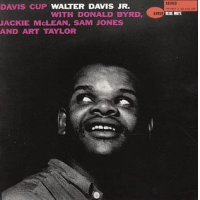
Walter Davis Jr.: Davis Cup
Source:
JazzWax by Marc Myers
On August 2, 1959, Rudy Van Gelder opened his newly built Englewood Cliffs, N.J., recording studio. Between 1952 and August 1959, Rudy had been recording jazz albums for Blue Note and other labels in a soundproof room at his parents modernist white stucco home a few miles away in Hackensack. The first album recorded in Hackensack was the 10-inch Gil Melle Quintet/Sextet for Blue Note. The room Rudy used is featured widely in many of Francis Wolff's photos with the ...
Continue
Reading...
Mike Wofford: Jerome Kern

Source:
JazzWax by Marc Myers
Sometimes you must give an artist time to reveal himself. That's certainly the case with pianist Mike Wofford, who has been recording jazz since 1962, starting with The Shorty Rogers Quintet With Guest Vocalist Jeri Southern. Over the 18 years that followed, Wofford accompanied Larry Bunker (Live at Shelly's Manne-Hole), Joe Pass (Joy Spring), Shelly Manne (Jazz Gunn, Perk Up, Daktari and many others), Howard Roberts (Antelope Freeway and others), Oliver Nelson (Skull Session, Stolen Moments), Bobby Shew (Debut), Sam ...
Continue
Reading...
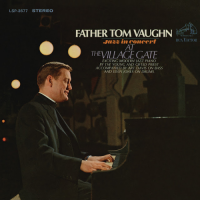
Father Tom Vaughn: Village Gate
Source:
JazzWax by Marc Myers
In the post-war jazz universe, two men of the cloth stand out. The first was Father Norman O'Connor, who was known as the “Jazz Priest." Boston University's Catholic chaplain in 1951, O'Connor was a board member of the first Newport Jazz Festival in 1954 and appeared in his priest collar when serving as master of ceremonies at festival concerts. He's heard announcing on Ellington at Newport (1956) and on John Coltrane's My Favorite Things: Coltrane at Newport (1963) and New ...
Continue
Reading...
Six Videos: Big-Band Gillespie

Source:
JazzWax by Marc Myers
From his earliest days in the trumpet sections of big bands led by Teddy Hill, Cab Calloway, Les Hite, Lucky Millinder and Billy Eckstine, Dizzy Gillespie wanted to front an orchestra of his own. His first shot came in 1946 when he recorded for Musicraft and played New York cubs. His bebop band continued into 1947, '48 and '49, recording for RCA Victor. Throughout his career, Gillespie would be most at home fronting a big band or soloing in front ...
Continue
Reading...
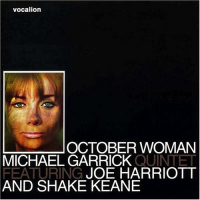
Michael Garrick: Oct. Woman
Source:
JazzWax by Marc Myers
Michael Garrick was an English jazz pianist who today is little known in the U.S. Born in 1933, Garrick was a self-taught musician who majored in English literature. Emerging from college in 1959 into a British world where mod jazz and poetry were trending, Garrick wound up the musical director of Poetry & Jazz in Concert, a touring ensemble of performance artists. From 1965 to 1969, Garrick led a contemporary jazz group that included saxophonist Don Rendell and trumpeter Ian ...
Continue
Reading...
Four Lee Morgan Videos

Source:
JazzWax by Marc Myers
Lee Morgan was a fluid burner. His trumpet could be fleshy and warm on ballads and sharp and darting on up-tempo songs. His staccato-like lines grabbed your attention, but he resisted making the instrument sizzle by pouring too much heat into his notes. His edge was an ingredient, not a means to and end. Here's Lee Morgan playing Bobby Timmons' Moanin’ on Canadian TV in July 1959... Here's Lee Morgan and Horace Silver in the early 1970s. Apologies for the ...
Continue
Reading...
Chet Baker: Time Unhinged

Source:
JazzWax by Marc Myers
Chet Baker was a jazz romantic quietly frustrated that the passage of time refused to slow down. The early 1950s was his moment, and the years that followed moved like sand through his hands, leaving him confounded and depressed. Like a movie star who suddenly grows too old for the parts he or she played best, Baker found himself lost, unable to retrace his steps home. For someone who looked and played sweet, Baker's eyes viewed the future with exhaustion. ...
Continue
Reading...
Album Showcase


Trending
 Performance / Tour
Smoke Jazz Club Announces October Line-up Including...
 Award / Grant
How Can Album Notes Compete For A Grammy Nomination?
 Recording
Macedonian Saxophonist Hristijan Risteski Releases...
 Music Industry
Harvard’s Ming Mei Residency Concert Features...
 Recording
Drummer-bandleader Brandon Sanders Carries Basketball...
 Recording
Jelly Roll Morton - 'New Orleans Joys: The Earliest...
 Recording
Dan Papirany Trio Captures Lyrical Interplay On New...
VOTE!



