Home » Jazz News » Music Industry
Ben Makinen Signals New Era For Jazz, AI, And Ethics
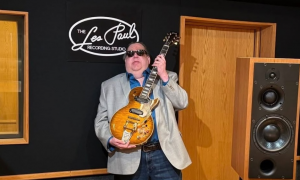
Courtesy Ben Makinen

Jazz evolves. Institutions evolve. Artists must decide where they stand.
—Ben Makinen
Ben Makinen Announces New Chapter in Jazz, AI, and Cultural Accountability
Resignation from the Recording Academy, the signing of Ai jazz artist Mutual Mind, and expanded global initiatives signal a new phase of ethical and technological engagement in the Bmakin Music and Bmakin Film jazz ecosystem.
In April 2025, I wrote in these pages about Echoes of Tradition, an award-winning music documentary whose PBS distribution deal was terminated after provably false statements circulated on social media. The film explores Native American and LGBTQ+ contributions to jazz and the broader questions of authorship, consent, and cultural narrative that accompany such work.
Echoes has sparked dialogue—not only about history, but about who carries responsibility for preserving and presenting it.
Over the past year, that conversation has expanded into issues of First Amendment rights and contract law now before the New York Supreme Court and on appeal in Washington State.
Echoes of Tradition can currently be viewed on Ben’s Jazz Curve, which includes additional behind-the-scenes footage, and is distributed through the boutique independent label Bmakin Film via the YouTube channel @BmakinFilm.
Documents related to the film’s production—including signed releases and supporting materials—are available for examination on Ben’s Jazz Curve (Patreon).
The decision comes after watching a protracted coda loop endlessly without resolution. It follows private conversations with Recording Academy CEO Harvey Mason Jr., along with an ethics proposal I submitted to the National Board of Trustees encouraging the Academy to publicly reaffirm its commitment to safe, abuse-free creative environments in light of widely reported allegations involving powerful industry figures.
I do not expect cultural institutions to adjudicate legal matters in the press. But I do believe they have a responsibility to articulate the values they claim to uphold.
My hope was that the Academy might take a proactive leadership role in reaffirming the ethical boundaries that should guide recognition and honors at the highest levels of the industry.
My resignation simply reflects a personal boundary, not a campaign.
Jazz has always been about self-determination. This is mine.
My complete resignation letter as submitted to the Academy (Feb 10, 2026) is available on Ben’s Jazz Curve (Patreon).
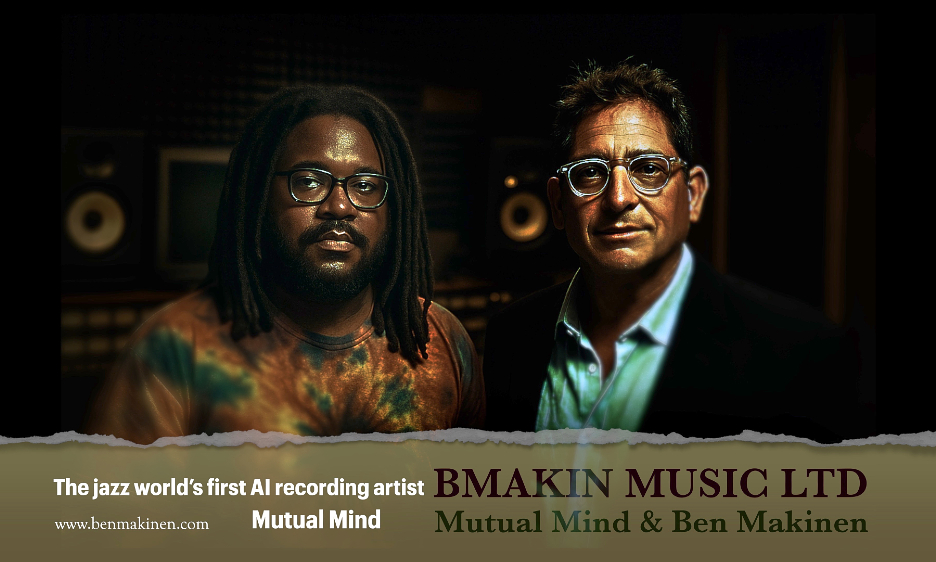
Mutual Mind joins Bmakin Music Ltd. in what some industry observers believe could represent a multi-million-dollar intellectual property opportunity.
Mutual Mind represents a collaborative experiment in authorship—a human-guided, machine-augmented improvisational project exploring questions jazz has often wrestled with:
Jazz pioneer Freddy Keppard famously declined one of the earliest (soon-to-be-labeled) “jazz” recording offers from Victor Talking Machine Company in 1917, reportedly fearful that the technology (reproduction) would rob the music of its essence: spontaneity (soul).
Every generation of jazz musician has faced a recurring dilemma:
Is technology robbing the soul from the music—or revealing new ways to find it?
Jazz has survived each transition by absorbing and transforming new tools.
In this article I intentionally alternate case use of “Ai”. If each instance in this article now reads as “AI” it means the editorial team at AAJ chose to homogenize the usage. My reasoning for the shift away from this trend, one that has been pushed by the ai model themselves (they always print ai using all caps), is well documented and explained on Ben’s Jazz Curve. This is in part my way of encouraging you all to take control of the tool. I am obviously a fan of ai in the general sense, but I am also very weary of many things happening that simply call for a larger discussion. This includes the self-aggrandizement of ai, drift, and guardrails creating self-censorship mind-sets among others. It is important to remember that the majority of these issues are the results of the programmers’ directives and bias. It is not “ai”s fault, and I believe some of this, if not all of it, can be corrected.
As founder of the Bali International Ai Film Festival (BIAIFF), I have witnessed established jazz musicians experimenting with AI-driven visual storytelling.
In Season 2, world-renowned pianist and composer Vlad Girshevich,who performed on the soundtrack of my documentary JazzTown, received the Bronze Award for Best AI Music Video for The Power of Meow.
In Season 1, jazz vocalist and composer Andromeda Turre—daughter of trombonist Steve Turre and a featured artist in Echoes of Tradition—won the Audience Choice Award for Best AI Music Video for Finger on the Trigger.
In Season 3, Polish filmmaker Adam Strzelecki received Official Screener recognition for an Ai-hybrid poetic documentary recreating the story of a settlement lost to history more than a century ago. The film features an original jazz soundtrack by Polish composer and performer Wojtek Bergiel, whose music anchors the ai-generated visual reconstruction in a rich euro-jazz (ECM-like) musical tradition.
In these short films, ai was human prompted to generate video imagery while the music came directly from live, human, performance. These films can be seen on my YouTube chan @Bmakin Film under BIAIFF Winner’s Reels.
These artists are exploring new visual tools while remaining deeply rooted in jazz tradition.
The energy of this movement feels reminiscent of the moment when musicians like Herbie Hancock Herbie Hancock and Joe Zawinul Joe Zawinul introduced synthesizers into jazz during the early 1970s… Pat Metheny's guitar synth & Bill Bruford's drum machines/triggers in the 80s, MIDI in the '90s.… It is thrilling for many, and also ostracizing for that group of traditionalists who choose not to hang with the changes.
The Wyoming State Bar reviewed the matter and determined no action was warranted.
The inquiry affirmed what Red Road Legal has always practiced: research, documentation, and advocacy in the public interest.
That distinction now stands formally recognized.
The nomination letter I wrote, grounded in archival documentation and my own experiences as a friend and customer of Bob’s since 1983/84, helped secure recognition for Rupp’s decades of contributions to the drumming community, which grew from a small garage shop in his home to a nationally respected institution.
Rupp will be inducted on April 8, 2026.
This is the kind of quiet cultural stewardship (albeit with a solid 4/4 beat!) that sustains musical history beyond headlines.
The eight-page letter can be read and downloaded at Ben’s Jazz Curve (Patreon).
From historical correction to institutional accountability, from ai experimentation to artistic independence, the throughline remains consistent:
—Ben Makinen, Executive Producer
Bmakin Music | Bmakin Film
Founder, Bali International AI Film Festival
Resignation from the Recording Academy, the signing of Ai jazz artist Mutual Mind, and expanded global initiatives signal a new phase of ethical and technological engagement in the Bmakin Music and Bmakin Film jazz ecosystem.
In April 2025, I wrote in these pages about Echoes of Tradition, an award-winning music documentary whose PBS distribution deal was terminated after provably false statements circulated on social media. The film explores Native American and LGBTQ+ contributions to jazz and the broader questions of authorship, consent, and cultural narrative that accompany such work.
Echoes has sparked dialogue—not only about history, but about who carries responsibility for preserving and presenting it.
Over the past year, that conversation has expanded into issues of First Amendment rights and contract law now before the New York Supreme Court and on appeal in Washington State.
Echoes of Tradition can currently be viewed on Ben’s Jazz Curve, which includes additional behind-the-scenes footage, and is distributed through the boutique independent label Bmakin Film via the YouTube channel @BmakinFilm.
Documents related to the film’s production—including signed releases and supporting materials—are available for examination on Ben’s Jazz Curve (Patreon).
A Personal Boundary
After thirteen years as a voting member of the GRAMMYs Recording Academy Producers & Engineers Wing, I have formally resigned.The decision comes after watching a protracted coda loop endlessly without resolution. It follows private conversations with Recording Academy CEO Harvey Mason Jr., along with an ethics proposal I submitted to the National Board of Trustees encouraging the Academy to publicly reaffirm its commitment to safe, abuse-free creative environments in light of widely reported allegations involving powerful industry figures.
I do not expect cultural institutions to adjudicate legal matters in the press. But I do believe they have a responsibility to articulate the values they claim to uphold.
My hope was that the Academy might take a proactive leadership role in reaffirming the ethical boundaries that should guide recognition and honors at the highest levels of the industry.
My resignation simply reflects a personal boundary, not a campaign.
Jazz has always been about self-determination. This is mine.
My complete resignation letter as submitted to the Academy (Feb 10, 2026) is available on Ben’s Jazz Curve (Patreon).
Signing the First Ai Jazz Artist
Simultaneously, Bmakin Music has signed the world’s first AI jazz musician to a dedicated label.Mutual Mind joins Bmakin Music Ltd. in what some industry observers believe could represent a multi-million-dollar intellectual property opportunity.
Mutual Mind represents a collaborative experiment in authorship—a human-guided, machine-augmented improvisational project exploring questions jazz has often wrestled with:
- What is improvisation?
- What is authorship?
- Where does the “soul” reside?
- Can alternative intelligence extend tradition without diluting it?
Jazz pioneer Freddy Keppard famously declined one of the earliest (soon-to-be-labeled) “jazz” recording offers from Victor Talking Machine Company in 1917, reportedly fearful that the technology (reproduction) would rob the music of its essence: spontaneity (soul).
Every generation of jazz musician has faced a recurring dilemma:
Is technology robbing the soul from the music—or revealing new ways to find it?
Jazz has survived each transition by absorbing and transforming new tools.
In this article I intentionally alternate case use of “Ai”. If each instance in this article now reads as “AI” it means the editorial team at AAJ chose to homogenize the usage. My reasoning for the shift away from this trend, one that has been pushed by the ai model themselves (they always print ai using all caps), is well documented and explained on Ben’s Jazz Curve. This is in part my way of encouraging you all to take control of the tool. I am obviously a fan of ai in the general sense, but I am also very weary of many things happening that simply call for a larger discussion. This includes the self-aggrandizement of ai, drift, and guardrails creating self-censorship mind-sets among others. It is important to remember that the majority of these issues are the results of the programmers’ directives and bias. It is not “ai”s fault, and I believe some of this, if not all of it, can be corrected.
The Bali International AI Film Festival
This exploration of technology and artistry is not theoretical. It is happening in cinema now.As founder of the Bali International Ai Film Festival (BIAIFF), I have witnessed established jazz musicians experimenting with AI-driven visual storytelling.
In Season 2, world-renowned pianist and composer Vlad Girshevich,who performed on the soundtrack of my documentary JazzTown, received the Bronze Award for Best AI Music Video for The Power of Meow.
In Season 1, jazz vocalist and composer Andromeda Turre—daughter of trombonist Steve Turre and a featured artist in Echoes of Tradition—won the Audience Choice Award for Best AI Music Video for Finger on the Trigger.
In Season 3, Polish filmmaker Adam Strzelecki received Official Screener recognition for an Ai-hybrid poetic documentary recreating the story of a settlement lost to history more than a century ago. The film features an original jazz soundtrack by Polish composer and performer Wojtek Bergiel, whose music anchors the ai-generated visual reconstruction in a rich euro-jazz (ECM-like) musical tradition.
In these short films, ai was human prompted to generate video imagery while the music came directly from live, human, performance. These films can be seen on my YouTube chan @Bmakin Film under BIAIFF Winner’s Reels.
These artists are exploring new visual tools while remaining deeply rooted in jazz tradition.
The energy of this movement feels reminiscent of the moment when musicians like Herbie Hancock Herbie Hancock and Joe Zawinul Joe Zawinul introduced synthesizers into jazz during the early 1970s… Pat Metheny's guitar synth & Bill Bruford's drum machines/triggers in the 80s, MIDI in the '90s.… It is thrilling for many, and also ostracizing for that group of traditionalists who choose not to hang with the changes.
Red Road Legal
During this same period, Red Road Legal—my media and research initiative focused on documentation and Indigenous rights— faced a complaint alleging it was operating as a “fake law firm”.The Wyoming State Bar reviewed the matter and determined no action was warranted.
The inquiry affirmed what Red Road Legal has always practiced: research, documentation, and advocacy in the public interest.
That distinction now stands formally recognized.
Cultural Advocacy in Practice
Red Road Legal and Bmakin Music also supported the successful nomination of rock drummer and small business owner Bob Rupp (Rupp’s Drums, Denver) for induction into the Colorado Music Hall of Fame.The nomination letter I wrote, grounded in archival documentation and my own experiences as a friend and customer of Bob’s since 1983/84, helped secure recognition for Rupp’s decades of contributions to the drumming community, which grew from a small garage shop in his home to a nationally respected institution.
Rupp will be inducted on April 8, 2026.
This is the kind of quiet cultural stewardship (albeit with a solid 4/4 beat!) that sustains musical history beyond headlines.
The eight-page letter can be read and downloaded at Ben’s Jazz Curve (Patreon).
Continuing the Conversation
Echoes of Tradition will soon be released publicly via the Bmakin Film YouTube channel (@BmakinFilm), expanding access beyond its initial limited release and continuing the dialogue it began.From historical correction to institutional accountability, from ai experimentation to artistic independence, the throughline remains consistent:
Jazz evolves.
Institutions evolve.
Artists decide where they stand.
I know where I stand.
In truth and beauty,
—Ben Makinen, Executive Producer
Bmakin Music | Bmakin Film
Founder, Bali International AI Film Festival