Home » Jazz Articles » Profile » Maynard Ferguson: Influential
Maynard Ferguson: Influential
When people speak of Maynard Ferguson, they usually point out his screaming high notes, but that
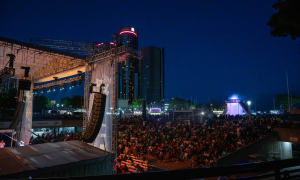
 I remember the first time I saw Maynard Ferguson in concert. It was spring 1982, the Cross & Sword Amphitheater in St. Augustine, Fla. It was my first time seeing a live jazz act, and the program left me feeling very satisfied. I knew I was onto something, although that could have been said the first time I played Conquistador (Columbia, 1977), Maynard's best-selling album which featured the top 30 hit "Gonna Fly Now.
 The band, I would learn later, was typical of Maynard's ensembles. Trumpet section leader Stan Mark was the only musician I knew from the albums I had at the time. Nearly everyone else was a recent college graduate—including several from North Texas State—and most were clinicians. The other players, if memory serves, were Matt Bissonette, bass; Ron Pedley, piano; Nelson Hill, Daniel Jordan and Denis DiBlasio, saxophones; Alan Wise and Hoby Freeman, trumpets; Steve Weist and Chris Brayman, trombones; and Dave Mancini, drums. With the exception of Greg Bissonette, Matt's brother who took over on drums, the lineup was pretty much the same when I saw Maynard again that fall in Jacksonville.
Among the songs performed that first time were "Gonna Fly Now, "Maria, "Birdland, "Chameleon and "Don't Stop 'Til You Get Enough. I observed several things during the program. Although this was dubbed "An Evening with Maynard Ferguson, this concert was about the whole band. Every musician had his time in the spotlight, and each soloist got a handshake from Maynard after his performance. It seemed to be his way of saying: "This night belongs to you as much as it does me. And you always knew when Maynard's turn was coming. He'd stand near his microphone, tilt his head back, plant his feet like a quarterback getting ready to throw the long ball, aim the bell of his trumpet toward the sky and then take in as much air as his lungs would hold. Every time he did that, the audience knew it was about to witness something special. As an added treat, all the horn players walked out into the aisles during their rendition of the Beatles' "Hey Jude. That literally brought the house down.
It was covers of themes from Rocky and Star Wars that prompted me to seek out Maynard's music. But when I heard Conquistador, and later Carnival (Columbia, 1978) and New Vintage (Columbia, 1977), I was blown away by the diversity of it all. Maynard covered some jazz standards as well as creating some pretty good original songs—written by him, composer/arranger Jay Chattaway or members of the band. "Mister Mellow, basically a duet between Maynard and guest guitarist George Benson, remains one of my all-time favorites. Bob James penned and performed the keyboard solo on another favorite: "Soar Like an Eagle. The saxophone section buzzed on "The Fly. Mike Migliore's soprano solo is reminiscent of the scene in the movie where the human/fly pleaded: "Help me; help me.
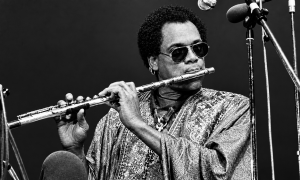
While the fusion and pop-jazz pieces were excellent, Maynard's bands were at their best when employing that big band sound, whether doing standards like "Stella By Starlight and "Take the 'A' Train or original pieces like "Give It One, "Superbone Meets the Badman and "Everybody Loves the Blues. His albums also featured many big name artists, either as members of his studio band or as guest soloists. Among them: Steve Gadd, David Sanborn, Stanley Clarke, Nathan East, Chick Corea, Wayne Shorter and Steve Khan. Bob Militello's flute solo on "Theme from Star Trek was one of several that established him as one of my favorite all-time performers in Maynard's ensembles. Mark Colby's blistering solo on "Primal Scream not only made the tenor my favorite member of the sax family, but also set the standard by which I'd measure all tenor performances thereafter.
But it wasn't just the soloists who made Maynard's music special. Gordon Johnson's bass lines on "Mister Mellow and "Conquistador are noteworthy. As I revisit Conquistador and New Vintage, I realize Peter Erskine is probably the single greatest reason I have such a strong dislike for drum programming. Even though he doesn't have any solos, his presence is very strong on such tracks as "Theme from Star Trek, "Soar Like an Eagle, "Maria (from West Side Story), "El Vuelo (the Flight) and "Scheherazade. Pay attention to his work on these songs and a few of the Carnival tracks and your appreciation for cookie-cutter rhythm loops is bound to change.
 When people speak of Maynard Ferguson, they usually point out his screaming high notes, but that's only part of the picture. There's a certain beauty, to say nothing of precision, in the way he played. Anybody can make a horn squeak. But it takes a master to make one sing. Maynard's trumpets sang beautifully.
Purists knocked Maynard for covering a lot of rock and pop tunes, but it was those covers that helped him reach the common man. As artists like Herbie Hancock and Josef Zawinul made their marks, presenting jazz as something other than an exclusive club for the elite, Maynard crossed a lot of bridges, infusing pop, blues, rock, classical and even disco into his soundscape. By doing this, he created music that stands the test of time. So even though Walter Maynard Ferguson has left this existence, he lives on in his music.
And that is the essence of Maynard Ferguson.
Selected discography
Maynard Ferguson, Live from San Francisco (Avenue, 1983)
Maynard Ferguson, Storm (Avenue, 1982)
Maynard Ferguson, Hollywood (Columbia, 1976)
Maynard Ferguson, Primal Scream (Columbia, 1976)
Maynard Ferguson, Chameleon (Columbia, 1974)
Maynard Ferguson, MF Horn 2 (Columbia, 1972)
Maynard Ferguson, Maynard Ferguson (Columbia, 1970)
Photo Credit: Hans Kumpf
 FOLLOW Woodrow Wilkins
and get notified whenever Woody has a new article published.
FOLLOW Woodrow Wilkins
and get notified whenever Woody has a new article published.
Woody started in jazz with the diverse sounds of Maynard Ferguson's bands of the 1970s.
About Maynard Ferguson

Tags
PREVIOUS / NEXT


Become a Sustaining Member

Since 1995, All About Jazz has championed jazz as an art form and supported the musicians who create it. Over three decades, it has grown into one of the world's leading jazz resources, serving hundreds of thousands of readers, musicians, presenters and industry professionals each month.
Help Build the Future of All About Jazz
Your support helps us continue building All About Jazz for the next generation—expanding our editorial coverage, preserving jazz history, developing new community features and creating better ways to discover the music and the people behind it.
Become a sustaining member for as little as $20 per year and you'll immediately enjoy an ad-free experience along with access to subscriber features and future articles for a full year.
Together, we're not simply sustaining All About Jazz—we're building its future. Thank you for being part of the journey.