Home » Jazz Articles » Extended Analysis » Marc Mommaas: Marc Mommaas: Balance
Marc Mommaas: Marc Mommaas: Balance
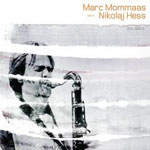 Marc Mommaas with Nikolaj Hess
 Balance
Sunnyside Records
2006
In classical music, people distinguish between "program music, which is "about something, and "absolute music, which is not. Someone has probably worked out what would be meant by a jazz version of "absolute music : I suspect it would sound a lot like Balance, the excellent new record by Dutch tenor saxophonist Marc Mommaas, in a series of duets with Danish pianist Nikolaj Hess. Let me explain what I mean.
Consider a textbook piece of program music, like, for example, Richard Strauss's Ein Heldenleben (1898). Strauss's tone poem presents a series of precisely narrated events in the hero's life: going into battle, performing "works of peace, and, my favorite, "gaining wisdom. (Have you ever thought of what "gaining wisdom sounds like?) In contrast, absolute music, in a philosophically challenging way, is self-referentially only "about itself: about its internal architecture, about its temporal development of themes. More intellectual and less emotional than the crowd-pleasing story telling of the programmatic guys.
This dichotomy breaks down in the face of a piece of music like James Brown's "Sex Machine. "Sex Machine, if it is "about anything, is about a group of musicians performing a song called "Sex Machine. It is every bit as rigorously absolute as The Art of the Fugue; our aesthetic delight stems from an amazement at the way the blocks of sonic material are compiled. But at the same time, "Sex Machine is decidedly crowd-pleasing and emotionally charged, unlike its classical cousins. Indeed, any good instrumental jazz reading of a thirty-two bar song is more like "Sex Machine than Bach in this respect—self-referentially non-programmatic, but emotionally evocative at the same time. So divorcing the musical performance from story-telling in jazz or R&B doesn't have the same intellectual and philosophical effects it does in classical music.
If they want to create "absolute music, perhaps jazz musicians must eschew conventional elements, especially sentimental or emotional elements, even if they do not eschew "form altogether (as some schools of free jazz have done). Then the musician could more clearly call attention to the music's formal structure without the intrusion of the emotional or sentimental baggage that generally accompanies more oft-used formal elements.
That's what Marc Mommaas seems to want to do on Balance, his second release on Sunnyside. In his words, "All the compositions were written with this recording in mind and include polyharmonic and mixed meter material, which is extremely effective in this spacious setting but not often utilized. The space created by this instrumentation gives the polychordal voicings the necessary space to breathe and the opportunity to connect with the horizontal melodic movements.
The resulting music is decidedly intellectual; it's closely composed and slightly unfamiliar sounding. But the mixed-meter and polychordal elements are not at all difficult to listen to: on the aural evidence, these are devices used with some frequency by other jazz musicians, though perhaps more instinctively and anarchically than in Mommaas' case. What makes their use here distinctive is Mommaas's earnestness in isolating these compositional elements over others that he leaves aside for now. That is, the mixed meters and the polyharmonies are deployed with skill but they are not what make this music sound intellectual, even if their systematic use tends toward musical absolutism.
No, what makes the music sound intellectual is a certain cool reserve in the playing. There is passion and abandon here, but carefully rationed. There is a little tenderness in "Remind Me, a little sweetness in "Amissirac. Mommaas' saxophone tone is controlled, firm, sober; he can slip in a little atonality, a little shriek, but he does so sparingly. On balance, his playing is remarkably effective and his two unaccompanied solo numbers are beautifully constructed.
What strikes me about the artistic manifesto quoted above is not the formal elements upon which Mommaas insists, but the fact that the music for this record was composed as a whole. The unity and coherence of the set comes not from mixed meter or polyharmony, but from a more general compositional harmony. "Heart of Winter, a piece occurring in the middle of the set, is a template containing many of the musical elements that are developed in the others: a meditative mood, a slightly elegiac feeling. (There I go, desperately trying to impose programmatic elements on what I've claimed is absolute music.) "Aftermath and "Dialogue are all about the performance; while "Sorcerers' Dance and "Remind Me hint at more programmatic, if not fully narrative, material. Perhaps the surest reference point for the music on the disc is Miles Davis's "Circle, from Miles Smiles, which approached, but never coalesced into, a mournful ballad, drawing attention to its unusual structure.
Hess plays strongly throughout, perhaps slightly more conventionally and with more variety than does the leader. A kind of Red Garland-ish warmth seeps into his solo in "Amissirac ; while his percussive clusters underneath Mommaas on the wonderfully free "Dialogue are perfectly placed but draw upon a completely different lineage. (Hess studied with Horace Parlan, and it implies no criticism of the student to note that the teacher's influence shines through at times.)
There is an implicit pejorative sense to labeling something "intellectual : Balance is intellectual jazz with no such reservations. Mommaas has created an unfaltering suite of compositions that express new things while studiously avoiding, for the most part, the free-jazz route. I'm not sure we need absolute jazz, and I'm even less sure that this record is an example of such a thing. Mommaas would almost certainly object that he would not mind if the music evoked emotions and sentiments, or at least, Ein Heldenleben-style, the gaining of wisdom. But Mommaas and Hess present a compelling case that we may have only begun to scratch the surface of the formal and communicative capabilities of the form. Add to this the fact that both musicians' playing is damn good and you have an important record.
Tracks: Funny Bones Jones; Amissirac; Sorcerer's Dance; Solo No. 1; Heart of Winter; Aftermath; Remind Me; Dialogue; Solo No. 2.
Personnel: Marc Mommaas: tenor saxophone; Nikolaj Hess: piano.
 FOLLOW Jeff Dayton-Johnson
and get notified whenever Jeff has a new article published.
FOLLOW Jeff Dayton-Johnson
and get notified whenever Jeff has a new article published.
Jeff Dayton-Johnson is a rapidly-aging economist and return migrant to California
Track Listing
Funny Bones Jones; Amissirac; Sorcerer's Dance; Solo No. 1; Heart of Winter; Aftermath; Remind Me; Dialogue; Solo No. 2.
Personnel
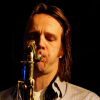
Marc Mommaas
saxophoneMarc Mommaas: tenor saxophone; Nikolaj Hess: piano.
Album information
Title: Marc Mommaas: Balance | Year Released: 2006 | Record Label: Sunnyside Records
About Marc Mommaas
Tags
PREVIOUS / NEXT

Become a Sustaining Member

Since 1995, All About Jazz has championed jazz as an art form and supported the musicians who create it. Over three decades, it has grown into one of the world's leading jazz resources, serving hundreds of thousands of readers, musicians, presenters and industry professionals each month.
Help Build the Future of All About Jazz
Your support helps us continue building All About Jazz for the next generation—expanding our editorial coverage, preserving jazz history, developing new community features and creating better ways to discover the music and the people behind it.
Become a sustaining member for as little as $20 per year and you'll immediately enjoy an ad-free experience along with access to subscriber features and future articles for a full year.
Together, we're not simply sustaining All About Jazz—we're building its future. Thank you for being part of the journey.