Home » Jazz Articles » Album Review » Janusz Stanisław Lewandowski: Karłowicz – Żeleński: Jazz...
Janusz Stanisław Lewandowski: Karłowicz – Żeleński: Jazz Impressions
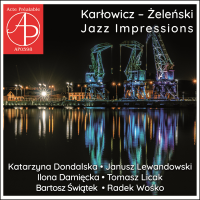
Karłowicz-Żeleński: Jazz Impressions is a bold and thoughtfully constructed project that places late-Romantic Polish art song within a contemporary jazz soundscape while carefully preserving the integrity of the original vocal writing.
At the heart of the album are songs by late 19th and early 20th century Polish composers Władysław Żeleński and Mieczysław Karłowicz, whose lyrical idiom provides the thematic and emotional foundation for the project.
Żeleński (1837-1921) was one of the leading figures of Polish musical life in the late 19th century; a composer, pedagogue, and advocate of Romantic lyricism whose songs are marked by elegant melodic lines and refined harmonic language. Karłowicz (1876-1909), representing the younger generation, brought a deeply introspective and expressive voice to Polish music at the turn of the 20th century, infusing his works with emotional intensity and rich late-Romantic harmony. Their art songs remain central to the Polish vocal repertoire.
The distinguished Polish bass-baritone Janusz Stanisław Lewandowski stands at the center of the project, not only as its leading performer, but as its originator and artistic designer, the figure who conceived and shaped its guiding idea. The repertoire is re-imagined through arrangements by saxophonist Tomasz Licak and percussionist Radek Wośko, who not only crafted the new settings but also perform in the ensemble, bringing their ideas to life from within the band. They are joined by internationally-acclaimed coloratura soprano Katarzyna Dondalska, with pianist Ilona Damięcka and double bassist Bartosz Świątek completing the ensemble.
The Academy of Art in Szczecin provided essential support, grounding the album firmly in the city's cultural life. This connection is more than symbolic: Most of the musicians share personal and professional ties to Szczecin, and the cover image of the harbor at night evokes the atmosphere of the city that quietly permeates the project's identity.
A crucial aspect of this recording is that the singers do not adopt jazz phrasing. Both Lewandowski and Dondalska perform with purely classical technique and articulation. Their vocal production, breath control, legato line, diction, and interpretative approach remain firmly rooted in the classical art-song tradition. There is no swing inflection, no jazz stylization in the vocal lines, and no attempt to imitate jazz vocal aesthetics. The vocal parts retain their original Romantic character, respecting the stylistic language in which the songs were conceived.
The jazz character of the album comes exclusively from the instrumental layer—the quartet. Saxophone, double bass, percussion, and piano create rhythmic flexibility, harmonization, and improvisation textures that surround the classically delivered vocal parts. This contrast gives the project its distinctive identity: classical singing framed by a modern jazz environment.
A particularly striking moments occurs in "Polały się łzy (My Tears Flowed)," where Licak's saxophone solo becomes one of the emotional high points of the album. His improvisation is both restrained and deeply expressive, unfolding with lyrical sensitivity rather than virtuoso display. Equally important is the contribution of Damięcka, a highly versatile artist who, both as a pianist and as a vocalist, moves fluently between mainstream jazz and free jazz. Although she appears here exclusively as a pianist, her broad artistic background is clearly audible. She is an engaging improviser, as heard in her dynamic solo on the album's opening track, "Idzie na pola," where her playing unfolds with both clarity and daring, weaving sharp rhythmic ideas into a subtly shifting harmonic landscape.
A highlight of the album is also "Niepewność," a final song set to a poem by Adam Mickiewicz. The song occupies a cherished place in Polish culture, with Marek Grechuta's interpretation standing as a touchstone. Here, it is re-imagined as a duet for Lewandowski and Dondalska, whose intertwining lines honor the classical phrasing and Romantic contour of the original, while the jazz quartet adds harmonic color and rhythmic inflection that gently re-frames the piece without disturbing its core vocal character.
"Karłowicz-Żeleński: Jazz Impressions" is not a crossover in which classical singers attempt jazz styling. Rather, it is a carefully balanced artistic dialogue: classical vocal interpretation framed by jazz instrumentation. The repertoire remains intact and stylistically authentic, while the instrumental setting offers a contemporary perspective that invites listeners to rediscover the timeless beauty of Polish classical music through a fresh, jazz inflected lens.
 FOLLOW Cezary L. Lerski
and get notified whenever a new article published.
FOLLOW Cezary L. Lerski
and get notified whenever a new article published.
Editor in chief at PolishJazz.com and NotTwoRecords.org
Track Listing
Mieczysław Karłowicz – Idzie na pola (It goes over fields), Mieczysław Karłowicz – Pamiętam ciche, jasne, złote dnie (I remember quiet, bright, golden daysy), Mieczysław Karłowicz – Mów do mnie jeszcze (Speak to me still), Mieczysław Karłowicz – Na spokojnym ciemnym morzu (On a calm dark sea), Mieczysław Karłowicz – Nie płacz nade mną (Do not weep for me), Władysław Żeleński – Marzenia dziewczyny (A Maiden’s Dreams), Władysław Żeleński – Polały się łzy (My tears flowed), Władysław Żeleński – Niepewność (Uncertaint)
Personnel
Janusz Stanisław Lewandowski
vocalsKatarzyna Dondalska
vocalsIlona Damięcka
pianoTomasz Licak
saxophone, tenorBartosz Świątek
bassAlbum information
Title: Karłowicz – Żeleński: Jazz Impressions | Year Released: 2025 | Record Label: Acte Préalable
About Janusz Stanisław Lewandowski
Tags
PREVIOUS / NEXT


Become a Sustaining Member

Since 1995, All About Jazz has championed jazz as an art form and supported the musicians who create it. Over three decades, it has grown into one of the world's leading jazz resources, serving hundreds of thousands of readers, musicians, presenters and industry professionals each month.
Help Build the Future of All About Jazz
Your support helps us continue building All About Jazz for the next generation—expanding our editorial coverage, preserving jazz history, developing new community features and creating better ways to discover the music and the people behind it.
Become a sustaining member for as little as $20 per year and you'll immediately enjoy an ad-free experience along with access to subscriber features and future articles for a full year.
Together, we're not simply sustaining All About Jazz—we're building its future. Thank you for being part of the journey.