Home » Jazz Articles » Album Review » Charlie Munro: Eastern Horizons
Charlie Munro: Eastern Horizons
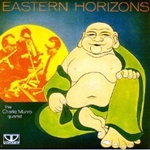
Although not for purists, Munro—supported by a bottom-heavy bass sound with trombone and percussion—succeeds in producing a compelling work of art where Eastern time signatures, jazz improvisations and Western classical harmonies meld seamlessly. The music is sometimes modal in structure, and occasionally freer in style, but never loses its mellifluousness.
This record has been compared to Pharoah Sanders' Karma (Impulse!, 1969) and Alice Coltrane's Indo-centric recordings. Apart from the fact that all of these recordings draw inspiration from Eastern music, there are very few similarities between them. While Sanders and Coltrane induce the feeling of meditating in a quiet, incense-perfumed temple, Eastern Horizons is more like traveling to, or viewing a film about, exotic locations.
The musical interaction amongst the quartet members eschews the traditional labor division of frontline and rhythm section for a more egalitarian distribution of solos and flights of musical ideas. Munro exhibits equal virtuosity on both reeds and cello, while the others also excel on their respective instruments. The sound of the CD has been impeccably remastered with new notes and photos added to the original booklet liner notes and handsomely reproduced cover art.
An intriguing record with an exotic sound from a part of the world not well known for its jazz, Eastern Horizons rewards and delights with repeated listens.
 FOLLOW Hrayr Attarian
and get notified whenever a new article published.
FOLLOW Hrayr Attarian
and get notified whenever a new article published.
Ancora Imparo
Track Listing
Islamic Suite; Arch's Groove; Malahari Raga; David; Japanese Love Song; Minimum; When I Look At You; Raised Eyebrows.
Personnel
Charlie Munro
woodwindsCharlie Munro: bass clarinet, soprano sax, alto sax, tenor sax, flute, cello; Bob McIvor: trombone; Neville Whitehead: bass; Mark Bowden: drums, vibraharp, marimba.
Album information
Title: Eastern Horizons | Year Released: 2009 | Record Label: Votary
About Charlie Munro
Tags
PREVIOUS / NEXT


Become a Sustaining Member

Since 1995, All About Jazz has championed jazz as an art form and supported the musicians who create it. Over three decades, it has grown into one of the world's leading jazz resources, serving hundreds of thousands of readers, musicians, presenters and industry professionals each month.
Help Build the Future of All About Jazz
Your support helps us continue building All About Jazz for the next generation—expanding our editorial coverage, preserving jazz history, developing new community features and creating better ways to discover the music and the people behind it.
Become a sustaining member for as little as $20 per year and you'll immediately enjoy an ad-free experience along with access to subscriber features and future articles for a full year.
Together, we're not simply sustaining All About Jazz—we're building its future. Thank you for being part of the journey.