Home » Jazz Articles » Book Excerpts » Diminuendo and Crescendo
Diminuendo and Crescendo
 I tried calling my good pal Harlan the other day. I needed some help with my computer and if anyone knows about computers, it's Harlan. Unfortunately, or perhaps fortunately, my friend was nowhere to be found. Instead, Harlan's voicemail greeting confronted me.
"Hi, I'm not home right now," his voice explained. "This is Paul Gonsalves' saxophone solo from 'Diminuendo And Crescendo In Blue.' If you have heard this before, you may press pound now and leave me a message."
I smiled to myself as Paul Gonsalves' tenor blew through the wire into my ear. Harlan had come up with some wild phone greetings in the past, but this one was really too much. Now, you may be asking yourself what makes this bit of music so notable in the first place and I must say, I'm glad you asked.
You see, Paul Gonsalves played this particular saxophone solo with Duke Ellington's orchestra at the American Jazz Festival in Newport, Rhode Island on July 7, 1956. Ellington, of course, was the undisputed giant of jazz who'd became enormously popular since first performing at Harlem's Cotton Club in the Roaring 20s.
While immortal compositions like "Mood Indigo," "Sophisticated Lady" and "Take The A Train" sustained Ellington throughout the 30s and 40s, things had tapered off for Duke's big band, and their appearance at Newport was intended to be a comeback of sorts. Ellington had even written the "Newport Jazz Festival Suite" expressly for the occasion.
Paul Gonsalves was a journeyman musician who had played with Count Basie and Dizzy Gillespie before joining Ellington's caravan. His extroverted saxophone style was solid, coming out of the Coleman Hawkins' school of tenor players. While not nearly as famous as other tenor stars that had worked with the Duke (like the great Ben Webster), Gonsalves was still a well-seasoned jazzman.
That night, Ellington's introduction of "Diminuendo and Crescendo in Blue" was respectfully received by the Newport crowd but not identified as particularly noteworthy. Indeed, the song had been written nineteen years earlier and there was no indication that this performance would contain anything out of the ordinary.
The piece starts out with a few minutes of classic Ellingtonia, that is, Duke setting the stage with four jumping choruses on piano before the ensemble rolls in to fortify the main theme. After two more choruses by the Duke, and with a rollicking beat laid down by bassist Jimmy Woode and drummer Sam Woodyard, Paul Gonsalves stepped forward to perform his most memorable solo.
Gonsalves' segment begins conventionally enough and any number of tenor players could have played his first few choruses. Traditionally, three or four choruses by a notable soloist would be plenty for an Ellington composition, but this was not the case at Newport.
It was somewhere around Gonsalves' sixth steaming chorus that the crowd began to sense something special was occurring: during his seventh go-round a sophisticated lady (a platinum blonde in a black evening dress) jumped up from her box seat and began dancing wildly to the rocking rhythm. Bear in mind that the festival was a somewhat elegant event and the commotion caused by Gonsalves' tour de force had the Newport security police more than a little concerned.
By this time, most of the crowd (7,000 strong) was on their feet and cheering. Eight, twelve, fifteen muscular choruses and Gonsalves showed no signs of slowing down. At the very foot of the stage, Jo Jones (former Basie drummer appearing at Newport with Teddy Wilson) was pounding out his unbridled enthusiasm with a rolled-up copy of the Christian Science Monitor.
Backed by just bass, drums, and an occasional piano fill by the Duke, Gonsalves reared back even harder and played on. Veteran Ellington band-mates like Johnny Hodges, Cat Anderson, and Harry Carney were shouting their own special encouragement as Gonsalves boldly blew through a grand total of twenty-seven straight, groovin' choruses.
After almost seven minutes worth of a saxophone solo that shook the world (would you believe Rhode Island?), the beep indicating it was time to leave Harlan a message brought me back from a most nostalgic reverie. I had forgotten what I was calling about, and although I tried valiantly to think of something clever to say, I was stumped.
So instead, I sat right down and wrote myself this letter. Yes, Harlan wasn't around to fix my computer, but Paul Gonsalves sure did help out Duke Ellington on that fine day in Newport.
-For George Avakian
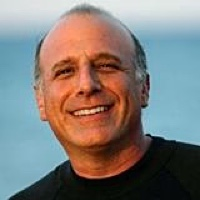
Learn more about The Boy Who Cried Freebird: Rock & Roll Fables and Sonic Storytelling. © 2008, Mitch Myers
 FOLLOW Mitch Myers
and get notified whenever a new article published.
FOLLOW Mitch Myers
and get notified whenever a new article published.
About Paul Gonsalves

Tags
PREVIOUS / NEXT

Become a Sustaining Member

Since 1995, All About Jazz has championed jazz as an art form and supported the musicians who create it. Over three decades, it has grown into one of the world's leading jazz resources, serving hundreds of thousands of readers, musicians, presenters and industry professionals each month.
Help Build the Future of All About Jazz
Your support helps us continue building All About Jazz for the next generation—expanding our editorial coverage, preserving jazz history, developing new community features and creating better ways to discover the music and the people behind it.
Become a sustaining member for as little as $20 per year and you'll immediately enjoy an ad-free experience along with access to subscriber features and future articles for a full year.
Together, we're not simply sustaining All About Jazz—we're building its future. Thank you for being part of the journey.