Home » Jazz Articles » New York Beat » David Finck: Music Spoken Here
David Finck: Music Spoken Here
[In] my opinion, there is no one who is as good a jazz bass player and collaborator.
—Andre Previn
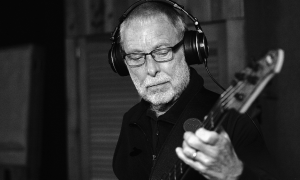
Finck is the apotheosis of the contemporary New York jazz musician- educated, articulate, and widely read. His humor is always sagacious and often hysterical. With both his parents involved in music, he began playing bass at age 10 and while still in high school studied with several bassists from the Philadelphia Orchestra. Upon graduation from the Eastman School of Music he immediately plunged into touring with the Woody Herman band. His jazz career has been remarkable. As Andre Previn notes, "I have worked with David Finck in many different circumstances and venues, for a period of eight years, and in my opinion, there is no one who is as good a jazz bassist and collaborator."
The key to his talent has been best described by Finck himself: "I hear music as a spoken language. When I listen, I'm conscious of the breaths that are taken during a phrase; I hear the vocabulary, the inflection and the syntax." This often used analogy of music to language is conspicuously helpful when analyzing Finck's performing approach. When he plays he can indeed switch from active to passive voice and from imperative to subjunctive mood. His solos reflect the best rhetorical traditions of subordination and parallel structure. And in his vocal accompanying, he always chooses the correct modifier be it adjective, adverb or participial phrase.
 In his continuing saga of pursuing a musical renaissance existence, Finck has become a producer, arranger, songwriter and lecturer/essayist. In the former incarnations he has of late created some magic for two emerging talents: Peter Cincotti and Christy Baron. Says Baron of her mentor "as an arranger and producer, he's able to apply the intention of the lyricist within the structure of his arrangements, while keeping his ideas fresh and unique." And in writing for the Village Voice in an issue celebrating Frank Sinatra's 80th birthday Finck presciently isolated Sinatra's "ability to combine musical language with poetic language."
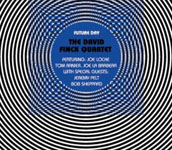
Finck has waited a long time to release a jazz CD as a leader, but finally we have Future Day—The David Finck Quartet (Soundbrush records) whose promos describe the selections as "music that's closest to his heart: jazz originals and standards of the last three decades, the ones that define his love affair with jazz." For the session, Finck has carefully chosen a crop of jazz standouts: vibraphonist (and fellow Eastman alum) Joe Locke, drummer Joe La Barbera, pianist Tom Ranier and special guests trumpeter Jeremy Pelt and tenorist Bob Sheppard. Predictably, the CD contains material that is thoughtfully arranged, compositionally fresh and masterfully performed. Another triumph for the ubiquitous David Finck.
 FOLLOW Nick Catalano
and get notified whenever a new article published.
FOLLOW Nick Catalano
and get notified whenever a new article published.
Dr. Nick is a TV writer/producer and professor of Literature and Music at Pace University.
About David Finck

Tags
PREVIOUS / NEXT
Become a Sustaining Member

Since 1995, All About Jazz has championed jazz as an art form and supported the musicians who create it. Over three decades, it has grown into one of the world's leading jazz resources, serving hundreds of thousands of readers, musicians, presenters and industry professionals each month.
Help Build the Future of All About Jazz
Your support helps us continue building All About Jazz for the next generation—expanding our editorial coverage, preserving jazz history, developing new community features and creating better ways to discover the music and the people behind it.
Become a sustaining member for as little as $20 per year and you'll immediately enjoy an ad-free experience along with access to subscriber features and future articles for a full year.
Together, we're not simply sustaining All About Jazz—we're building its future. Thank you for being part of the journey.