Home » Jazz Articles » Album Review » Neil Cowley: Built on Bach
Neil Cowley: Built on Bach
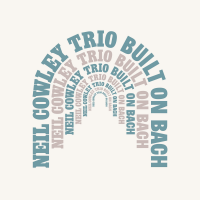
From this belated recognition emerges Built on Bach, a collection of 10 original compositions through which Cowley, joined by bassist Rex Horan and drummer Evan Jenkins, enters into an intimate conversation with the Baroque master's surviving imagination. Having exchanged the disciplinary austerities of classical performance for the volatile permissions of jazz, Cowley approaches Bach's keyboard miniatures as repositories of potential, drawing out fragments whose transformations make audible the strange afterlives of compositional thought. A melodic gesture becomes the seed of another consciousness, while a harmonic progression discovers unforeseen intimacies within the body's instinct for rhythm. Cowley deliberately withholds the identities of almost all his source pieces, allowing their traces to circulate as anonymous presences within the new. Originality begins to resemble an act of hospitality toward what has already passed through us without ever having belonged to us.
"Sales Technique" saunters into this predicament with magnificent swagger, its title suggesting a degree of calculation that the music mischievously indulges and disarms. A delicate opening gains density through changes of direction so organic that rigor and spontaneity seem momentarily to share a nervous system. The trio sells its premise through the sincerity of its enjoyment. "Chatterbox" gives that exuberance a social life, its whimsical confidence emerging from the musicians' delight in answering one another. Conversation becomes audible as a compositional principle, each intervention altering the meaning of what preceded it. Throughout, there is a wonderful love of self without self-importance, made possible by genuine camaraderie. "John Wayne" revives something of the opener's theatrical stride, inviting a miniature cinema of the mind in which the piano negotiates its surroundings with sly acumen. Especially affecting are its flowering, almost chorus-shaped gestures, which arrive with the ease of melodies waiting patiently inside the harmonies for permission to bloom.
"Scurry" brings the project's spectral genealogy into sharper focus. Bach's "Invention No. 4 in D minor" (BWV 775), is the one source Cowley openly identified when introducing it as a pre-release single, and its contrapuntal character survives as much as it changes within the transformation. That exception deepens the surrounding secrecy. Knowing one ancestor by name only makes the others more haunting, turning recognition into a form of historical reconstruction whose evidence changes under examination. "Thomas," meanwhile, offers a more transparent lineage, drawing upon the "C-major Prelude" of The Well-Tempered Clavier. After the preceding exuberance, its gentler current reveals the tenderness concealed within Bach's familiar harmonic progression. Cowley's deconstruction has the delicacy of someone unfolding a letter whose sender has been dead for centuries, discovering that its words can acquire new meanings in different hands. "Emma's Video Shop" locates another unexpected storefront in this imagined city of inheritance, recasting the "C-minor Prelude" from the same work. Jenkins's drums give its perpetual motion a new bodily urgency, as though the Baroque mechanism had suddenly discovered the pleasures of moving through crowded streets. These disarmingly ordinary titles bring ancestral genius into the incidental textures of contemporary life.
"Incorrect Number" opens a quieter aperture, its childlike tenderness moving through a sunlit urban solitude. Its misdirected title intimates that intimacy occasionally depends upon reaching someone other than the person we intended to call. "Periwiggle" answers with fluid pointillism, scattering impulses across a surface whose apparent frivolity conceals the patient intelligence of its design. "Clever Clogs" draws the body back into a head-nodding pulse, its playfulness sharpened by an architectural instinct for proportion. By the time "White Elephant" arrives, the music has adopted a more reflective tenderness. Its fond farewell carries the delicate embarrassment of a gift we can neither return nor quite claim as ours, an apt emblem for the obligations of artistic inheritance.
What astonishes is the trio's refusal to pursue greatness through individual display. Horan and Jenkins participate with such complete imaginative agency that the usual distinctions between accompaniment and leadership dissolve. Grand solos would disturb this balance, whose intimacy depends upon each musician allowing his thought to be reconfigured by the others. The resulting coherence feels profoundly Bachian, even at its most rhythmically irreverent. Of the many attempts to reconcile classical inheritance with jazz improvisation, few achieve this degree of freedom without sacrificing fidelity to the spirit of their source.Built on Bach is a masterpiece of the encounter, guided by the conviction that genuine reverence must risk transformation.
 FOLLOW Tyran Grillo
and get notified whenever a new article published.
Music writer, singer, translator, scholar.
Track Listing
Sales Technique; Chatterbox; John Wayne; Thomas; Scurry; Emma's Video Shop; Incorrect Number; Periwiggle; Clever Clogs; White Elephant.
Personnel


Album information
Title: Built on Bach | Year Released: 2026 | Record Label: Hide Inside Records
About Neil Cowley
Tags
PREVIOUS / NEXT

Become a Sustaining Member

Since 1995, All About Jazz has championed jazz as an art form and supported the musicians who create it. Over three decades, it has grown into one of the world's leading jazz resources, serving hundreds of thousands of readers, musicians, presenters and industry professionals each month.
Help Build the Future of All About Jazz
Your support helps us continue building All About Jazz for the next generation—expanding our editorial coverage, preserving jazz history, developing new community features and creating better ways to discover the music and the people behind it.
Become a sustaining member for as little as $20 per year and you'll immediately enjoy an ad-free experience along with access to subscriber features and future articles for a full year.
Together, we're not simply sustaining All About Jazz—we're building its future. Thank you for being part of the journey.