Home » Jazz Articles » Rodrigo Amado
Jazz Articles about Rodrigo Amado
About Rodrigo Amado

Summer Bummer 2026
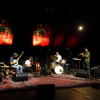
by John Sharpe
Summer Bummer 2026 Trix, Antwerp Belgium August 28-29, 2026 Intro The 11th edition of the Summer Bummer festival more than lived up to the promise of the mouth-watering bill, presenting a wide variety of experimental music without fealty to any particular genre. While Summer Bummer inevitably tips its hat to the local Belgian improvised music scene, it is notable for bringing in projects not routinely heard elsewhere, including one world premiere. Trix--more often a rock ...
Continue Reading...David Maranha / Rodrigo Amado: Desolation Row
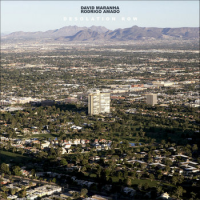
by Kevin Poindexter
David Maranha and Rodrigo Amado's Desolation Row seems to invite you into its world, offering you a front-row seat on a transcendent journey, an opportunity to bear witness to the wonders that are about to transpire. Desolation Row is the duo's second album, and like its predecessor,Wrecks (Nariz Entupido, 2024), it was also recorded live before an audience. Similar to Wrecks, Desolation Row is a 40-minute composition that blends free jazz, drone, and pure improvisation into one spiritual, meditative experience. ...
Continue Reading...Rodrigo Amado: Wailers
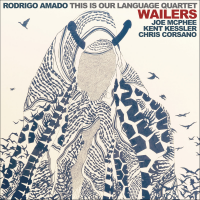
by Mark Corroto
A decade ago, it would have been easy to assume that saxophonist Rodrigo Amado's This Is Our Language (Not Two, 2015) was a singular encounter rather than the beginning of an enduring ensemble. Amado had previously collaborated with bassist Kent Kessler and drummer Paal Nilssen-Love on Teatro (European Echoes, 2006), while drummer Chris Corsano would join him for a pair of exceptional duo recordings. The final piece was the legendary Joe McPhee, whose presence elevated the quartet's debut into something ...
Continue Reading...Rodrigo Amado / Joe McPhee / Kent Kessler / Chris Corsano: Wailers
by John Sharpe
Wailers captures Portuguese saxophonist Rodrigo Amado's This Is Our Language quartet at a fascinating juncture, revealing fresh dimensions within one of his most compelling working bands. An unchanged lineup features reedman Joe McPhee (restricting himself solely to tenor), bassist Kent Kessler and drummer Chris Corsano alongside the leader's tenor saxophone. Recorded in a Lisbon studio in 2019, the album now arrives with the feel of an archival issue. But it constitutes the first since Let The Three Be Men (Trost, ...
Continue Reading...Rodrigo Amado The Bridge: Further Beyond
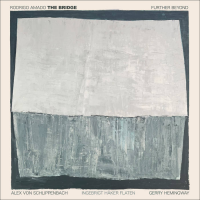
by John Sharpe
As well as being one of the premier exponents of his instrument, Portuguese tenor saxophonist Rodrigo Amado thrives in demanding company. For Further Beyond, the follow-up to Beyond The Margins (Trost, 2023), he reconvenes the all star cast he calls The Bridge, comprising pianist Alexander von Schlippenbach, bassist Ingebrigt Haker Flaten and drummer Gerry Hemingway. On three expansive cuts from a 2023 Amsterdam concert, they advance a strain of contemporary improvisation rooted in free jazz yet impatient with its formal ...
Continue Reading...Rodrigo Amado: The Healing
by John Sharpe
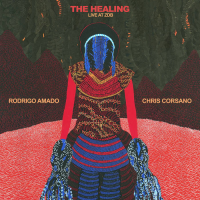
The Healing unites tenor saxophonist Rodrigo Amado and drummer Chris Corsano in a tremendous set that tempers visceral power with nuanced exchange. An archival release, it documents a 2016 live date at Lisbon's ZBD Club, marking the second recording by this duo, after a 2014 session issued as No Place To Fall (Astral Spirits, 2019). However the Portuguese reed player and American percussionist have been comrades since 2012 in a quartet completed by bassist Kent Kessler and saxophonist-trumpeter Joe McPhee ...
Continue Reading...Rafael Toral: Traveling Light
by Fran Kursztejn
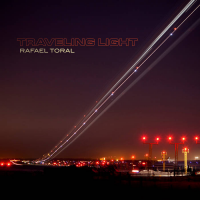
Jazz has a difficult time wrestling with its own history. All genres do, but jazz, specifically in the lethargic modern era, cannot but find itself somewhat directionless. Rock, pop, and electronica all advertise their frontrunners as “the next big thing" or “revolutionary," or otherwise contain a je ne sais quoi found nowhere else but in the artist or song in question. Certainly, very few of these promises are ever kept, but publicity around jazz frequently goes the opposite route. The ...
Continue Reading...
Trending
 In Tribute To...
Points of View: Celebrating Dave Holland
 Interview
Boney James: A Simple Man And A Lifetime Study
 Interview
Miles Okazaki's Monkathon: The Complete Thelonious...
 Interview
Bill Bruford And Pete Roth: A One-Of-A-Kind Juxtaposition
 Musician 2 Musician
Steve Coleman on Dave Holland
 Live Review
Isaiah Collier Plays Coltrane: Live at Jazz Alley in Seattle
 Reanimating Conversations Past
John Scofield: Meant To Be
Premium
VOTE!