Home » Jazz Articles » Album Review » Russ Lossing: All Things Arise
Russ Lossing: All Things Arise
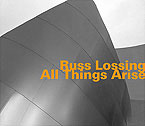
This time, however, Lossing is on solo piano, which only increases the intensity since every aspect of the sounds and emotions presented is in the soloist's hands. The piano used is very good and the recording quality impeccable, leading to a "you are there" experience. The intensity level, but not the volume, is very high, and real concentration is required of the listener.
A listener so inclined will be rewarded with playing of amazing dexterity and a feeling of total control despite the rapid-fire nature of the presentation of ideas. As pure sound, the music is quite wonderful as Lossing explores the full range of the piano while getting many textures and densities from it. He is a master of the sustain pedal and at one point, when both hands are playing a fast, tight repeated figure, holds it down to create a music wave which rises up out of the speakers and then crashes.
Lossing's playing is much more than just sound painting, however. He has a way with musical space and time that brings the listener inside the music. The space is represented both as the separation of notes in time and as the musical distance between notes, while time is deeper than mere pulse, getting closer to the relationship of the notes as they flow. Form and development, while abstract, is created by how space and time are always changing, not randomly but rather with an intent that can be intuited.
The record is broken up into two distinct parts. The first is a suite of four pieces improvised in the moment and the second is six improvisations on compositions by Duke Ellington ("Azure"), Sonny Rollins ("Pent-Up House"), Ornette Coleman ("Kathelin Grey"), Kurt Weill ("Alabama Song") and Lossing himself ("Verse"). The distinction between totally free improvisation and improvisation that is quite free while maintaining touch with its base will be quite apparent regardless of whether or not the tunes are familiar.
Ellington's "Azure" was played twice and recorded sequentially, but split on the record to be the first and last tunes of the second part. This arrangement is quite fortuitous as they are played differently. The second version is much closer to a classic jazz improvisation, and serves to put not only the first version, but also the other tunes' treatments in perspective.
The music of All Things Arise would be an almost overwhelming experience live, and we should be thankful to be able to hear these ephemeral yet deep creations many times over.
 FOLLOW Budd Kopman
and get notified whenever a new article published.
FOLLOW Budd Kopman
and get notified whenever a new article published.
Jazz musicians are magicians and Jazz is the spell they cast
Track Listing
Suite: All Things Arise (All Things Arise, Interdependence, From Within, Causes); Azure 1; Pent-Up House; Kathelin Grey; Alabama Song; Verse; Azure 2.
Personnel

Russ Lossing
pianoRuss Lossing: piano.
Album information
Title: All Things Arise | Year Released: 2006 | Record Label: Hat Hut Records
About Russ Lossing
Tags
PREVIOUS / NEXT

Russ Lossing Concerts

Become a Sustaining Member

Since 1995, All About Jazz has championed jazz as an art form and supported the musicians who create it. Over three decades, it has grown into one of the world's leading jazz resources, serving hundreds of thousands of readers, musicians, presenters and industry professionals each month.
Help Build the Future of All About Jazz
Your support helps us continue building All About Jazz for the next generation—expanding our editorial coverage, preserving jazz history, developing new community features and creating better ways to discover the music and the people behind it.
Become a sustaining member for as little as $20 per year and you'll immediately enjoy an ad-free experience along with access to subscriber features and future articles for a full year.
Together, we're not simply sustaining All About Jazz—we're building its future. Thank you for being part of the journey.