Home » Jazz Musicians » Emmanuel Cremer Discography
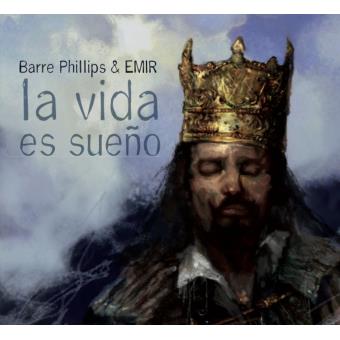
La Vie Est Songe
Emmanuel Cremer
Label: Nato
Released: 2017
Duration: 01:09:00
Views: 111
Personnel

Emmanuel Cremer
celloAlbum Description
Concept and Structure of the Work
Released on March 31, 2017, by the label Nato, "La Vida Es Sueño" (Life Is a Dream) is an improvised opera consisting of 21 tracks with a total duration of approximately 1 hour and 9 minutes. It is not merely a suite of pieces but a continuous sonic narrative adapted from the 17th-century play by Pedro Calderón de la Barca.
Barre Phillips conceived the work as an abstraction of classical opera: there are no lyrics, only the story told through sound. The structure strictly follows the dramaturgy of the original play (three "days" or acts, with two intertwining plots set in a fictional Poland). Phillips created a score specifying the duration and sequence of interventions, granting the musicians total freedom for improvised expression within this rigorous temporal framework.
Cast Distribution and Instrumentation
Each member of the EMIR collective (Ensemble de Musique Improvisée en Résidence) embodies a specific character from the play, developing a musical language unique to their role. The instruments converse, and the voices use an imaginary language to express emotions without intelligible text.
| Musician | Instrument | Role in the Play |
| Laurent Charles | Saxophones (Baritone, Tenor) | Segismundo (The King's son) |
| Patrice Soletti | Electric Guitar | King Basilio |
| Charles Fichaux | Percussion | King Basilio (Duo with Soletti) |
| Emilie Lesbros | Voice | Rosaura (Lady of the court) |
| Anna Pietsch | Voice | Estrella (Infanta) + Chorus (Soldiers, Guards) |
| Lionel Garcin | Saxophones (Alto, Soprano) | Clarin (Jester valet) |
| Emmanuel Cremer | Cello | Astolfo (Duke of Muscovy) |
| François Rossi | Percussion | Clotaldo (Nobleman and confidant) |
| Barre Phillips | Double Bass | Chorus (Soldiers, Musicians, Processions) |
Musical Aesthetic and Reception
The work navigates between expressivity and atonality, creating a musical flow that reproduces the tensions of the original piece: wars, thwarted loves, and metaphysical questioning regarding reality and dreams. Critics highlight the success of this bold wager, where the theatricalization of improvisations allows the listener to mentally visualize costumes and movements, transforming Phillips' dream into a tangible sonic reality.
The album was recorded and mixed in 2016, following the stage premiere on May 19, 2015, at the Musique Action 31 festival in Vandœuvre-lès-Nancy, France. It was released simultaneously with another work by Phillips, "No Man’s Zone", confirming the creative vitality of the double-bassist during this period.
The album "La Vida Es Sueño" represents a unique intersection of theater, metaphysics, and free improvisation. Here is a deeper look into its conception, execution, and philosophical underpinnings.
1. The Philosophical Core: Reality vs. Dream
The source material, Pedro Calderón de la Barca's 1635 play, is a cornerstone of the Spanish Golden Age, exploring whether life is merely a dream from which one only awakens at death. Barre Phillips was drawn to this theme because it resonates with modern quantum theories and the concept of multiple simultaneous realities.
In the album, this philosophical questioning is translated into sound. The music oscillates between expressivity and atonality, mirroring the protagonist Segismundo's confusion between his imprisonment (reality) and his time as a prince (dream). The listener is invited to question the "reality" of the opera itself: is it a structured composition or a fleeting dream of sound? Phillips successfully creates a sonic space where this ambiguity thrives, forcing the audience to abandon traditional narrative markers and "dream along" with the musicians.
2. The Methodology: "Caged" Freedom
A crucial aspect of this work is the specific constraint Phillips imposed. Unlike typical free improvisation, which can be entirely open, this project required rigorous discipline.
-
The Score: Phillips wrote a detailed score that dictated the timing, sequence, and grouping of the musicians (solos, duos, tuttis) to match the dramatic arc of the play's three "days" (acts).
-
The Freedom: Within these strict time limits, the content was 100% improvised. Each musician had to develop a specific "vocabulary" or sonic signature for their character beforehand. For instance, the King (Basilio) needed a sound of authority and age, while the Jester (Clarin) required a more erratic, playful texture.
-
The Challenge: Phillips noted that the constraints were "considerable." The musicians had to act as both actors and composers in real-time, ensuring their improvisations advanced the plot without a single spoken word.
3. The Vocal Innovation: An Imaginary Language
The use of voice by Emilie Lesbros (Rosaura) and Anna Pietsch (Estrella/Chorus) is pivotal. Instead of singing lyrics or using nonsense syllables that might distract, they invented a purely phonetic, imaginary language.
-
This approach strips away semantic meaning, forcing the voice to function purely as an instrument of emotion and texture.
-
The voices weave in and out of the instrumental fabric, sometimes leading the narrative, sometimes providing a choral backdrop (representing soldiers or crowds), creating a dense, human tapestry that replaces the original text.
-
4. Context within Phillips' Oeuvre: "No Man's Zone"
Released simultaneously in March 2017 on the Nato label, "No Man's Zone" offers a stark contrast that highlights the breadth of Phillips' vision at the time.
-
"La Vida Es Sueño" is a collective, theatrical, and historically rooted project involving nine musicians.
-
"No Man's Zone" is a cinematic, atmospheric work created for a film by Toshi Fujiwara, featuring a smaller lineup (including Emilie Lesbros). It explores themes of exclusion and borders (specifically the Fukushima exclusion zone). Together, these two albums demonstrate Phillips' ability to navigate between grand, structured collective narratives and intimate, cinematic soundscapes, all while maintaining his signature focus on the emotional power of the double bass and improvised music.
Album uploaded by EMMANUEL