Home » Jazz Musicians » Or Bareket Discography
/AYIN/
Or Bareket
Label: Enja Records
Released: 2026
Duration: 34:37
Views: 358
Tracks
Manaqish (Feat. Rasha Nahas) Ancestor Worship four drops Luz AYIN (for Savannah) Ecdysis Excarnation Sharav Aperture (for Aubrey) Foreglow Allegedly (for Godwin) Tru'unu'um
Personnel

Or Bareket
bass, acoustic
Godwin Louis
saxophone
Savannah Harris
drums
Fabian Almazan
piano
Joel Ross
vibraphoneAlbum Description
STREAM LINK: https://samply.app/p/v4AxagAoTfwU2hmpV3RV
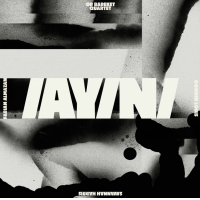
Bassist, composer, and bandleader Or Bareket announces his quartet's forthcoming album, /AYIN/, due on October 16, 2026 via Enja Records. Bareket is one of the leading figures of his generation on the New York and global scenes and has been praised by Jazz Critic Nate Chinen as having a "music of rhythmic sophistication and lyrical depth...brimming with springy energies and smart details." He is a first-call collaborator who has worked regularly with the likes of Joel Ross, Etienne Charles, Camila Meza, Ben Wendel, and Yosvany Terry, and has performed with Joshua Redman, Chris Potter, Marta Sanchéz, José James, Aaron Parks, Sullivan Fortner, and many more.
Bareket's two recent quartet albums SAHAR (2022) and YŌM (2024) are among the defining works of the New York sound in the 2020's. The quartet's forthcoming album, /AYIN/ follows in those footsteps while building on the language and aesthetics established with long-time collaborators Godwin Louis (sax) and Savannah Harris. The quartet is joined, for the first time, by Fabian Almazan on piano and electronics. /AYIN/ was produced by vibraphonist and composer Joel Ross.
“The word /AYIN/ has multiple meanings: it is a letter in both Abrahamic alphabets of Arabic and Hebrew, and it also translates to the words “Eye” and “fountain” (or, more accurately, “fountainhead”—the place where water emerges from the earth) in both languages,” explains Bareket. “The dashes are a phonetic spelling of a deep glottal stop: when pronounced properly from the base of the throat, /AYIN/ acts as both a vowel and a consonant.”
The music realized on the album is the result of an exploration of how musical elements get processed, metabolized, and transformed across different iterations of a piece. This work is inspired by Bareket's internal dialogues with deceased ancestors, yet-to-be-born progeny, and living peers, reflecting on what are the threads that connect us? Which elements remain intact across the generations and which morph into something else beyond recognition? And, most importantly, what is an artist's role within that lineage?
“All the songs start as a composition exercise,” says Bareket about his life-long composition practice. “I’m trying to use different tools and push myself towards different compositional pathways in order to integrate new ideas while trying to avoid certain devices that have started to feel like personal cliches. The music on /AYIN/ revolves around this idea of having a relationship with your ancestry, and with your history, that is dynamic and lateral. A relationship that isn't just based on this feeling of solemn, self serious reverence, but actually looks at the people that you come from as full and flawed humans while also contemplating how your own life reframes and recontextualizes these histories.”
Highlights of the album include:
Album opener “Manaquish,” where Bareket creates a solemn diatonic space which explores movement and color as his aim was to “see how much movement and interesting stuff I can get from just staying in the same key.” The track features spoken word poetry by Rasha Nahas.
The title “Four Drops,” comes from Bareket’s daily ritual of sharing coffee with his deceased ancestors. He explains, "Every morning I share four drops of my coffee with my deceased ancestors: my father, my two grandfathers, and my great uncle. I try to talk to them every morning.” The jagged bass figure heard at the top of the song symbolized each drop.
“Luz” takes inspiration from pianist Gerald Clayton’s composition “A Light.” Using a formal framework derived from Clayton’s composition, Barekett devised a form built around a stark harmonic contrast as well as a formal one—the hyper dense melodic section is set into relief by an open pedal where the musicians take turns improving.
“Ecdysis is the proper scientific name for the process by which a snake sheds its skin,” says Bareket. “This was one of the first songs that I wrote for this record, and I was still very attached to a certain sound or vibe of music from the previous record. I felt like I needed to shed it and I figured like rather than force it, I'll just write through the change.” On “Ecdysis,” Bareket contrasts the rhythmic labyrinth that frames the melody with a swing section which allows the band to stretch and explore a more open sonic field before collapsing back into the original frame. “There's a certain quality of claustrophobia, because it's a short form with a lot of hits. The tune has a feeling of actually trying to wiggle out of it.”
Album uploaded by Or Bareket