Home » Jazz Articles » Album Review » The Paris Jazz Big Band:
The Paris Jazz Big Band:

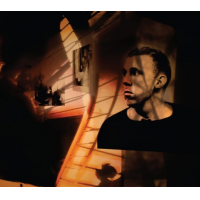
Bertrand quickly puts his audience in a cheerful frame of mind on À Suivre! with the bright samba “Oublie Ça l’Amie,” which precedes three more of his compositions including the album’s lone vocal, by guest artist Peter Kingsbery who croons (in English) his lyrics to “A Lifetime” (which seems almost that long before he’s done). Folmer wrote four of the last five numbers (“Ballade pour Mumu,” “Victor,” “Le Prisonnier,” “Tony Blues”), while Bertrand arranged Zool Fleischer’s charming “Deux Choses l’Une.” Bertrand (tenor) and pianist Eric Legnini are superb on Bertrand’s lyrical “Incertitude,” Folmer (muted), clarinetist Stéphane Chausse and guest conguero Orlando Poleo likewise on the rhythmically agile “Biguine.” Legnini is showcased again on “Deux Choses,” soprano saxophonist Sylvain Beuf on Folmer’s enchanting “Ballade.” Beuf switches to tenor to solo again, this time with Folmer, on the easygoing swinger, “Victor.” After introducing elements of the avant-garde into his eight-part mini-suite, “Le Prisonnier,” Folmer reverses course and charts a Basie-like groove on “Tony Blues” to underscore eloquent solos by trumpeter Tony Russo, alto saxophonist Hervé Meschinet and drummer André Ceccarelli (whose splendid work throughout mustn’t be overlooked). With the possible exception of Kingsbery’s largely tedious rock-style vocal (those who agree may use the “skip” button), A Suivre! is consistently impressive from end to end and easily recommended.
On Mediterraneo, the PJBB pays its respects to the historic wellspring and ethnic melting-pot that connects western Europe, northern Africa and the Middle East by presenting a series of evocative themes by Folmer, Bertrand and guest accordionist Richard Galliano whose “Heavy Tango,” sculpted in the epic image of maestro Astor Piazzolla, is enchanting, his sweeping “Escota” (with brief narrative by Ceccarelli) bright and (poly)rhythmic. “Tango” comes hard on the heels of the frisky opener, Folmer’s contrapuntally rich “Buleria” (a showcase for guest guitarist Louis Winsberg), and precedes two stylish works by the trumpeter, “Miró” and “Cataluña,” the first featuring flutist Meschinet, the second trombonist Denis Leloup. Bertrand’s “Valse,” on which his graceful tenor saxophone is spotlighted with bassist Stéphane Kerecki, is a Gallic-flavored dance that leads without pause to “Escola,” on which Galliano shines, and Folmer’s charming “Estérel” whose soloists are soprano Stéphane Guillaume and pianist Alfio Origlio. Bertrand wrote (and Winsberg arranged) “Haut de Cagnes,” a brief but melodious dwelling-place for Winsberg’s guitar and Origlio’s piano that gives way to Bertrand’s smart and sunny “Impatience” (solos by Origlio and trombonist Gueorgiu Kornazov). Folmer uses text by the Greek writer Nikos Aliagas for “Les Enfants d’Ulysse,” an homage to Aris Fakinos on which he plays piano and provides spoken commentary. Chausse’s full-blooded clarinet is front and center on Bertrand’s darkly shaded “Little Mama,” Meschinet’s sensuous alto saxophone on the equally wistful “For J.K” (on which Origlio’s piano is far too prominently recorded). The PJBB moves southward to Africa for the last two numbers, Folmer’s “Ifrikiya” (co-written with Ceccarelli) and “Derbouka,” the first buoyant and brassy, the second meteoric and muscular. As on À Suivre!” the charts are magnifique, the ensemble formidable, the soloists très enchanté. Another album we can endorse without pause.
Contact: www.cristalprod.com ; [email protected]
 FOLLOW Jack Bowers
and get notified whenever a new article published.
FOLLOW Jack Bowers
and get notified whenever a new article published.
A former newspaper writer / editor who has been writing about jazz for more than forty years.
Track Listing
Personnel
Album information
Title: | Year Released: 2002 | Record Label: Unknown label
About Paris Jazz Big Band
Tags
PREVIOUS / NEXT
Become a Sustaining Member

Since 1995, All About Jazz has championed jazz as an art form and supported the musicians who create it. Over three decades, it has grown into one of the world's leading jazz resources, serving hundreds of thousands of readers, musicians, presenters and industry professionals each month.
Help Build the Future of All About Jazz
Your support helps us continue building All About Jazz for the next generation—expanding our editorial coverage, preserving jazz history, developing new community features and creating better ways to discover the music and the people behind it.
Become a sustaining member for as little as $20 per year and you'll immediately enjoy an ad-free experience along with access to subscriber features and future articles for a full year.
Together, we're not simply sustaining All About Jazz—we're building its future. Thank you for being part of the journey.