Home » Jazz Articles » Album Review » Giuliano d'Angiolini: )))(((
Giuliano d'Angiolini: )))(((
D'Angiolini's next two albums were both released on the Another Timbre label. Released in 2016, four of the six tracks on the album Cantilena featured indeterminacy as pioneered by John Cage, so each performance of a piece would sound different. The Italian's use of indeterminacy dates as far back as 2003 and 2004 when he recorded the pieces "Ita Vita Zita Rita (1997)" and "Notturno in progressione (2004)" for Simmetrie Di Ritorno. Erstwhile's curator and producer Yuko Zama has said this of the Italian "I first came to know Giuliano d'Angiolini's work in 2018, shortly after starting my label Elsewhere, when I listened to his Cantilena (Another Timbre), a great album that is still one of my favorite releases on AnotherTimbre. Since then, I've been hoping to feature his work on Elsewhere one day...one of my favorite contemporary composers." Released in 2020, the other Another Timbre album, Antifona, had four tracks, recorded in four different years—one of which features d'Angiolini alone at a piano, another which is for flute and piano, one which features a sextet of Apartment House players and one performed by an orchestra. Although different, they each follow strict procedures of indeterminacy.
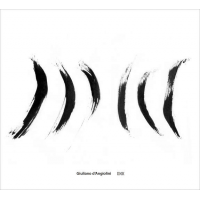
Compared to the music on Antifona, that on )))((( is significantly different. The three )))((( tracks are all versions for a specified number of particular instruments—")))((( 's version for four flutes and six clarinets," "7 flauti, for seven flutes" and "100100 for 35 flutes." However, the only musicians credited are flautist Manuel Zurria and clarinetist Paolo Ravaglia, so they must have been busy recording multiple parts, with d'Angiolini mixing them. Zurria had the idea for this project and worked to make it happen. The three pieces sound distinctly different as ")))(((" features flutes and clarinets, "7 flauti" features flutes, alto flutes and bass flutes, and "100100" flutes alone. ")))(((" is recommended to be played loud while the other two tracks follow strict procedures of indeterminacy. All three pieces are recognisable for occasional silences. Leaving aside the technical details, the end results of all three tracks make beautiful attention-grabbing listening which can be repeated without losing its irresistible appeal.
 FOLLOW John Eyles
and get notified whenever a new article published.
FOLLOW John Eyles
and get notified whenever a new article published.
Writing about music is like doing a dance about architecture...
Track Listing
)))((( (2023) version for four flutes and six clarinets; 7 flauti (2010) for seven flutes; 100100 (2023) for 36 flutes
Personnel
Manuel Zurria
flutePaolo Ravaglia
clarinet, bassAdditional Instrumentation
Manuel Zurria: alto flute , bass flute ; Paolo Ravaglia: clarinet
Album information
Title: )))((( | Year Released: 2024 | Record Label: Elsewhere
About Manuel Zurria
Tags
PREVIOUS / NEXT


Become a Sustaining Member

Since 1995, All About Jazz has championed jazz as an art form and supported the musicians who create it. Over three decades, it has grown into one of the world's leading jazz resources, serving hundreds of thousands of readers, musicians, presenters and industry professionals each month.
Help Build the Future of All About Jazz
Your support helps us continue building All About Jazz for the next generation—expanding our editorial coverage, preserving jazz history, developing new community features and creating better ways to discover the music and the people behind it.
Become a sustaining member for as little as $20 per year and you'll immediately enjoy an ad-free experience along with access to subscriber features and future articles for a full year.
Together, we're not simply sustaining All About Jazz—we're building its future. Thank you for being part of the journey.