Home » Jazz Articles » Album Review » Louis Shelton: Urban Culture
Louis Shelton: Urban Culture
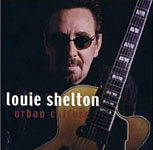
In 1996, Shelton delivered a fine solo release ( Guitar ) that was edgy enough to please fusion fans but catchy enough for contemporary jazz radio. Unfortunately, Urban Culture is too obviously targeted at the latter.
Not that Urban Culture is a terrible album. Shelton's fretwork rescues some of these songs from the snooze jazz abyss, and his playing throughout seems derivative of Wes Montgomery. But the mechanical drums and somnolent synthesizers conform to the smooth-jazz formula. And the boundless talents of Flecktone bass playerVictor Wooter go completely to waste in this restraining format.
Urban Culture is similar to some of Lee Ritenour's more formulaic pop-jazz . To me this stuff is the jazz equivalent of fast food, but if you're into unobtrusive background music with mildly funky beats and catchy guitar playing, this one should float your boat. The opener "Mandalay Sunset" sounds like a Steely Dan instrumental with a Kenny G-ish sax solo. The songs " "Boogaloo" and "Street Walkin'" are harmlessly funky, and "Inner City Blues" swings harder than most contemporary jazz.
Nevertheless, fans of Guitar will mostly be disappointed by Urban Culture. Louie Shelton is capable of much more substantial music, and diehard jazz fans may want to wait for his next release. He will reportedly dabble in straight-ahead jazz on that one.
 FOLLOW Ed Kopp
and get notified whenever a new article published.
FOLLOW Ed Kopp
and get notified whenever a new article published.
Ed is a Writer/Reporter for Jazziz Magazine and a Market Assessment Writer in Syracuse, NY
Track Listing
Mandalay Sunset; Uptown; No Secrets; Teardrops; Inner City Blues; Urban Culture; Boogaloo; Shirade; Street Walkin'; Magic Moments.
Personnel
Louie Shelton: guitar; Pat McDonald: drums; Victor Wooten: bass; Leroy Ayers:keyboards; Jim Horn: saxophones; Mark Douthit: trumpet; Steve Herrman: trumpet; Steve Patrick: horns; Charles Rose: trombone.
Album information
Title: Urban Culture | Year Released: 2000 | Record Label: Nuance Records
About Louis Shelton
Tags
PREVIOUS / NEXT


Become a Sustaining Member

Since 1995, All About Jazz has championed jazz as an art form and supported the musicians who create it. Over three decades, it has grown into one of the world's leading jazz resources, serving hundreds of thousands of readers, musicians, presenters and industry professionals each month.
Help Build the Future of All About Jazz
Your support helps us continue building All About Jazz for the next generation—expanding our editorial coverage, preserving jazz history, developing new community features and creating better ways to discover the music and the people behind it.
Become a sustaining member for as little as $20 per year and you'll immediately enjoy an ad-free experience along with access to subscriber features and future articles for a full year.
Together, we're not simply sustaining All About Jazz—we're building its future. Thank you for being part of the journey.