Home » Jazz Articles » Album Review » Julian Wittich 紀安: Tidelines
Julian Wittich 紀安: Tidelines
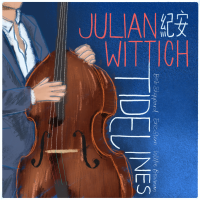
On Tidelines, Wittich keeps one foot firmly in the straight-ahead jazz idiom, but his incorporations of the Latin, Brazilian, and Taiwanese traditions enable what could have been a somewhat pedestrian exercise to sound to a fresh and vigorous outing. Indeed, Wittich's composing and arranging skills defy his youthful stature, displaying a wise-beyond-his-years understanding of the music.
Tidelines features pianist Eric Stern, saxophonist Bob Sheppard (on tenor and soprano saxophone) and Willie Bowman on most tracks, also joined on certain tracks by percussionist Rogerio Boccato and vocalist June Cavlan. The proficiency of Wittich's band may have actually resulted in one of the album's few flaws; the musicianship is so good that on several songs Wittich's bass actually gets overpowered. This results in Tidelines, in many spots, being more of a showcase of Wittich the composer/arranger, rather than Wittich the bassist. Presumably, this (extremely relative) weakness will get corrected with time; as Wittich matures as a musician, he should gain the confidence to feature his instrument more prominently. Furthermore, it should be noted that the three originals Wittich contributed to the set generally do a better job of showcasing Wittich's aptitude. In any event, this quibble certainly does not detract from the listenability of the album as a whole; as a work of jazz music, Tidelines is quite pleasurable.
The album opens with his "Matsu's Mood," one of the strongest, most balanced tracks on the record. A tribute to the Chinese sea goddess Matsu, as well as past victims of Taiwanese natural disasters, the song opens with a bluesy Wittich bass solo before Sheppard enters with a jaunty saxophone melody. The song is upbeat and fun, in spite of the solemn inspiration for the song.
"These Paths Channel Light" is another Wittich original, an interpretation of the Prélude from Maurice Ravel's "Le Tombeau de Couperin." The composition features a duet between Sheppard and Stern, and it is lovely, with both instruments conveying a melancholy atmosphere without sounding draggy or gloomy. Wittich's bass truly comes alive on his third original, "Sinking Fish, Falling Geese," a colorful marriage of Wittich's Asian heritage and New York's jazz traditions, with Sheppard and Stern adding swing.
"Canto De Ossanha," written by Baden Powell and Vinicius De Moraes, features virtuosic harmonies by Boccato and Stern, and is an enchanting exercise in the Brazilian jazz tradition. Cavlan delivers beautiful, heartbreaking vocals on Wittich's version of Victor Young and Sam M. Lewis's American Songbook standard, "Street of Dreams," accompanied by Stern's emotional piano. This cover is one of the sadder interpretations of the song, but Wittich handles the despair with grace and maturity, again displaying his precociousness in musical arrangements.
 FOLLOW Andrew Schinder
and get notified whenever a new article published.
FOLLOW Andrew Schinder
and get notified whenever a new article published.
Music writer and appreciator
Track Listing
Matsu's Mood; Bolivia; These Paths Channel Light; Canto de Ossanha; June 12; Sinking Fish, Falling Geese; Party in Olinda; Street of Dreams; Get Out of Town
Personnel
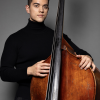
Julian Wittich 紀安
bass
Bob Sheppard
saxophone, tenor
Eric Stern
pianoWillie Bowman
drums
Rogerio Boccato
percussion
June Cavlan
vocalsAdditional Instrumentation
Bob Sheppard: soprano saxophone (track 7); Rogerio Boccato: percussion (tracks 4, 7), drums (track 7); June Cavlan: vocals (track 8)
Album information
Title: Tidelines | Year Released: 2026 | Record Label: Universal Music Taiwan
About Julian Wittich 紀安
Tags
PREVIOUS / NEXT


Become a Sustaining Member

Since 1995, All About Jazz has championed jazz as an art form and supported the musicians who create it. Over three decades, it has grown into one of the world's leading jazz resources, serving hundreds of thousands of readers, musicians, presenters and industry professionals each month.
Help Build the Future of All About Jazz
Your support helps us continue building All About Jazz for the next generation—expanding our editorial coverage, preserving jazz history, developing new community features and creating better ways to discover the music and the people behind it.
Become a sustaining member for as little as $20 per year and you'll immediately enjoy an ad-free experience along with access to subscriber features and future articles for a full year.
Together, we're not simply sustaining All About Jazz—we're building its future. Thank you for being part of the journey.