Home » Jazz Articles » Album Review » Avishai Darash: The Unplanned Child
Avishai Darash: The Unplanned Child
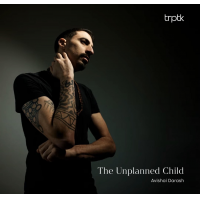
The album is a sequel to The Planned Child and was released in May 2026 on the Dutch label, TRPTK, which prides itself, and rightfully so, on its superb sound quality.
Contrary to The Planned Child, which was meticulously thought out from the onset, The Unplanned Child was born almost by accident, more from spontaneity than design. With barely any material on hand, it could have ended as a casual playing session at best, but instead it evolved into a surprisingly captivating album.
After years of performing in ensembles ranging from quartets and quintets to full orchestras, it is a pleasure to hear Darash return to the solo format. In doing so, he reconnects with the essence of his musical identity, leaving only himself and the piano to tell the story.
Composed of six tracks, The Unplanned Child opens with "Glass," a composition that immediately introduces the sense of wonder that permeates the album from beginning to end. From its opening notes, it invites the listener into a soundscape where unexpected moments unfold with remarkable beauty.
"Glass" is airy and luminous, yet imbued with a sense of fragility. Its delicate melody is expansive and reveals an emotional transparency that runs throughout the album. There is an almost childlike wonder to the piece, and with remarkable subtlety, Darash succeeds in creating a composition that feels both reflective and encompassing.
"Steppenwolf" is a piece that recalls an earlier Darash composition, "Lullaby for Bendavid." Both share the same melancholic tenderness and lyricism that have become hallmarks of the pianist's musical voice. The melody unfolds with quiet restraint, allowing emotion to emerge gradually rather than demanding attention. If the title evokes the image of the outsider or lone wanderer, the piece can also be interpreted as a reflection on vulnerability in an increasingly chaotic world. Beneath its gentle surface lies a subtle tension, as though sensitivity itself were an act of resistance. In that sense, "Steppenwolf" may be heard as the portrait of an intellectual rebel—someone striving to preserve depth, reflection, and authenticity amid the noise of modern life. It is a poignant reminder that such a path is rarely an easy one.
"Raindrops" follows as a light, refreshing interlude with a distinct classical undertone. Its flowing motion evokes the image of a gentle whirlwind, while the repetitive chord lends the piece both momentum and cohesion. The recurring harmony creates a hypnotic effect, while the graceful melodic lines flow with effortless elegance. There is a sense of spontaneity and clarity in the music, each phrase emerging naturally from the last.
Contrary to the album's more contemplative and introspective pieces, "Pathology" unfolds like a story being told. It is dynamic and restless, constantly shifting direction as though following the twists and turns of an unfolding narrative.
The tempo rarely stands still. It rises and falls with remarkable fluidity, accelerating into moments of excitement before gently retreating into calmer passages. The music twirls and dances across the keyboard, creating a sense of movement and anticipation. It is engaging from beginning to end, while a memorable refrain acts as a guiding anchor through the composition's many transformations.
"Pathology" showcases Darash's gift for musical storytelling. It is playful yet purposeful, unpredictable yet carefully structured—a piece that invites the listener to follow its winding path and discover something new at every turn.
"Morning" is a minimalist gem. Darash builds the piece around a simple refrain, revisiting it again and again while exploring the full range of the keyboard. Each variation feels fresh and purposeful, like sunlight gradually spreading across a quiet landscape. There is a remarkable purity to the composition. Delicate yet assured, it evokes the freshness and the gentle promise of a new day. Its simplicity is disarming, creating a sense of calm while quietly carrying an underlying strength and conviction.
The beauty of "Morning" lies not in its complexity but in its ability to open up a contemplative space. It is soothing without ever becoming monotonous, and like the best minimalist works, it reveals new subtleties with each listen, making it a piece that could effortlessly play on a loop and never lose its charm.
The album closes with "I Used to Be Like This," which is Darash's own tribute to Thelonious Monk. Unlike the rest of the album, it feels more fragmented, its melody evolving in unexpected ways. Yet therein lies its charm: a reminder that beauty often emerges when artists relinquish control of the outcome and simply allow themselves to play. The piece serves as a fitting conclusion to an album born from spontaneity, celebrating the creative possibilities that arise when intuition takes the lead.
Purged of all distractions, The Unplanned Child offers listeners an unfiltered and deeply personal portrait of Darash. This is pure, vulnerable, unadulterated Darash. There are no elaborate arrangements or ensemble textures to hide behind—only the intimate conversation between the artist and his instrument.
Avishai Darash's music breathes. Every nuance comes alive: every pause, every subtle shift in dynamics, every note resonates with intention and feeling. Few musicians possess the confidence to leave so much space in their music; fewer still can make that space speak so eloquently.
Perhaps the album serves as a gentle reminder that life, for all its unpredictability and chaos, remains beautiful in its imperfections. There is a sense of freedom running through these six compositions, an invitation to embrace uncertainty rather than resist it. In that regard, The Unplanned Child encourages an openness to new possibilities and a deeper appreciation for the unexpected moments that ultimately shape our journeys. What began as an unplanned endeavour has blossomed into one of Darash's most sincere artistic statements.
 FOLLOW Nathalie Tamara Freson
and get notified whenever a new article published.
FOLLOW Nathalie Tamara Freson
and get notified whenever a new article published.
I'm a writer from Tel Aviv.
Track Listing
Glass; Steppenwolf; Raindrops; Pathology; Morning; I Used To Be Like This.
Personnel

Avishai Darash
pianoAlbum information
Title: The Unplanned Child | Year Released: 2026 | Record Label: TRPTK
About Avishai Darash
Tags
PREVIOUS / NEXT


Become a Sustaining Member

Since 1995, All About Jazz has championed jazz as an art form and supported the musicians who create it. Over three decades, it has grown into one of the world's leading jazz resources, serving hundreds of thousands of readers, musicians, presenters and industry professionals each month.
Help Build the Future of All About Jazz
Your support helps us continue building All About Jazz for the next generation—expanding our editorial coverage, preserving jazz history, developing new community features and creating better ways to discover the music and the people behind it.
Become a sustaining member for as little as $20 per year and you'll immediately enjoy an ad-free experience along with access to subscriber features and future articles for a full year.
Together, we're not simply sustaining All About Jazz—we're building its future. Thank you for being part of the journey.