Home » Jazz Articles » Bailey's Bundles » The Led Zeppelin Papers: Presence, Deluxe Edition
The Led Zeppelin Papers: Presence, Deluxe Edition
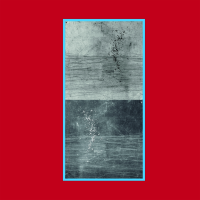
 By 1976, the monolithic machinery of Led Zeppelin was running entirely on fumes, adrenaline, and fractured bones. Recorded in a frantic eighteen-day blitz while Robert Plant was confined to a wheelchair,
 Presence is often chronicled as Jimmy Page's last stand of pure guitar orchestration. Yet, when considering the wider oeuvre of Led Zeppelin, two entirely separate bands fall out of the discussion, making Presence a fascinating historical collision point.
The first iteration was the British blues band establishing itself as something far greater across Led Zeppelin (Atlantic Records, 1969), Led Zeppelin II (Atlantic Records, 1969), Led Zeppelin III (Atlantic Records, 1970), and Led Zeppelin IV (Atlantic Records, 1971). Here, the band was a cannon shot, alerting the British Invasion that innovation had arrived and an entirely new sonic vocabulary was being established. They were plowing a creative field that set them far apart from contemporaries like the Beatles, the Rolling Stones, the Faces, the Kinks, and the Who—a foundational period that many purists still cite as their favorite version of the band.
The second version of the band emerged as Jimmy Page hit his stride on the transitional Houses of the Holy (Atlantic Records, 1973) and culminated in the album on which Led Zeppelin became LED ZEPPELIN: the towering Physical Graffiti (Swan Song, 1975). This mid-70s peak was ruled by the symphonic march of "Kashmir" as a signpost for where the band was heading, and by "In My Time of Dying" specifically showing how they were extending their concept of the blues into something epic and apocalyptic.
This second era roared directly into the recording and release of the live film and soundtrack The Song Remains the Same (Swan Song, 1976). However, the original LP release of that live album was heavily criticized for leaning too heavily on Houses of the Holy material at the expense of the first four canonical records. While this live imbalance was partially corrected on the expanded 2007 reissue—and arguably perfected on the archival release How the West Was Won (Atlantic Records, 2003) and the legendary 2006 bootleg Four Blocks in the Snow (The Chronicles of Led Zeppelin, 2008)—it was into a world still processing the live echo of The Song Remains the Same that Presence arrived.
But strip away the tracking marathons, live retrospectives, and tax-exile paranoia, and a deeper truth emerges about this studio effort: this record ceased being about a collaborative four-piece band and became a visceral showcase for a single, thunderous engine. Ultimately, Presence belongs to John Bonham.
To understand the claustrophobic fury of Presence, one must first look at what was left on the cutting room floor. Including "10 Ribs & All/Carrot Pod Pod" on the 2015 Deluxe Edition was a massive revelation for rock historians, precisely because it in no way fits the DNA of the final recording. Built around John Paul Jones's melancholic piano and Jimmy Page's aching, clean guitar lines, it features a tenderness entirely absent from the final tracklist. This track proves the band was still capable of the sonic light and shade that defined their earlier work. Leaving this track off the album was an intentional, editorial choice to preserve Presence as an exclusively aggressive, guitar-heavy statement; it was simply too beautiful for the bleak mood they were in.
Instead, the band poured their collective anxiety into "Achilles Last Stand," an evolutionary piece that showcased precisely where Led Zeppelin was heading at the time: running nowhere at light speed. Musically, it is a masterclass in progressive hard rock, powered by a galloping epic structure and an absolute army of overdubbed guitars, where Bonham reigned supreme and Page actually played second fiddle to him. Yet, despite its breakneck velocity, it is structurally circular and relentless. It doesn't build toward a triumphant resolution, choosing instead to run on an infinite, exhausting loop of pure panic. It is the definitive metaphor for this era of the group—the sound of a band frantically running on a treadmill at maximum velocity, burning a massive amount of energy just to stay alive in tax exile, trapped by their own immense, hard-to-steer, momentum.
Amidst this heavy, modern progressive tracking, "Candy Store Rock" serves as a lingering, vital bridge to the past, fueled by Robert Plant's eternal rockabilly anchors. The song is a direct homage to Plant's obsession with early American rock and roll, explicitly mirroring the frantic, stuttering energy of Eddie Cochran's "20 Flight Rock." Plant uses a heavy slapback echo on his vocals to mimic the classic Sun Records style. Even when the band was physically broken and musically drifting, Plant's safest harbor remained the basic, primal 1950s music that inspired him to sing in the first place.
Where Plant looked backward, the rhythm section pushed forward, using "Royal Orleans" and "For Your Life" to extend the complex, syncopated, off-beat language of Physical Graffiti. Both tracks double down on the jagged funk inflections the band had been experimenting with on the previous record. On "Royal Orleans," Bonham plays a complex, highly syncopated New Orleans shuffle that constantly displaces the accent, forcing Page's riff to lock into the spaces between the beats. "For Your Life" relies on a dragging, heavy, almost uncomfortable groove. The band drops accents intentionally, creating a stop-start momentum that mirrors the dark, drug-fueled lyrical themes of the song.
Finally, the band paid their mandatory dues to the blues, transforming the genre into something modern and monstrous. "Nobody's Fault But Mine" reinterprets Blind Willie Johnson's traditional acoustic blues into a heavily phased hard-rock leviathan, anchored by a blistering, distorted harmonica solo from Plant. Conversely, the exquisite "Tea For One" acts as the album's slow-burning centerpiece. While it serves as a spiritual successor to "Since I've Been Loving You," it is entirely stripped of that song's youthful, dramatic passion. Instead, it is replaced by a cold, isolated, and deeply exhausting sense of loneliness—a textbook example of using the blues format to express pure, adult despair.
This exhausting trajectory confirms that Presence ceased being a collaborative Led Zeppelin record and became an uncompromising monument to its rhythm engine. With Jones's keyboards silenced and Page locked in a frantic race against the clock, it is John Bonham who emerges as the truly illuminated star of the recording.
Without acoustic textures or orchestral synths to soften the edges, Bonham's sheer velocity, pristine drum tuning, and immaculate right foot carry the entire weight of a fractured band. He is the atomic clock keeping them aloft while they fly nowhere at light speed. On Presence, Bonham didn't just provide the beat—his thunderous, unyielding presence was the song, cementing this album as the ultimate, raw showcase of his peerless musical muscle.
Unwittingly, the frantic sprint of Presence marked the moment the band stepped off the edge of firm creative ground and entered a deep, uncharted period of uncertainty. The treadmill they were running on could only sustain them for so long. By the time they entered ABBA's Polar Studios to record In Through the Out Door (1979), the internal dynamics had fundamentally revised into something unrecognisable. Battling their respective addictions, Page and Bonham were frequently absent from the creative nucleus, forcing a lopsided shift that left John Paul Jones and Robert Plant to engineer a keyboard-heavy, pop-leaning record. It was an album that left fans divided, critics underwhelmed, and Page and Bonham explicitly plotting a return to a hard-driving rock album that would never come to fruition.
The tragic finality came swiftly on September 25, 1980, when John Bonham died in his sleep at 32. His passing was not just a loss of a band mate; it was the catastrophic, precipitating event to Led Zeppelin's sudden demise. Remaining true to the telepathic bond that forged Presence, the surviving members recognized that the dream was instantly over. Without their illuminated star to anchor the storm, Led Zeppelin could no longer exist, permanently exiling rock's greatest gods from Eden. But not before the band could codify its end on In Through the Out Door (Swan Song, 1979).
About Led Zeppelin

Tags
PREVIOUS / NEXT

Become a Sustaining Member

Since 1995, All About Jazz has championed jazz as an art form and supported the musicians who create it. Over three decades, it has grown into one of the world's leading jazz resources, serving hundreds of thousands of readers, musicians, presenters and industry professionals each month.
Help Build the Future of All About Jazz
Your support helps us continue building All About Jazz for the next generation—expanding our editorial coverage, preserving jazz history, developing new community features and creating better ways to discover the music and the people behind it.
Become a sustaining member for as little as $20 per year and you'll immediately enjoy an ad-free experience along with access to subscriber features and future articles for a full year.
Together, we're not simply sustaining All About Jazz—we're building its future. Thank you for being part of the journey.