Home » Jazz Articles » Album Review » Jangeun Bae: The End And Everything After
Jangeun Bae: The End And Everything After
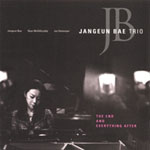
The observation that female musicians seem to be an optimistic group is not limited to Asian women, since Romona Borthwick and Tara Davidson exude it also. To be sure each puts her own spin on the optimistic, but, once hearing the connection, it is hard to deny it is there.
Bae is the most serious sounding of the group and yet has a romantic streak just beneath the surface. Serious here does not mean, of course, taking the music seriously, but rather the air of mystery combined with using small rather than large gestures as building blocks. The arrangements are full of drama and make full use of the trio's interplay to create emotional waves.
When Bae is improvising, she spins long lines made up of cells that are varied in many different ways both melodically and rhythmically, and then tied together to create a delicate yet strong net in which an attentive ear will bask. The effect of these piano lines is seductive and reinforced by bassist Ryan McGillicuddy and drummer Jon Deitemyer as they remain ever aware of Bae's twists and turns.
While every track has its own charms, the album's pacing creates its high point within the center third: "Donauquelle: The End and Everything After, Rachmaninov's "The Theme of Paganini" and "After He Has Gone."
"Donauquelle" is a German word meaning the "source of the Danube," and there is a monument built at the spot in southwest Germany. Juxtaposing this word with the phrase "the end and everything after," which has an oppositional meaning, is telling. Bae plays solo and this track is the most transparently romantic and emotional on the record.
"Paganini" begins with echoes of Ahmad Jamal, especially in Deitemyer's cymbal work, which brings to mind Vernel Fournier from Jamal's early trio, and has a dramatic slow section near the middle. Sadness quickly evolves to resoluteness as "After He Has Gone" progresses.
The most interesting thing about The End and Everything After is the ease with which all the deep structure and detail are wrapped within very accessible music. Even (or maybe especially) on the standard, "You Don't Know What Love Is," a casual listener will find much beauty and consonance, while a close listener will continue to uncover more and more as the layers are dissected and peeled away, which is a most pleasant undertaking.
 FOLLOW Budd Kopman
and get notified whenever a new article published.
FOLLOW Budd Kopman
and get notified whenever a new article published.
Jazz musicians are magicians and Jazz is the spell they cast
Track Listing
Liberation Amalgamation; Secret Place; My Mother's House; Donauquelle: The End and Everything After; The Theme of Paganini; After He Has Gone; I am a Poor Wayfaring Stranger and Korean Folk Song; Procrastination; You Don't Know What Love Is.
Personnel

Jangeun Bae: piano; Ryan McGillicuddy: bass; Jon Deitemyer: drums.
Album information
Title: The End And Everything After | Year Released: 2007 | Record Label: Kang Music
About Jangeun Bae
Tags
PREVIOUS / NEXT

Become a Sustaining Member

Since 1995, All About Jazz has championed jazz as an art form and supported the musicians who create it. Over three decades, it has grown into one of the world's leading jazz resources, serving hundreds of thousands of readers, musicians, presenters and industry professionals each month.
Help Build the Future of All About Jazz
Your support helps us continue building All About Jazz for the next generation—expanding our editorial coverage, preserving jazz history, developing new community features and creating better ways to discover the music and the people behind it.
Become a sustaining member for as little as $20 per year and you'll immediately enjoy an ad-free experience along with access to subscriber features and future articles for a full year.
Together, we're not simply sustaining All About Jazz—we're building its future. Thank you for being part of the journey.