Home » Search Center » Results: Don Byas
Results for "Don Byas"
Trumpets? Yes (And More)

by Marc Cohn
Lots of trumpeters this week (mostly 21st century music): Marcus Printup, Ron Horton, Roy Hargrove, Farnell Newton, along with Buck Clayton (and Buddy Tate) plus Emmett Berry (and Don Byas). Big band (a bit off center) from Marty Ehrlich and Django Bates and the Charlie Parker centennial (Koko, including the 'famous' breakdown) and our chronological Sonny ...
About Don Byas
Results for pages tagged "Don Byas"...
Don Byas

Born:
Don Byas was one of the most respected and recorded tenor players of the 1940’s. In that fruitful period he had few peers in the the area of prolific productivity. Byas was a masterful swing player with his own style, an advanced sense of harmony, and a confidence and adventurousness that found him hanging around the beboppers and asking to play. He held his own and did so while insistently remaining himself: he never picked up the rhythmic phrases, the lightning triplets, which are indigenous to bop. Yet Charlie Parker said of him that Byas was playing everything there was to play. Born in Muskogee, Oklahoma, in 1912, he played alto as a teenager, subbing in territorial bands like Bennie Moten's and Walter Page's Blue Devils
Houston Person: I'm Just a Lucky So and So

by Jack Bowers
Perhaps tenor saxophonist Houston Person is indeed A Lucky So and So, as he professes on his newly recorded album of that name, but it has taken far more than luck to sustain a long and successful career that spans more than half a century and numbers more than sixty albums as leader of his own ...
Take Five With Greg Burk

by AAJ Staff
About Greg Burk Following his acclaimed 2016 release Clean Spring on SteepleChase Records, American pianist and composer Greg Burk returns with solo piano As A River--his 12th and most lyrical album to date. The son of classical musicians, Burk spent his formative years on the Detroit jazz scene, followed by studies in ...
Dave Liebman: On the Corner Live!

by Victor L. Schermer
When the Miles Davis album On the Corner (Columbia, 1972) was released, Davis had already begun to engage in electronic instrumentation and jazz fusion with soon to be revered recordings: In A Silent Way (Columbia, 1969), Bitch's Brew (Columbia, 1970) and Jack Johnson (Columbia, 1971). On the Corner, however, was so experimental and funky that it ...
Big in Japan: A History of Jazz in the Land of the Rising Sun, Part 1

by Karl Ackermann
Part 1 | Part 2The music market in Japan--second only to the U.S. in terms of revenue--generates more than two-billion dollars in sales annually. Enthusiasts and collectors of jazz recordings had long ago discovered that Japan's robust music scene, and the now virtual accessibility to products have made the country a go-to resource for ...
Blue Highways and Sweet Music: The Territory Bands, Part II

by Karl Ackermann
Part 1 | Part 2 Part 1 of Blue Highways and Sweet Music: The Territory Bands looked at the roots, drivers and challenges of the travelling groups who brought jazz music to the non-urban areas of the Southern Plains, through one-night-stands, in often impromptu venues. A black phenomenon, often misappropriated by white musicians, promoters, ...
Six on Cellar Live
by C. Michael Bailey
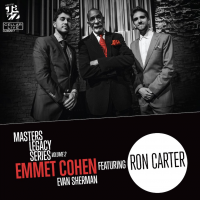
Cory Weeds' record label Cellar Live has become a welcome home to straight-ahead mainstream jazz in the same way that Arbors Records has been the beacon for traditional jazz and swing. Think Norman Granz's Pablo label tele-transported deep into the 21st Century. Six recent releases illuminate Cellar Live's importance to jazz as a whole and to ...
Culture Clubs: Part IV: When Jazz Met Europe

by Karl Ackermann
The Geography of Jazz--When Jazz Met Europe In 2004 Maureen Anderson, a researcher at Illinois State University contributed a dissertation to the journal, African American Review, titled The White Reception of Jazz in America. Ostensibly, her article deals with stories published in high profile periodicals and journals from 1917 and into the 1930s, written by white ...
Culture Clubs: A History of the U.S. Jazz Clubs, Part II: New York

by Karl Ackermann
Jazz didn't abandon Chicago but its further development only began to take on a distinct personality in the 1960s. By the late 1920s, the next phase of the jazz scene had shifted from Chicago to New York though, initially, there was no red carpet rolled out. As jazz bands made their way to New York they ...
Album Showcase





Trending
 Interview
Lou Marini: A Solo Career Starting At The Age Of 80
 History of Jazz
John Coltrane in Detroit: A Brief History
 Live Review
Detroit Jazz Festival 2026: A Gathering in a Great Jazz City
 Live Review
The Tension Is Where the Music Lives: Miles Davis at 100,...
 Radio & Podcasts
Sullivan Fortner, Jim Rotondi & Dena DeRose, Ardeshir,...
 Reanimating Conversations Past
Charlie Haden: Anatomy of a Jazz Classic
 Profile
The Discreet Charm of Tete Montoliu
Featured Video
VOTE!