Home » Jazz Articles » Album Review » Sophie Agnel: Song (Sophie Agnel)
Sophie Agnel: Song (Sophie Agnel)
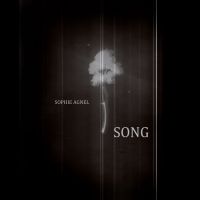
But that is not quite the entire story. What gives the session its distinctive flavor is the framing device: a taped voice—that of soprano Mauricette Millot singing a 1958 rendition of the traditional French carol "San Jousé m'a dit"—on the first and last of the seven cuts. More on that later, but suffice to say now that the shrewd programming signals another of Agnel's enduring virtues—a refined sense of structure, even in the most unbound settings.
Like many others, she treats the keyboard less as a fixed instrument than as a mutable noise generator—extending far beyond the static preparations prescribed by John Cage into terrain that feels tactile, volatile and alive. Yet what distinguishes her from the pack is not just technique, it is the precision with which she situates individual sounds and her exquisite calibration of contrasts. Just listen and luxuriate in the subtle and not-so-subtle degradations of the piano's signature. Her pieces unfold as tone poems—unconfined in form but rich in gesture and implication.
In further examples of canny organization, Agnel alternates density between numbers. The isolated droplets and distorted reverberations of "Song 2" hover in the domain of restraint, while the percussive, mechanical, relentless hammering of "Song 3" is all tension and torque. Even without recourse to the taped voices, she creates sonic layers, which evoke vivid and elemental metaphors: oceanic swells, distant storms, cicada drones, errant poltergeist tappings. At times these emerge as fragmented pulses, at others they engender an immersive, shimmering haze.
The use of Millot's voice adds an unexpected emotional dimension. On the opener, the carol enters as a spectral presence amid an ambient hiss, rattle and resounding key strokes. By the time it reappears in the final track, it is a much more corporeal entity, one which Agnel initially ignores with tentative strikes, but then incrementally aligns, sounding out the underlying harmonic progression, along with thuds, strums and echoes, all sustained even as the voice fades, until she finishes the cut with a gentle lilting coda of two repeated chords in quiet resolution.
It is a stunning denouement to an invigoratingly plotted album—less a climax than a reconciliation—on a record shaped with rare attentiveness. Song may be minimalist in players, but it is abundant in ideas, and its coherence lies in Agnel's ability to sculpt time and resonance with unwavering focus.
 FOLLOW John Sharpe
and get notified whenever a new article published.
FOLLOW John Sharpe
and get notified whenever a new article published.
John first fell under the spell of free jazz in the 1970s when he wistfully regarded the loft jazz scene from across the Atlantic
Track Listing
Song 1; Song 2; Song 3; Song 4; Song 5; Song 6; Song 7.
Personnel
Sophie Agnel
pianoAdditional Instrumentation
Sophie Agnel: piano.
Album information
Title: Song (Sophie Agnel) | Year Released: 2025 | Record Label: Relative Pitch Records
About Sophie Agnel
Tags
PREVIOUS / NEXT


Become a Sustaining Member

Since 1995, All About Jazz has championed jazz as an art form and supported the musicians who create it. Over three decades, it has grown into one of the world's leading jazz resources, serving hundreds of thousands of readers, musicians, presenters and industry professionals each month.
Help Build the Future of All About Jazz
Your support helps us continue building All About Jazz for the next generation—expanding our editorial coverage, preserving jazz history, developing new community features and creating better ways to discover the music and the people behind it.
Become a sustaining member for as little as $20 per year and you'll immediately enjoy an ad-free experience along with access to subscriber features and future articles for a full year.
Together, we're not simply sustaining All About Jazz—we're building its future. Thank you for being part of the journey.