Yelena Eckemoff Explores The Scandinavian Spirit In Rosendals Garden

Yelena Eckemoff is one of the most interesting composers currently, with a classical background, her universe is jazz, but always with a deep intellectual reasoning. It is impossible to ignore the romanticism and the poetry of Yelena Eckemoff's compositions, who, with her style, manages to renew herself with each album.
—Thierry De Clemensat
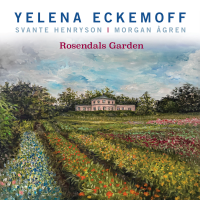
Available Worldwide March 27, 2026 on L&H Productions
Acclaimed pianist and composer Yelena Eckemoff, known for her richly imaginative jazz storytelling, unveils her newest release: Rosendals Garden – a trio tribute to Sweden’s natural beauty, history, and quiet magic. Set for worldwide release on March 27, 2026, this 11-track album (Yelena’s 23rd since 2010) adds to her impressive collection of compositions that integrate sophisticated jazz improvisation with a deeply personal narrative.
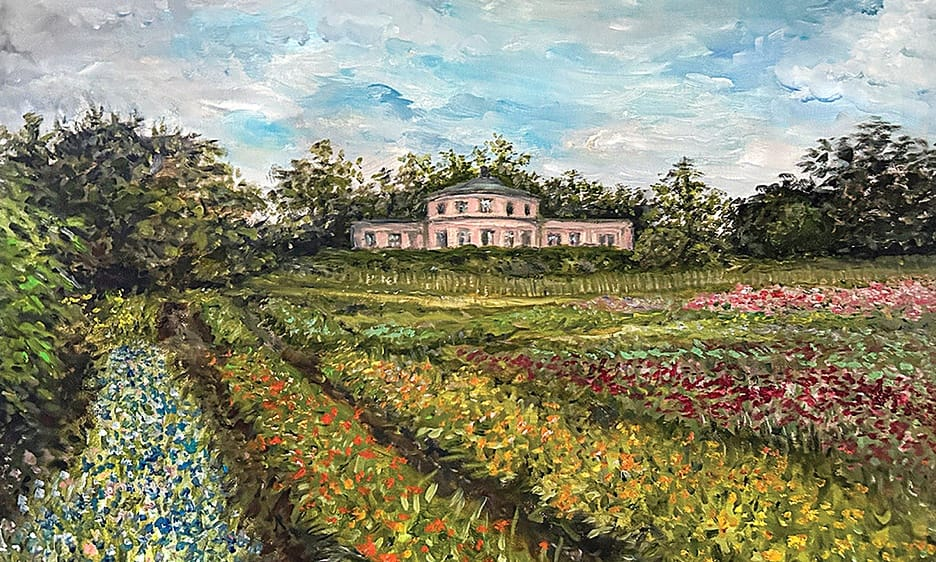
Inspired by her travels to Sweden and recorded with some of the country’s most prominent musicians, Rosendals Garden captures more than just picturesque scenery. It immerses listeners in the composer’s inner experiences, emotional impressions, and wide-eyed awe before the natural world, symbolized by the verdant sanctuary by the same name.
Each composition on Rosendals Garden functions as a standalone short story, yet together these tunes form a sweeping suite of emotional and cultural exploration. The album opens with “ABBA Museum,” an energetic, melody-driven homage to the Swedish supergroup ABBA, an early musical interest that persuaded Yelena to experiment beyond the superb classical training that informs each of her pieces. She follows with the title track, “Rosendals Garden,” an alternating reflective/stimulating meditation that recalls the peace and vibrancy of this floral oasis in Djurgården, Stockholm’s city center. Likewise, with its free, jagged turns, “Gamla Stan” captures the haunting echoes that reverberate amongst the ancient cobblestones of Stockholm’s Old City.
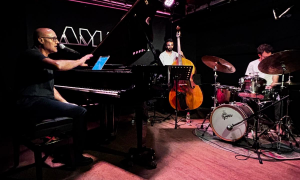
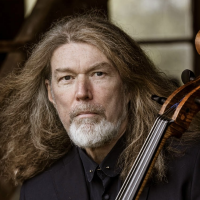
Even this early in the album, Yelena demonstrates a firm connection with her band: Her storytelling makes full use of the eclectic, seductive percussion of Morgan Ågren, the album’s drummer,and of the string-based contributions of Svante Henryson, who plays either acoustic or electric bass on all of the tracks and cello on nine out of eleven. To grasp how intimately coordinated this trio is, note how Svante’s lyrical cello accents “Country Orchard Café,” a tender, pastoral interlude inspired by a spontaneous detour into a charming village café, or how Morgan’s resolute pulse-keeping undergirds the ominous harmonies of “Öresund Bridge,” recalling a fog-drenched drive across one of Europe’s most iconic feats of engineering. These contrasting tracks also show off the breadth and depth of Yelena’s consummate skills as a composer and player.
But the proof is in the listening. In the playfulness of the retro vibe and the depth of the shifting moods of “Skansen Park,” an amusement where Swedish history comes alive. In the peacefulness and understated elegance of “Sunrise in Rimbo.” In the ghostly aura of “Ruins of Älvsborg,” its oscillating effects and marching rhythm alluding to the distant memory of this former military stronghold. In the tension between light and shadow in “Storanden Nature Reserve,” suggesting sun rays slicing through the dim of the wild woods. And in the raucous, whimsical excitement of “Strandvägen Pier,” Stockholm’s architecturally stunning waterfront.
Finally, the album closes with “Gripsholm Castle,” a luscious track replete with geometric lines festooned with florid melodies—a nod to the stateliness of this finely preserved medieval landmark and a reminder that, once upon a time, it was the most glorious sight in the land. This kind of restorative vision, so much in evidence throughout Rosendals Garden, goes a long way to set Yelena apart as a composer.
Notably, most of the Rosendals tracks feature extensive free group improvisations—though the listener would be hard-pressed to ascertain the passages where the trio is playing extemporaneously rather than by the score, so seamless is their musical communication. Here's the tipoff: You can hear the moments when the players lean into each other, focusing intently on their conversation. It happens about a third of the way into “Ruins of Älvsborg,” when the pauses lengthen and the repartee breathes a bit before the theme reenters. Or on the latter part of “ABBA Museum,” when each of the players is sharing their own internal ruminations inspired by the catchy hooks. Or just off the center of the title track, when, simultaneously, each player pulls out their personalized riffs, infusing the otherwise introspective tune with some surprising splashes of color.
Throughout this kaleidoscope of an album, Yelena remains masterfully in charge—always the consummate composer, instrumentalist, and bandleader. She continues to assert what a jazz album can be—not just a collection of ear-pleasing tunes, but a deeply felt experience transformed into pure sound.
Acclaimed pianist and composer Yelena Eckemoff, known for her richly imaginative jazz storytelling, unveils her newest release: Rosendals Garden – a trio tribute to Sweden’s natural beauty, history, and quiet magic. Set for worldwide release on March 27, 2026, this 11-track album (Yelena’s 23rd since 2010) adds to her impressive collection of compositions that integrate sophisticated jazz improvisation with a deeply personal narrative.
Inspired by her travels to Sweden and recorded with some of the country’s most prominent musicians, Rosendals Garden captures more than just picturesque scenery. It immerses listeners in the composer’s inner experiences, emotional impressions, and wide-eyed awe before the natural world, symbolized by the verdant sanctuary by the same name.
Each composition on Rosendals Garden functions as a standalone short story, yet together these tunes form a sweeping suite of emotional and cultural exploration. The album opens with “ABBA Museum,” an energetic, melody-driven homage to the Swedish supergroup ABBA, an early musical interest that persuaded Yelena to experiment beyond the superb classical training that informs each of her pieces. She follows with the title track, “Rosendals Garden,” an alternating reflective/stimulating meditation that recalls the peace and vibrancy of this floral oasis in Djurgården, Stockholm’s city center. Likewise, with its free, jagged turns, “Gamla Stan” captures the haunting echoes that reverberate amongst the ancient cobblestones of Stockholm’s Old City.
Even this early in the album, Yelena demonstrates a firm connection with her band: Her storytelling makes full use of the eclectic, seductive percussion of Morgan Ågren, the album’s drummer,and of the string-based contributions of Svante Henryson, who plays either acoustic or electric bass on all of the tracks and cello on nine out of eleven. To grasp how intimately coordinated this trio is, note how Svante’s lyrical cello accents “Country Orchard Café,” a tender, pastoral interlude inspired by a spontaneous detour into a charming village café, or how Morgan’s resolute pulse-keeping undergirds the ominous harmonies of “Öresund Bridge,” recalling a fog-drenched drive across one of Europe’s most iconic feats of engineering. These contrasting tracks also show off the breadth and depth of Yelena’s consummate skills as a composer and player.
But the proof is in the listening. In the playfulness of the retro vibe and the depth of the shifting moods of “Skansen Park,” an amusement where Swedish history comes alive. In the peacefulness and understated elegance of “Sunrise in Rimbo.” In the ghostly aura of “Ruins of Älvsborg,” its oscillating effects and marching rhythm alluding to the distant memory of this former military stronghold. In the tension between light and shadow in “Storanden Nature Reserve,” suggesting sun rays slicing through the dim of the wild woods. And in the raucous, whimsical excitement of “Strandvägen Pier,” Stockholm’s architecturally stunning waterfront.
Finally, the album closes with “Gripsholm Castle,” a luscious track replete with geometric lines festooned with florid melodies—a nod to the stateliness of this finely preserved medieval landmark and a reminder that, once upon a time, it was the most glorious sight in the land. This kind of restorative vision, so much in evidence throughout Rosendals Garden, goes a long way to set Yelena apart as a composer.
Notably, most of the Rosendals tracks feature extensive free group improvisations—though the listener would be hard-pressed to ascertain the passages where the trio is playing extemporaneously rather than by the score, so seamless is their musical communication. Here's the tipoff: You can hear the moments when the players lean into each other, focusing intently on their conversation. It happens about a third of the way into “Ruins of Älvsborg,” when the pauses lengthen and the repartee breathes a bit before the theme reenters. Or on the latter part of “ABBA Museum,” when each of the players is sharing their own internal ruminations inspired by the catchy hooks. Or just off the center of the title track, when, simultaneously, each player pulls out their personalized riffs, infusing the otherwise introspective tune with some surprising splashes of color.
Throughout this kaleidoscope of an album, Yelena remains masterfully in charge—always the consummate composer, instrumentalist, and bandleader. She continues to assert what a jazz album can be—not just a collection of ear-pleasing tunes, but a deeply felt experience transformed into pure sound.
About Yelena Eckemoff
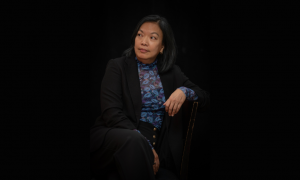
Yelena Eckemoff was born in Moscow, Russia, in the former Soviet Union. She showed early talent at the piano and began studying at an early age with her mother, Olga, a professional pianist and teacher. At seven, Yelena attended Gnessin State Musical College, a school for musically gifted children, and furthered her education in classical piano at Moscow State Conservatory. After graduating, she began concertizing, studying jazz, composing music for several instruments, playing in a jazz-rock band, and teaching piano. After moving to the U.S. in her late 20s, she began her recording career, working across several genres such as classical, vocal, folk, Christian, and jazz. Since then, Yelena has turned out almost two-dozen albums, received critical acclaim in the jazz press, and forged her own unique sound as a chamber-setting composer and improvisational pianist.Early Buzz (from the review of the title track)
“Never content with remaining in a single stylistic place long, Eckemoff moves into new sonic areas with Rosendals Garden. The title track is a nine-minute suite featuring a variety of mood vistas and enchantments. Like the gardens, the composition is overwhelming with colors, textures, and assorted tonal devices intended to capture the disparate, yet related, parts of the garden. The piece begins with an airy trilogy that dissolves into a rhythmically complex open section that features Henryson sparring with the composer while Ågren keeps things polite. If “Rosendals Garden” is any sign, the rest of the recording will be exceptional.” —C. Michael BaileyFor more information contact Jason Byrne, Red Cat Publicity.
Track Listing
CD 1: ABBA Museum; Rosendals Garden; Gamla Stan; Country Orchard Café; Öresund Bridge. CD 2: Skansen Park; Sunrise in Rimbo; Ruins of Älvsborg; Storanden Nature Reserve; Strandvägen Pier; Gripsholm Castle.
Personnel

Additional Instrumentation
Svante Henryson: cello, double bass, electric bass. Olavi Louhivuori: additional percussion (track 1).
Album information
Title: Rosendals Garden | Year Released: 2026 | Record Label: L & H Production
About Yelena Eckemoff
Tags
Recording
Jason Byrne, Red Cat Publicity
Jason Byrne - Red Cat Publicity
United States
New York
Yelena Eckemoff
Rosendals Garden