Home » Jazz Articles » Album Review » Noam Bierstone: Mountains Move Like Clouds
Noam Bierstone: Mountains Move Like Clouds

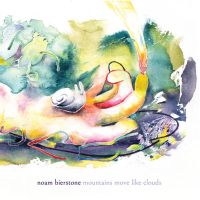
Straight from the album's opening sounds, it is clear that Bierstone is not constrained by conventional notions of percussion, but is prepared to deploy a much broader range of sounds. So, the first sound heard here could easily be a tin cup that is being dragged across a hard, rough surface. (The YouTube clip below of the Toraman piece gives some idea of Bierstone's set-up and confirms he was not dragging a tin cup...) Further unconventional sounds are added and combine together in a complex, multi-layered soundscape which makes fascinating listening, however often it is played. As Hartman's own notes say, "Message From The Lighthouse" features a percussionist that acts more as an exciter or prober of sounds rather than a typical instrumentalist. Although she was writing that about her own piece, Hartman's observation applies to the entire album. That is fully borne out by the Billone- composed track which follows and dominates the album; it is an ever-fluid and evolving collage of metallic sounds which give it an industrial feel and call to mind those masters of the genre, Test Department, but without their rhythmic drive—there only being one Bierstone.
Closing the album is Toraman's "Mountains Move Like Clouds" which is as different from the other two as they are from each other; in addition to a selection of percussion, it includes a range of other recorded sounds such as birdsong and white noise. It makes a fitting finale to the album, emphasising its diversity. As a first solo album, this is very commendable and promises much for future recordings from Bierstone.
Track Listing
Message From The Lighthouse; Mani.Δίκη; Mountains Move Like Clouds.
Personnel

Noam Bierstone
percussionAlbum information
Title: Mountains Move Like Clouds | Year Released: 2021 | Record Label: No Hay Discos
About Noam Bierstone
Tags
PREVIOUS / NEXT


Become a Sustaining Member

Since 1995, All About Jazz has championed jazz as an art form and supported the musicians who create it. Over three decades, it has grown into one of the world's leading jazz resources, serving hundreds of thousands of readers, musicians, presenters and industry professionals each month.
Help Build the Future of All About Jazz
Your support helps us continue building All About Jazz for the next generation—expanding our editorial coverage, preserving jazz history, developing new community features and creating better ways to discover the music and the people behind it.
Become a sustaining member for as little as $20 per year and you'll immediately enjoy an ad-free experience along with access to subscriber features and future articles for a full year.
Together, we're not simply sustaining All About Jazz—we're building its future. Thank you for being part of the journey.