Home » Jazz Articles » Rez Abbasi
Jazz Articles about Rez Abbasi
About Rez Abbasi

Rez Abbasi: A Throw Of Dice

by Friedrich Kunzmann
No matter what style of music Rez Abbasi tackles, he always makes it sound exciting, fresh and uniquely his own. The American guitarist and composer is known for his individual spin on jazz, which is as deeply rooted in western jazz doctrine as it is in traditions of his Pakistani heritage. Be it in the context of Indo-American fusion group Invocation—the outfit in which he plays alongside fellow like-minded contemporaries Rudresh Mahanthappa and Vijay Iyer—or in the wake of his ...
Continue Reading...Rez Abbasi: A Throw Of Dice
by Dan McClenaghan
Rez Abbasi has written a score for a 1929 movie—not an everyday jazz endeavor, but that is what the guitarist/composer does with his thirteenth recording. This after-the-fact soundtrack composing, though rare, is not unprecedented. In 2015 guitarist Aram Bajakian wrote and self produced a recording--an unofficial soundtrack--to the 1969 Soviet film The Color Of Pomegranates, an exploration of the life of the Armenian poet, Sayat-Nova. Abbasi, for his inspiration, writes a score for the vintage black and white ...
Continue Reading...Rez Abbasi: Unfiltered Universe

by Glenn Astarita
Guitarist Rez Abbasi, saxophonist Rudresh Mahanthappa and pianist Vijay Iyer share South Asian roots and have respectively incorporated many of the region's modalities and song-forms into the progressive jazz idiom at various points in time as solo artists or collaborators. Hence, the musicians coalesce for the third chapter of Abassi's Invocation group that merges South Asian music with ultra-modern jazz, often executed at warp speed amid supple time signatures and Herculean soloing activities. Largely built on tightly ...
Continue Reading...Rez Abbasi: Unfiltered Universe
by Roger Farbey
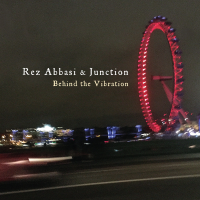
Rez Abbasi was born in Karachi, Pakistan but at the age of four his family moved to Los Angeles and at eleven he started learning guitar. Whilst there are undoubtedly some South Asian influences in his compositions, these are generally incidental or to be found “under the radar" as Abbasi himself puts it. In any case the music surely transcends geographical boundaries. With a brace of ten albums to his name, this is Abbasi's follow-up to 2016's Behind The Vibration ...
Continue Reading...Rez Abbasi & Junction: Behind the Vibration
by Mark F. Turner
With a unique touch and distinct abilities, guitarist Rez Abbasi has produced some captivating recordings that have combined modern jazz and Pakistani/American in forward thinking projects like 2015's Intents and Purposes (Enja) with his Acoustic Quartet which put a fresh spin on popular 1970s jazz-rock compositions. Here he presents Junction, a new electric project of original music delivered by like-minded musicians with a lively plugged-in aesthetic--throbbing keyboards and funky yet tricky rhythms that lean heavily toward his early rock influences. ...
Continue Reading...Album Review
Rez Abbasi Acoustic Quartet: Intents and Purposes

by Mario Calvitti
Rileggere alcuni dei classici del jazz-rock elettrico anni '70 secondo una prospettiva acustica potrebbe sembrare una scommessa decisamente azzardata per molti. Non per il chitarrista di origine pakistana Rez Abbasi, che alla guida di un quartetto acustico completato dal vibrafono di Bill Ware e dalla sezione ritmica formata dal contrabbassista Stephan Crump e dal batterista Eric McPherson ne propone la sua personale rilettura in questo Intents and Purposes, secondo disco del quartetto dopo Natural Selection del 2010. ...
Continue Reading...Rez Abbasi Trio: Continuous Beat
by John Kelman
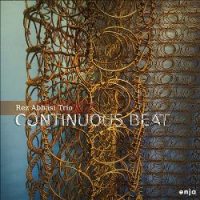
In the 17 years since Rez Abbasi released Third Ear (Cathexis, 1995), the Pakistan-born, American-raised guitarist hasn't just covered a lot of ground, he's gone from an undoubtedly talented but somewhat vanilla player to one with a distinct voice and approach. Starting with Snake Charmer (Earth Sounds, 2005) and Bazaar (Zoho, 2006), Abbasi began to find his voice, in a meeting place between the linear nature of his eastern roots and the broader harmonies of his western studies.For ...
Continue Reading...Album Showcase







Trending
 Inside AAJ
Giving Thanks & Spreading the Jazz Joy
 Preview
Record Store Day Black Friday 2026 Jazz Releases
 History of Jazz
A Chronological History of Jazz
 Opinion
Bomb Shelter Bebop
 Radio & Podcasts
Six new releases from Michael Pagan Big Band, Ron Vincent,...
 Interview
Avishai Cohen on "Jack Johnson"
 Interview
Yazz Ahmed on "Bitches Brew"
Featured Video
Premium
VOTE!