Home » Jazz Articles » Album Review » Omar Sosa: Afreecanos
Omar Sosa: Afreecanos
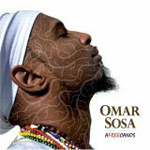
Several songs represent Sosa's roots in African music, forming the foundation of his musical concept. Fanta Cissoko's passionate vocals open "Nene La Kanou" on an intoxicating, personal note. Traditional African instruments blend with Cuban batï, as Sosa's improvisation displays his gift for melodic invention. The intriguing 'ngoni' accompanies Mola Sylla's vocals on "Mon Yalala," soon joined by kalimba and balafon. Sosa explores ideas around the vocal, eventually taking a spacious solo that blends beautifully into the song's texture. Each of the songs establish a solid foundation with African roots, grounding Sosa's music.
Some of the tracks utilize Sosa's core background in Afro-Cuban rhythms, building upon his roots while exploring new concepts. "D'Son" references the Cuban danzïn with a typical melody before falling into an open feeling. Leandro Saint-Hill's flute solo glides over a cha-cha-cha, while Sosa's statement reflects his visionary connection between Afro-Cuban tradition and his own expression. A rumba opens "Tumborum," leading into a blend of talking drums, funk ideas, jazz-informed melodies, and a cha-cha-cha. He builds an exciting solo that stimulates a conversation with drummer Julio Barreto. Sosa's overall concept finds strength in Afro-Cuban music, connecting history and development in his overall artistic vision.
Other compositions reach into the air, representing Sosa's experimentations with different musical elements. A horn section explodes into a fusion feel on "Ollï," Sosa's dedication to the Santeria orisha Ochun. Barreto's rhythmic invention and African percussion instruments support Sosa's introspective solo. A sorrowful voice questions the untimely death of Sosa's close friend Miguel Angï Diaz on the highly personal "Why Anga?" As the song progresses, a free improvisation steers the song's search for peace and resolution. Sosa's ability to blend cultural elements and improvisatory ideas into larger statements brings his concept into full bloom.
Sosa grows his music from its African roots into a culturally comprehensive concept on Afreecanos. His use of African, Caribbean and American musicians brings a wide range of cultural perspectives into the music. Sosa's compositions boldly combine these viewpoints into a sympathetic whole. He finds natural intersections between the musical traditions, refraining from forced references and relying upon each tradition to link back to African roots. In every way, Sosa tells a powerful story about the growth from roots to branches and the fluid connection that eternally exists between them.
 FOLLOW Chip Boaz
and get notified whenever Chip has a new article published.
FOLLOW Chip Boaz
and get notified whenever Chip has a new article published.
Chip's obsession with Latin Jazz fills his bass playing, teaching, blogging, and composing full of clave . . .
Track Listing
Prologo; Oll?; Nene La Kanou; Iyade; Babalada; Light In The Sky; D'Son; Tres Negros; Mon Yalala; Tumborum; Why Anga?.
Personnel

Omar Sosa
pianoOmar Sosa: piano, Fender Rhodes, vibraphone, marimba, percussion; Julio Barreto: drums; Childo Tomas: electric bass, kalimba; Stephane Belmondo: trumpet, flugelhorns; Leandro Saint-Hill: flute, alto saxophone; Lionel Belmondo: bamboo flute; Christophe "Disco" Minck: ngoni, kamalengoni, guitar sitar; Mola Sylla: vocals, bamboo flute, xalam, kongoman, calebasse; Baba Sissoko: ngoni, talking drum; Mamani Keita: vocals; Jorge Alabe: vocals, rum, rumpi, agogo; Graca Onasile: vocals; L?zaro Galarraga: vocals, bat?; Fanta Cissoko: vocals; Orestes Vilato: timbales; Bill Ortiz: trumpet; Michael Spiro: bat?; Ali Wague: tambin (flute); Ali Boulo Santo: kora; Mohamed Soulimane: violin; Ousseynou Piagne Epa: piano drum, zabar, dun dun.
Album information
Title: Afreecanos | Year Released: 2008 | Record Label: Ota Records
About Omar Sosa
The Latin Jazz Corner - Exploring the Crossroads Between Latin and Jazz
Tags
PREVIOUS / NEXT


Become a Sustaining Member

Since 1995, All About Jazz has championed jazz as an art form and supported the musicians who create it. Over three decades, it has grown into one of the world's leading jazz resources, serving hundreds of thousands of readers, musicians, presenters and industry professionals each month.
Help Build the Future of All About Jazz
Your support helps us continue building All About Jazz for the next generation—expanding our editorial coverage, preserving jazz history, developing new community features and creating better ways to discover the music and the people behind it.
Become a sustaining member for as little as $20 per year and you'll immediately enjoy an ad-free experience along with access to subscriber features and future articles for a full year.
Together, we're not simply sustaining All About Jazz—we're building its future. Thank you for being part of the journey.