Home » Jazz Articles » Book Review » Time Will Tell: Conversations With Paul Bley
Time Will Tell: Conversations With Paul Bley
But even more compelling than the anecdotes about jazz greats are Bley's outrageously freewheeling bits of advice to new jazz pianists.
 Time Will Tell: Conversations With Paul Bley
 Norman Meehan
Berkeley Hills Books
2003
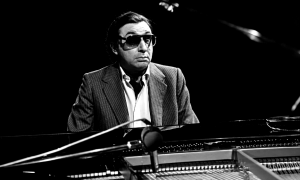
Paul Bley's jazz career has been marked by a burning creative restlessness continually leading to new musical discoveries. An earlier book about Bley, Stopping Time, was a collaborative effort matching Bley the grand raconteur with writer David Lee. Time Will Tell repeats that formula,this time with jazz academic and journalist Norman Meehan, although with strikingly more success. Bley's storytelling about himself and his inspired and inspiring fellow musicians (Ornette Coleman, Don Cherry, Sonny Rollins)is marked by both intelligent admiration and disarming candor. His love/hate relationship with pianist Bill Evans is wonderfully illuminated through Bley's detailed description of a recording session they shared creating George Russell's complex Jazz In The Space Age album. Quite unsparing of his ruthlessly competitive spirit toward other pianists, he admits thinking of Evans, "I'm going to knock this guy out, and he's going to sound bad," only finding that Evans in his own sweet way elevated his playing to the point where Bley met his match.
But even more compelling than the anecdotes about jazz greats are Bley's outrageously freewheeling bits of advice to new jazz pianists. There's exciting advice about synthesizing world musical styles with jazz: "If you can establish an aesthetic that is not metrical, and apply it to world music, which is metrical, you have opened up a whole range of possibilities." What young musician wouldn't benefit from Bley's perfectionism: "I love the expression, "Going past excellence. . ." And Bley, while not pretending to possess literary skills, —hence this book as a second installment of a jazz oral history —reveals a poet's awareness of the restraints of vocabulary: "There are not enough words to describe the details of what we do. A lot of people are called musicians, but there should be ten or twenty terms used to refer to people who make music. . .That's always the goal, to make interesting or beautiful sounds."
The jazz book as oral history, often stitched together by a professional writer, has had a checkered history. Yet Time Will Tell is an extraordinary feat: a "talked" document replete with lyrical turns of phrases, raucous humor, unorthodox advice for the novice or seasoned player, and instructive gossip about jazz greats. Bley the reconteur is just as seductive as Bley the pianist, a free spirit reinventing jazz with a romantically playful imagination always on the move.
About Paul Bley

Tags
PREVIOUS / NEXT


Become a Sustaining Member

Since 1995, All About Jazz has championed jazz as an art form and supported the musicians who create it. Over three decades, it has grown into one of the world's leading jazz resources, serving hundreds of thousands of readers, musicians, presenters and industry professionals each month.
Help Build the Future of All About Jazz
Your support helps us continue building All About Jazz for the next generation—expanding our editorial coverage, preserving jazz history, developing new community features and creating better ways to discover the music and the people behind it.
Become a sustaining member for as little as $20 per year and you'll immediately enjoy an ad-free experience along with access to subscriber features and future articles for a full year.
Together, we're not simply sustaining All About Jazz—we're building its future. Thank you for being part of the journey.