Home » Jazz News » Music Industry
Palestinian Nay Virtuoso, Faris Ishaq Weaves Cultural Memory With Contemporary Expression On Jasad جَسَد (arabic For “body”)
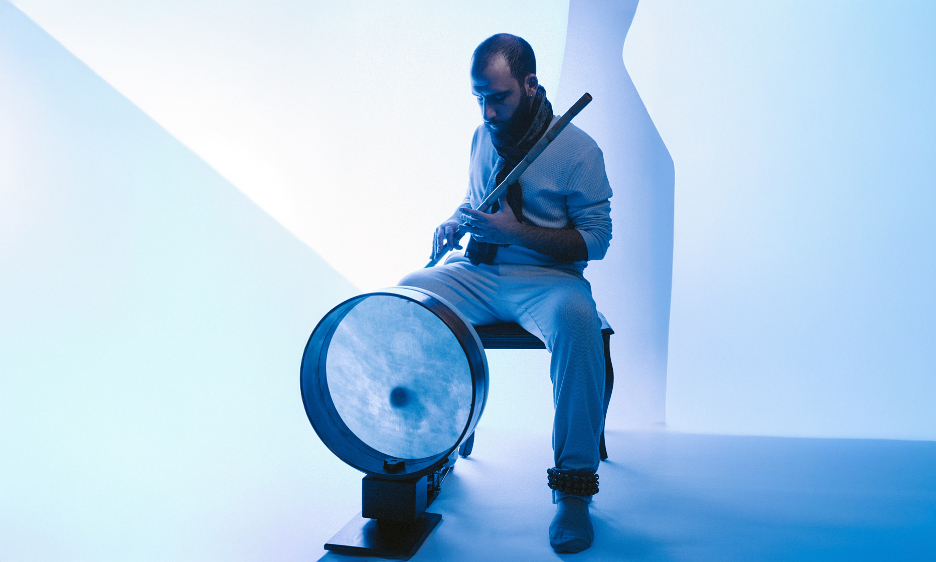
Courtesy Fadi Dahabreh
Bethlehem-born, Palestinian nay virtuoso and percussionist, Faris Ishaq is an extraordinary musician. As a frequent musical collaborator, releasing ‘Supplication’ with multi–Grammy Award-winning bassist John Patitucci and contributing as a recording artist to the BAFTA-nominated ‘Assassin’s Creed Mirage’ soundtrack, Faris is always seeking performance and recording avenues for the nay. And find them he did. The result is his new solo album, JASAD جَسَد (Arabic for “Body”), an album that takes the nay to wondrous new heights.
JASAD جَسَد (Arabic for “Body”) is a breath-driven manifesto reimagining the nay—a Middle Eastern flute with a 5,000-year history—as a contemporary, self-sustained acoustic landscape. The nay is a very important instrument in traditional Palestinian and broader Arabic classical music with its haunting expressions of sorrowful, deep emotion and joyful tones. Faris Ishaq explains his personal connection to the nay and what the music means for him,
“The sounds of the nay are for me, a place for healing and contemplation. On JASAD, I wanted to rekindle the quiet dialogue between breath, body, and our surrounding living landscape in an increasingly digitised world.”
Made of reed cane, with no mouthpiece or mechanics, the nay responds solely to the player’s breath and intention, a quality celebrated in JASAD as living physical technology. Faris describes his new journey in creating innovative performance techniques,
“ I created JASAD (Body) to amplify the sound of the nay in a digitally distorted world. With its raw technology I celebrate in this statemental album, where acoustic limitations are pushed to the edge using nothing but the nay and my leg-mounted frame drum. “
On JASAD’s opening track “Ard”, Faris delivers an evocative tribute to Arabic traditional songs traveling from Palestine to Jordan to Iraq. “Incense Trail”, “Carved”, “Sukon” and “Twilight” are the 4 original compositions on the album. “Incense Trail” was originally inspired by the expressive Arabic word “Qabas”—a small shed of light a creative spark that starts a flame within. Faris specifically developed a new technique for the instrument to capture this feeling of Qabas, creating a trail of acoustic effects that beautifully evolves into a deeply soulful, lyrical journey.
“Sukon” which means “stillness" in Arabic, is a raw, meditative track that serves as a breathing point for the album. Utilizing pure acoustic effects and earthy melodies, the piece creates a deeply grounding space for reflection.
Born and raised in Bethlehem, Faris Ishaq’s formative years were steeped in classical Arabic and traditional Levantine music. As a young professional Dabke dancer, Faris was absorbed in the the earthy footwork of Dabke and rhythmic improvisations of Tashbib. Tashbib is a traditional woodwind style of playing the nay, known for its melodic and percussive improvisation, originating from shepherds' playing. The music on JASAD fully captures the timeless beauty of the nay with masterfully crafted new techniques as Faris describes,
“I move between rich Arabic Maqam modalities and fierce, Coltrane-inspired arrangements, my aim was to ignite an evolving dialogue between Tashbib and global jazz sensibilities. By weaving cultural memory with contemporary expression, JASAD celebrates the nay as a living artefact— rooted, evolving, and present.”
Faris Ishaq produced, recorded, mastered and mixed JASAD live in his Bethlehem studio in the heart of the West Bank, with with no overdubs. Unlike its residents, music is able to travel across borders, without ID passes, permits or permission to move.
JASAD was made possible through funding from the Arab Fund for Arts & Culture and PRS Foundation Open Fund for Music Creators. JASAD released digitally, independently and internationally on July 17, 2026 followed by a tour including a WOMEX showcase and EFG London Jazz Festival concert.
JASAD جَسَد (Arabic for “Body”) is a breath-driven manifesto reimagining the nay—a Middle Eastern flute with a 5,000-year history—as a contemporary, self-sustained acoustic landscape. The nay is a very important instrument in traditional Palestinian and broader Arabic classical music with its haunting expressions of sorrowful, deep emotion and joyful tones. Faris Ishaq explains his personal connection to the nay and what the music means for him,
“The sounds of the nay are for me, a place for healing and contemplation. On JASAD, I wanted to rekindle the quiet dialogue between breath, body, and our surrounding living landscape in an increasingly digitised world.”
Made of reed cane, with no mouthpiece or mechanics, the nay responds solely to the player’s breath and intention, a quality celebrated in JASAD as living physical technology. Faris describes his new journey in creating innovative performance techniques,
“ I created JASAD (Body) to amplify the sound of the nay in a digitally distorted world. With its raw technology I celebrate in this statemental album, where acoustic limitations are pushed to the edge using nothing but the nay and my leg-mounted frame drum. “
On JASAD’s opening track “Ard”, Faris delivers an evocative tribute to Arabic traditional songs traveling from Palestine to Jordan to Iraq. “Incense Trail”, “Carved”, “Sukon” and “Twilight” are the 4 original compositions on the album. “Incense Trail” was originally inspired by the expressive Arabic word “Qabas”—a small shed of light a creative spark that starts a flame within. Faris specifically developed a new technique for the instrument to capture this feeling of Qabas, creating a trail of acoustic effects that beautifully evolves into a deeply soulful, lyrical journey.
“Sukon” which means “stillness" in Arabic, is a raw, meditative track that serves as a breathing point for the album. Utilizing pure acoustic effects and earthy melodies, the piece creates a deeply grounding space for reflection.
Born and raised in Bethlehem, Faris Ishaq’s formative years were steeped in classical Arabic and traditional Levantine music. As a young professional Dabke dancer, Faris was absorbed in the the earthy footwork of Dabke and rhythmic improvisations of Tashbib. Tashbib is a traditional woodwind style of playing the nay, known for its melodic and percussive improvisation, originating from shepherds' playing. The music on JASAD fully captures the timeless beauty of the nay with masterfully crafted new techniques as Faris describes,
“I move between rich Arabic Maqam modalities and fierce, Coltrane-inspired arrangements, my aim was to ignite an evolving dialogue between Tashbib and global jazz sensibilities. By weaving cultural memory with contemporary expression, JASAD celebrates the nay as a living artefact— rooted, evolving, and present.”
Faris Ishaq produced, recorded, mastered and mixed JASAD live in his Bethlehem studio in the heart of the West Bank, with with no overdubs. Unlike its residents, music is able to travel across borders, without ID passes, permits or permission to move.
JASAD was made possible through funding from the Arab Fund for Arts & Culture and PRS Foundation Open Fund for Music Creators. JASAD released digitally, independently and internationally on July 17, 2026 followed by a tour including a WOMEX showcase and EFG London Jazz Festival concert.
For more information contact Angie Lemon PR.