Jazz For Young People: “Who Is John Coltrane?” For Area School Groups At The Apollo Theatre On May 22

Interested school groups can contact Jazz at Lincoln Center at (212) 258-9979. Leadership support for Jazz for Young People is provided by The Louis Armstrong Educational Foundation and The Lindemann Education Fund.
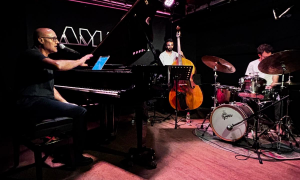
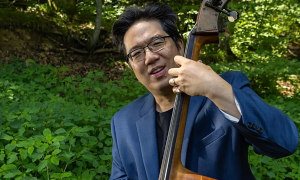
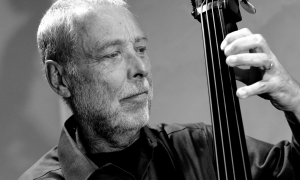
The personnel for the program will be: WYNTON MARSALIS, host and trumpet; TED NASH, alto saxophone; WALTER BLANDING, JR., tenor saxophone; VICTOR GOINES, tenor saxophone; BILL CHARLAP, piano; BEN WOLFE, bass; ALI JACKSON, drums.
John Coltrane was born September 23, 1926 in Hamlet, NC, grew up in High Point, NC, and moved to Philadelphia, PA in June 1943. He was inducted into the Navy in 1945, returning to civilian life in 1946. Coltrane worked a variety of jobs through the late 1940s until he joined Dizzy Gillespie’s big band in 1949. He also had early experience with Earl Bostic and Johnny Hodges. The main period of his career spans between 1955 and 1967, during which time he reshaped modern jazz and influenced generations of other musicians. Coltrane was freelancing in Philadelphia in the summer of 1955 when he received a call from trumpeter Miles Davis, who was forming a new quintet. Coltrane was with Davis from October 1955 through April 1957 (with a few absences). During the latter part of 1957, Coltrane worked with Thelonious Monk in his legendary residency at New York’s Five Spot club. He rejoined Miles in January 1958, staying until April 1960, during which time he participated in such important Davis sessions as Milestones and Kind Of Blue and recorded his own influential sessions, notably Giant Steps. Coltrane formed his seminal quartet (with McCoy Tyner, Elvin Jones, and Reggie Workman, later Jimmy Garrison) in 1960, which made his ‘hit’ recording My Favorite Things that year. By early 1961, Coltrane had signed with the new Impulse label; his first project was an orchestral recording, the Africa/Brass sessions. In 1961, Coltrane’s quartet was joined by multi-instrumentalist Eric Dolphy for a variety of recordings and appearances. In 1962, Coltrane’s output was more conservative, including a Ballads album and a joint session with Duke Ellington. The peak of Coltrane’s output is arguably the prodigious amount of music recorded between December 1964 (the classic suite A Love Supreme) and November of 1965 (Meditations). By January 1966, the classic John Coltrane Quartet had dissolved, and his last group, with wife Alice on piano and Rashied Ali on drums (plus bassist Jimmy Garrison) is well represented by recordings of concerts in Japan and a variety of small group sessions from early 1967. Coltrane died on July 17, 1967 at Huntington Hospital in Long Island, NY.
For more information contact All About Jazz.