Enoch Smith Jr. Returns With This Is What Love Does


This record is about my love for my family, but it's also about my love for the life this music has given me.
—Enoch Smith Jr.
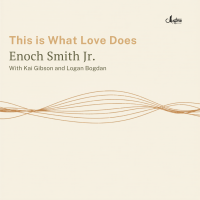
Following the return to recording marked by The Book of Enoch, Vol. 1, pianist and composer Enoch Smith Jr. takes the next step in his musical evolution with This Is What Love Does, a nine-song piano trio recording featuring seven original compositions. The new album turns Smith's attention inward, drawing on family, memory, love and responsibility while continuing to explore the blues, swing, gospel, groove and rhythmic influences that have shaped his work. The album will be released August 28 on Smith's Misfitme Music.
At the center of This Is What Love Does is a simple idea: love is not simply something we feel, but something we do. For Smith, that means showing up, taking responsibility, remembering, encouraging, grieving, celebrating and continuing to be present for the people who matter most. Nearly every composition on the album is connected to a specific person or experience, turning the record into a musical portrait of the relationships that have shaped his life.
The opening track, “Let's Make It Clear,” establishes Smith's musical foundation immediately. Built on a blues form with subtle alterations, the composition is designed to carry the feeling of the blues without relying on the conventional harmonic turns of a jazz blues. A tritone substitution creates an early departure from the expected IV chord before Smith returns to the language of traditional blues and uses ♭6 and ♭7 dominant chords to float the harmony back to the top of the form.
“L'Appel du Solitaire (Drew's Song)” is a portrait of Smith's daughter Drew. The French title, which translates as “Call of the Lonely,” reflects both her fascination with Paris and the loneliness of adolescence, changing friendships and family transitions. One summer, Drew went through the family home labeling household objects in French on strips of painter's tape as she taught herself the language. Her melody floats much like the free spirit Smith sees in his daughter before settling into a grounded answer at the end of the phrase—the call of the lonely finding its way toward grace.
“Little Z,” written for Smith's daughter Zuri, takes its rhythmic identity from the Bembé tradition. Zuri was Smith's first child to receive an intentionally African name, and the rhythm became one way of reflecting that connection. The composition opens deliberately in dissonance, setting the stage for the restless, sometimes destructive curiosity of a willful child who always wants to discover what comes next.
“Imani” draws from another daughter and her instinctive love of dancing to Soca, her mother's favorite music. With his wife's family roots in Panama and Montserrat, Smith uses the rhythmic energy of Soca to capture the uninhibited freedom he sees when Imani hears the music and simply begins to dance—without worrying who's watching.
The album's exploration of family extends backward as well. “A Time for Love” is dedicated to Smith's parents and the enduring bond they shared. His mother still speaks of how deeply she misses Smith's father, who died in 2020, and the composition reflects a love that persists beyond his death. “Pop's Lament,” meanwhile, is Smith's musical portrait of his father himself. Years of phone calls—often involving something broken in the house, the need for a new truck or some other complaint—are translated into a slow, bluesy feel that affectionately echoes his father's familiar doom-and-gloom lilt.
Smith widens the rhythmic palette on “When I Think of You,” which begins in the feel of Washington, D.C. go-go before shifting into a Latin jazz groove influenced by Chick Corea. Envisioned as full and free, the piece closes with a false ending inspired by bassist Avishai Cohen before unexpectedly falling back into the groove.
The album's other non-original, Elle King's “No One Can Save You,” approaches pain through the language of the piano itself. Smith opens with a dissonant right-hand chord struck repeatedly as the left hand moves through the harmony beneath it. The melody begins in one key, modulates on its second pass and eventually finds its way home—a shift subtle enough to escape a listener who isn't paying close attention.
The album closes with the Kern-Hammerstein standard “All the Things You Are,” dedicated to Smith's wife and the many roles she carries within their family. Throughout the performance, the trio plays with time and tempo, repeatedly settling into a pulse, unsettling it, then finding its way back again—much like a life.
Smith's longtime trio of bassist Kai Gibson and drummer Logan Bogdan provides the album's musical foundation. Gibson plays with a sense of commitment and joy, while Bogdan brings an instinctive ear and conversational approach to the drums. Both musicians have a way of hearing Smith's compositions that helps shape them beyond what is written on the page. In rehearsal, Smith begins by telling them the story behind each composition; from there, the three musicians work together to discover how that story should sound. By the time they enter the studio, the music has been shaped by the shared vocabulary the trio has developed through years of playing together.
“This record is about my love for my family, but it's also about my love for the life this music has given me,” Smith says. “It's about my parents, who carved out the grooves in the road so I could travel freely. It's about the great musicians who inspired me when I was a young Berklee student, and the teachers who poured into me and helped me become the musician I am. In a lot of ways, this record is about recognizing what has been given to me and understanding that love means carrying that forward.”
Smith's previous album, The Book of Enoch, Vol. 1, debuted at No. 28 on the JazzWeek chart, its peak position, and received airplay from more than 50 stations nationwide, including WRTI, WDCB, KUVO, KNKX, WDNA, KCSM and WGBH. The album's radio campaign expanded Smith's audience nationally and established a foundation for This Is What Love Does, which turns more deeply toward his original compositions and the personal experiences that have shaped his life and music.
At the center of This Is What Love Does is a simple idea: love is not simply something we feel, but something we do. For Smith, that means showing up, taking responsibility, remembering, encouraging, grieving, celebrating and continuing to be present for the people who matter most. Nearly every composition on the album is connected to a specific person or experience, turning the record into a musical portrait of the relationships that have shaped his life.
The opening track, “Let's Make It Clear,” establishes Smith's musical foundation immediately. Built on a blues form with subtle alterations, the composition is designed to carry the feeling of the blues without relying on the conventional harmonic turns of a jazz blues. A tritone substitution creates an early departure from the expected IV chord before Smith returns to the language of traditional blues and uses ♭6 and ♭7 dominant chords to float the harmony back to the top of the form.
“L'Appel du Solitaire (Drew's Song)” is a portrait of Smith's daughter Drew. The French title, which translates as “Call of the Lonely,” reflects both her fascination with Paris and the loneliness of adolescence, changing friendships and family transitions. One summer, Drew went through the family home labeling household objects in French on strips of painter's tape as she taught herself the language. Her melody floats much like the free spirit Smith sees in his daughter before settling into a grounded answer at the end of the phrase—the call of the lonely finding its way toward grace.
“Little Z,” written for Smith's daughter Zuri, takes its rhythmic identity from the Bembé tradition. Zuri was Smith's first child to receive an intentionally African name, and the rhythm became one way of reflecting that connection. The composition opens deliberately in dissonance, setting the stage for the restless, sometimes destructive curiosity of a willful child who always wants to discover what comes next.
“Imani” draws from another daughter and her instinctive love of dancing to Soca, her mother's favorite music. With his wife's family roots in Panama and Montserrat, Smith uses the rhythmic energy of Soca to capture the uninhibited freedom he sees when Imani hears the music and simply begins to dance—without worrying who's watching.
The album's exploration of family extends backward as well. “A Time for Love” is dedicated to Smith's parents and the enduring bond they shared. His mother still speaks of how deeply she misses Smith's father, who died in 2020, and the composition reflects a love that persists beyond his death. “Pop's Lament,” meanwhile, is Smith's musical portrait of his father himself. Years of phone calls—often involving something broken in the house, the need for a new truck or some other complaint—are translated into a slow, bluesy feel that affectionately echoes his father's familiar doom-and-gloom lilt.
Smith widens the rhythmic palette on “When I Think of You,” which begins in the feel of Washington, D.C. go-go before shifting into a Latin jazz groove influenced by Chick Corea. Envisioned as full and free, the piece closes with a false ending inspired by bassist Avishai Cohen before unexpectedly falling back into the groove.
The album's other non-original, Elle King's “No One Can Save You,” approaches pain through the language of the piano itself. Smith opens with a dissonant right-hand chord struck repeatedly as the left hand moves through the harmony beneath it. The melody begins in one key, modulates on its second pass and eventually finds its way home—a shift subtle enough to escape a listener who isn't paying close attention.
The album closes with the Kern-Hammerstein standard “All the Things You Are,” dedicated to Smith's wife and the many roles she carries within their family. Throughout the performance, the trio plays with time and tempo, repeatedly settling into a pulse, unsettling it, then finding its way back again—much like a life.
Smith's longtime trio of bassist Kai Gibson and drummer Logan Bogdan provides the album's musical foundation. Gibson plays with a sense of commitment and joy, while Bogdan brings an instinctive ear and conversational approach to the drums. Both musicians have a way of hearing Smith's compositions that helps shape them beyond what is written on the page. In rehearsal, Smith begins by telling them the story behind each composition; from there, the three musicians work together to discover how that story should sound. By the time they enter the studio, the music has been shaped by the shared vocabulary the trio has developed through years of playing together.
“This record is about my love for my family, but it's also about my love for the life this music has given me,” Smith says. “It's about my parents, who carved out the grooves in the road so I could travel freely. It's about the great musicians who inspired me when I was a young Berklee student, and the teachers who poured into me and helped me become the musician I am. In a lot of ways, this record is about recognizing what has been given to me and understanding that love means carrying that forward.”
Smith's previous album, The Book of Enoch, Vol. 1, debuted at No. 28 on the JazzWeek chart, its peak position, and received airplay from more than 50 stations nationwide, including WRTI, WDCB, KUVO, KNKX, WDNA, KCSM and WGBH. The album's radio campaign expanded Smith's audience nationally and established a foundation for This Is What Love Does, which turns more deeply toward his original compositions and the personal experiences that have shaped his life and music.
About Enoch Smith Jr.
Born and raised in Rochester, New York, Smith grew up immersed in church and gospel music, teaching himself piano as a teenager before attending Berklee College of Music. Since releasing his debut album, Church Boy, in 2010, he has continued to develop a musical language drawing from jazz, gospel, blues, groove and R&B. This Is What Love Does is his seventh album as a leader, following The Book of Enoch, Vol. 1 (2025), and continues a recording career that has also included collaborations with Mimi Jones, Camille Thurman and others. Smith is co-founder and Vice President of the Heart of Jazz Foundation, which supports mentorship and performance opportunities for emerging Philadelphia-area jazz musicians.Track Listing
Let’s Make It Clear; L'Appel Du Solitaire (Drew’s Song); Little Z; Imani; When I Think Of You; No One Can Save You; Pop’s Lament; A Time For Love; All The Things You Are.
Personnel


Album information
Title: This Is What Love Does | Year Released: 2026 | Record Label: Misfitme Music