Andy Nechaevsky Explores Memory And Acoustic Ecology In 'Red Box'
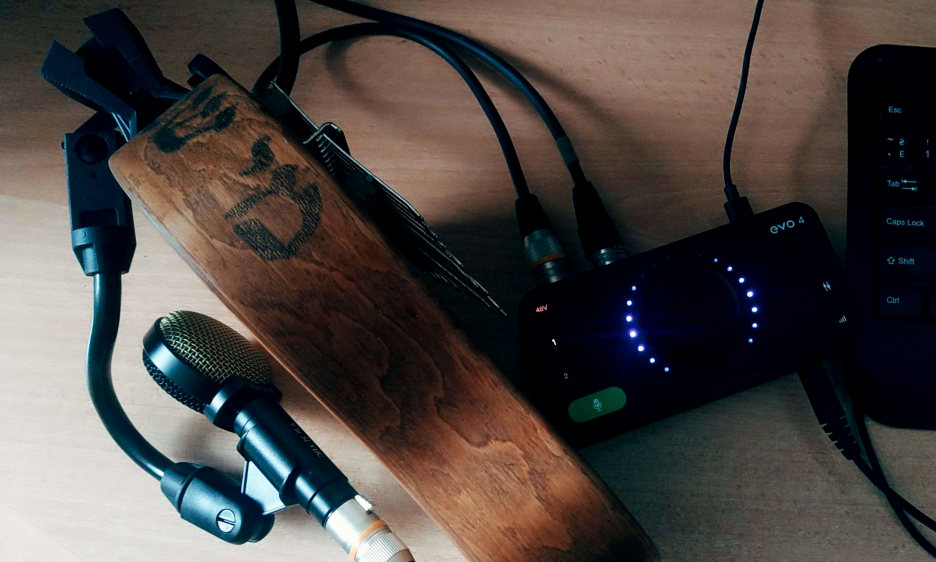
Courtesy Andy Nechaevsky
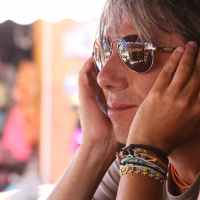
Kintsukuroi, where everything is considered evenly broken, and the gold is only sound
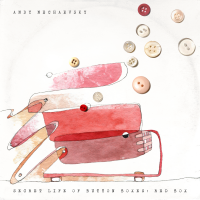
Ukrainian composer and multi-instrumentalist Andy Nechaevsky is set to release Secret Life of Button Boxes: Red Box (Rightbrain Records , 2026). This marks the first installment of an ambitious diptych, with the second part, Blue Box, scheduled for release on July 28.
“I hope that after the second part, I will finally calm down and get back to making ‘normal’ music—as far as that is possible for me,” Nechaevsky reflects. The project began years ago with a single composition rooted in Ashkenazi Jewish tradition—utilizing the Mi Shebeirach mode and harmonic minor—but the artist felt a sense of incompleteness. “I threw it into the 'Stuff' folder, intending to forget it like all the other unfinished freaks in that folder. But I didn't forget.”
To finish the story this melody wanted to tell, Nechaevsky had to live through countless nights, build several new 9-tone Moorish Phrygian kalimbas, and “violate" his cello by forcing it into a low, cracked tuning it was never meant to hold. “I had to recall, refuse to believe my own memories, invent plausible ones, and then lock myself in the studio in total darkness to try and see these memories through sound.”
The resulting album is about his first home—a place that was southern, northern, eastern, and western all at once. It is a world where people looked no bigger than a pinky finger from the window, and where one draped a perfumed handkerchief over a radio’s warm tubes so the music would smell nice. “My greatest joy was a big box of buttons,” Nechaevsky says. “An entire infinite universe of beads, keys, and silent vacuum tubes from my Granny’s radio. Sorted roughly by purpose, color, or by key. Our house was inside that box, too.”
The music balances strict 9-tone structural anchoring with the fluid, “accidental" freedom of improvisations from which new structural anchors emerge: sometimes dissonant and atonal, at other times simple, like a lullaby. The instrumentation features handcrafted resonator kalimbas, bells and a prepared “NotACello" that growls softly under the bow, occasionally engaging in a haunted duet with Nechaevsky’s own vocalizations, mumbling and mooing.
“I hope that after the second part, I will finally calm down and get back to making ‘normal’ music—as far as that is possible for me,” Nechaevsky reflects. The project began years ago with a single composition rooted in Ashkenazi Jewish tradition—utilizing the Mi Shebeirach mode and harmonic minor—but the artist felt a sense of incompleteness. “I threw it into the 'Stuff' folder, intending to forget it like all the other unfinished freaks in that folder. But I didn't forget.”
To finish the story this melody wanted to tell, Nechaevsky had to live through countless nights, build several new 9-tone Moorish Phrygian kalimbas, and “violate" his cello by forcing it into a low, cracked tuning it was never meant to hold. “I had to recall, refuse to believe my own memories, invent plausible ones, and then lock myself in the studio in total darkness to try and see these memories through sound.”
The resulting album is about his first home—a place that was southern, northern, eastern, and western all at once. It is a world where people looked no bigger than a pinky finger from the window, and where one draped a perfumed handkerchief over a radio’s warm tubes so the music would smell nice. “My greatest joy was a big box of buttons,” Nechaevsky says. “An entire infinite universe of beads, keys, and silent vacuum tubes from my Granny’s radio. Sorted roughly by purpose, color, or by key. Our house was inside that box, too.”
Technical Perspective
Critically described by TuniteMusic as a masterpiece of “natural randomness," the album operates as a living acoustic ecology—a style Nechaevsky calls “composed bio-music" (a form of composition where music mimics a biological organism: structured enough to be intentional, yet organic enough to evolve with its own unpredictable randomness).The music balances strict 9-tone structural anchoring with the fluid, “accidental" freedom of improvisations from which new structural anchors emerge: sometimes dissonant and atonal, at other times simple, like a lullaby. The instrumentation features handcrafted resonator kalimbas, bells and a prepared “NotACello" that growls softly under the bow, occasionally engaging in a haunted duet with Nechaevsky’s own vocalizations, mumbling and mooing.
About Andy Nechaevsky
Andy Nechaevsky is a Lviv-based multi-instrumentalist and luthier who operates on the fringes of contemporary jazz and avant-folk, creating music mostly on handcrafted instruments.Listen
Track Listing
Ok at ease; Weathered Vane; Odds Ends Waltz; Empty Box Around; Rapt By Fairy Tale; Even the dolls are older than me; Creepy China Owl Lamp; Rustling Sundays; Leave The Nightlight On, Please; Senescent Unterweissbach Shepherdess; Paper Angels
Personnel
Andy Nechaevsky
multi-instrumentalistAlbum information
Title: Secret Life of Button Boxes: Red Box | Year Released: 2026 | Record Label: Rightbrain Records