Home » Jazz Articles » Miles Davis
Jazz Articles about Miles Davis
About Miles Davis
Hugues Kieffer: Marseille, Five Continents, One Jazz
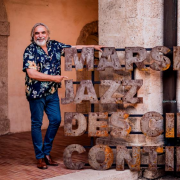
by Silvia Papa
In its 26 years of existence, the festival Marseille Jazz Five Continents has evolved from an event aimed primarily at local audiences--offering Marseille residents the chance to hear some of the biggest names in jazz live--to a boundary-crossing festival that embraces the full richness and diversity of contemporary jazz. Today, it offers an immersive experience spanning classical, free, soul, African, Sub-Saharan, Caribbean, Latin, electronic, and other emerging musical languages. Its evolution mirrors that of the city that hosts it: multicultural, ...
Continue ReadingHugues Kieffer: Tutto il mondo a Marsiglia

by Silvia Papa
In 26 anni di attività, il festival Marseille Jazz des Cinq Continents si è trasformato da rassegna rivolta soprattutto a un pubblico locale, cui offriva l'opportunità di ascoltare dal vivo grandi nomi del jazz, a festival trasversale che esplora tutta la ricchezza e la diversità del jazz contemporaneo, in un'esperienza immersiva che spazia fra influenze classiche, free, soul, africane, subsahariane, caraibiche, latine, elettroniche e nuovi linguaggi sonori. Questa evoluzione rispecchia la città che lo ospita: meticcia, contaminata, aperta, inclusiva.
Continue ReadingMiles Davis: Miles '56: The Prestige Recordings
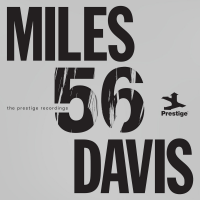
by Mark Corroto
The ancient Greek philosopher Heraclitus never met Miles Davis, but his famous observation, “No man ever steps in the same river twice, for it's not the same river and he's not the same man," seems tailor-made for the trumpeter. Few artists transformed themselves as completely or as often as Davis. Listeners encountering his music today can struggle to reconcile the cool, lyrical trumpeter of the bebop era with the architect of jazz-rock fusion, the creator of On the Corner (Columbia, ...
Continue ReadingMiles Davis: Miles '56: The Prestige Recordings
by Mike Jurkovic
Let us imagine for the moment that it is a day or two after the Big Spirit Beyond Wonder has separated the wheat from the chafe. The terrible, unwanted wars have ceased. Global climate change is no longer a threat. Autocracy is in the dustbin of history where it rightfully belongs. Illness has passed. The world, as it was in the beginning, is free of the subterfuge and manipulations of humankind. Now the Big Spirit turns their attention ...
Continue ReadingMiles the Composer in the '50s: Jazz Musicians Play Miles, Part 2

by Larry Slater
Miles Davis is justly celebrated for his harmonic sense, his tone, his style, and his ever-changing musical career. However, we rarely hear about Miles the composer. Miles certainly wasn't a prolific composer, and he wrote even less in his later years. He often surrounded himself with gifted writers including Gil Evans,, Bill Evans, Wayne Shorter and Marcus Miller. Nonetheless, many of his compositions have stood the test of time to become jazz standards.. Many of these ...
Continue ReadingMiles the Composer: Jazz Musicians play Miles. Part 1: The early tunes
by Larry Slater
Miles Davis is justly celebrated for his harmonic sense, his tone, his style, and his ever-changing musical career, but we rarely hear about Miles the composer. In this hour, you'll hear jazz artists covering Miles' early tunes, including his bebop compositions and those from the early '50s.Miles certainly wasn't a prolific composer, but many of his tunes have stood the test of time to become jazz standards.His best-known bebop tunes include “Donna Lee,""Half Nelson" and “Little ...
Continue ReadingCelebrating Miles Davis's 100th Birthday! Music Representing Three Time Periods (1950-1964, 1965-1968, and 1969-1982)
by David W. Daniels
This week's show plays the music of Miles Davis during three distinct time periods and jazz subgenres. First, we feature his bop, hard bop, and cool jazz contributions between 1950 and 1964. Next, music from his modal period and with the 2nd Great Quintet is played, ranging from 1965 through 1968. Finally, Miles's fusion compositions between 1969 and 1982 are featured. In addition to Miles-led bands, interpretations of his classics are done by artists including Wes Montgomery, Allan Harris, Joe ...
Continue ReadingAlbum Showcase




Trending
 Interview
Lou Marini: A Solo Career Starting At The Age Of 80
 Jazz Raconteurs
Julius Hemphill: Marty Ehrlich and Tim Berne Remember a...
 History of Jazz
John Coltrane in Detroit: A Brief History
 In Tribute To...
John Coltrane At 100: A Global Perspective
 Live Review
Detroit Jazz Festival 2026: A Gathering in a Great Jazz City
 Interview
Jasur Khalilov: From Falak to Fusion
 Profile
Sequoia Snyder: Growing in the Light of the Masters
Premium
VOTE!