"Budapest by Blimp" by Thomas Dolby
 Keaton Royer
Duration: 4:05
550 views
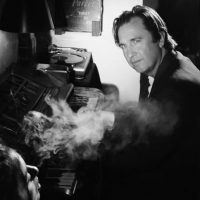
This is a recording of my former student, pianist Keaton Royer, and his trio performing “Budapest by Blimp,” a deep cut by synth-pop icon Thomas Dolby. I gave them nothing but a simple leadsheet and asked them to create their own arrangement with no further instructions. No one knew whose tune it was.
Since I first heard Dolby’s music in 1982—before “She Blinded Me With Science” made him famous—I kept noticing something unusual in the background: sophisticated jazz harmonies and melodic devices woven so naturally into synth-pop that most listeners never noticed them. Over the years I kept returning to his catalogue, hearing the same subtle jazz DNA again and again. When “Budapest by Blimp” came out in 1988, it stopped me in my tracks. The harmonies were so rich, nuanced, and perfectly paced that I knew this was no casual “dabbling.” No one lands on chords like these by happenstance or sheer luck.
That realization eventually led to this article. After analyzing the jazz elements in three very different Dolby tracks, I wanted to take the idea one step further and bring the music full circle. So I made a leadsheet of “Budapest by Blimp” and wanted to send it to two of my former students—one in the U.S. and one in Europe—asking each trio to treat the tune as if it had always been a jazz standard. Budgets being what they are, we only have the American version by Keaton Royer and his trio for now, but I hope the European one will follow someday.
For me, this kind of inquiry is very satisfying. It is akin to the concept of evolution: the Jazz bird, let’s call it Aves Bebopius Americanus, migrates into new territory and, after several generations, no longer looks quite the same. Yet you can still see the family resemblance. In Dolby’s music the original Aves Bebopius Americanus has evolved into something new—Aves Dolbyus Synthius—era-defining pop that is quietly, beautifully tinged with jazz. That sweet spot where genres surreptitiously borrow from and enrich each other is exactly where I love to work, and I hope this little experiment helps bring those hidden connections to a wider audience in a way that feels both understandable and compelling.
Posted by Kurt Ellenberger.