Home » Jazz Articles » Stefon Harris
Jazz Articles about Stefon Harris

Stefon Harris & Blackout: Urbanus

by John Kelman
Since emerging in the late 1990s as the vibraphonist of his generation, Stefon Harris has been unfairly tagged as an overly cerebral player for Blue Note projects like the elaborate Grand Unification Theory (2003) and African Tarantella: Dances for Duke (2006). Evolution (Blue Note, 2004), Harris' first with his groove-happy Blackout band, went a long way to demonstrating a capacity for making accessible music with plenty going on under the hood. Following a few years of touring--including outstanding 2006 performances ...
Continue ReadingStefon Harris: African Tarantella: Dances with Duke

by John Kelman
Given the number of tribute albums coming out these days, it's refreshing to see an artist reference lesser-known works and take a road less-travelled in terms of approach. Vibraphonist Stefon Harris' African Tarantella enlists a streamlined instrumental configuration to rework excerpts from Duke Ellington's 1970 “The New Orleans Suite" and 1958 “The Queen's Suite," along with parts of his own commissioned “The Garner Meditations." The result is less cerebral than The Grand Unification Theory (Blue Note, 2003), but no less ...
Continue ReadingStefon Harris: African Tarantella: Dances with Duke
by Troy Collins
With five previous albums on Blue Note, vibraphonist Stefon Harris has proven to be one of the label's most adventurous new artists. More conceptually expansive than many of his generation, Harris has long been interested in extended forms and suite-like structures. His 2003 album, The Grand Unification Theory (Blue Note), dealt with the journey from birth to death as its subject matter. In light of such lofty ambition, reinterpreting selections from Duke Ellington's suites seems natural.
Harris demonstrates ...
Continue ReadingStefon Harris: African Tarantella: Dances with Duke
by Jim Santella
With three selections from Duke Ellington's “New Orleans Suite, two from his “Queen's Suite and three more from Stefan Harris' own “Gardner Meditations, African Tarantella conveys a sincere appreciation for lyrical beauty. Like the original purpose for a tarantella, the music transfixes you with its magic spell. Much of Ellington's music had that quality, and it's not surprising that Harris would dedicate his latest album to such a well-known body of work.
With a nonet that rides high ...
Continue ReadingStefon Harris & Blackout: Evolution
by Eric J. Iannelli
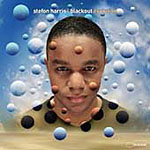
It takes no time at all to get into Evolution , Stefon Harris’ fifth album for Blue Note, the young vibraphonist’s fourth as leader and his first with his new band. Immediately the music breaks into a sprint. And its appeal is equally as instantaneous. There is no acclimation period, no finger-drumming developmental warm-up, no amusing 30-second intro track. So it’s funny that this disc should bear the title Evolution , by all Darwinian or Lamarckian accounts an excruciatingly slow ...
Continue ReadingStefon Harris & Blackout: Evolution
by John Kelman
Vibraphonist Stefon Harris first came to attention on releases by trombonist Steve Turre and, most notably, with eight-string guitarist Charlie Hunter's groove-happy Pound for Pound band. Since that time, with an approach that could perhaps be accused of sometimes being a little too cerebral and not visceral enough, Harris has released three fine recordings as a leader. Putting aside loftier ideals and bridging the divide between the intellectual approach of last year's ambitious Grand Unification Theory and his more groove-centric ...
Continue ReadingStefon Harris: The Grand Unification Theory
by Jim Santella
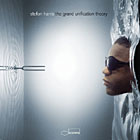
Writing from a physical as well as philosophical viewpoint, Stefon Harris has developed his suite for 12 jazz artists into an exciting adventure about life and death, and what goes on in between. It's all there: the big bang theory, the pleasures of life, the inevitable tragedies, mourning, afterlife, rebirth, and tribute. The leader's vibraphone and marimba provide searing timbres, while his ensemble colors gently. The suite builds and ebbs in order to depict changes in mood. Harris' cohesive ensemble ...
Continue Reading