Home » Jazz Musicians » Orquesta Akokán
Orquesta Akokán
Orquesta Akokán derives its name from a Yoruba word meaning "from the heart." Across a decade of acclaimed, Havana-recorded releases led by Chulo Records producer Jacob Plasse and pianist-arranger Michael Eckroth, the group has stayed true to that sentiment.
Formed with players from legendary Cuban bands like Los Van Van and Irakere, the ensemble debuted on Daptone Records in 2018, polishing the golden mambo of Pérez Prado and Benny Moré to a 21st-century sheen—earning a Grammy nomination for Best Tropical Latin Album. Subsequent releases expanded this vision at Cuba's storied Egrem and Abdala studios: 2021’s 16 Rayos pushed mambo’s hallowed boundaries into avant-garde territory, while 2024’s Caracoles wove Congolese spiritual dialect into groove-saturated rhythms, accumulating Billboard Latin Music, Telemundo, and Songlines awards along the way.
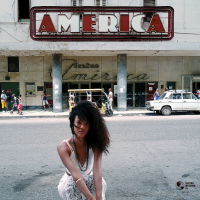
América!, however, invites a different journey.
"I wanted something more intimate, more inward," Plasse reflects. "Our past albums have been very 'capital-M Mambo' — fast tempos, strident horns. For this, I thought we could explore something new." Plasse gave each collaborating vocalist and lyricist a single prompt: "América, I am here. I said goodbye to the things I loved and dreaming left into a new life. ¿De quién me despedí y qué soñé?" (Who did I say goodbye to, and what was I dreaming about?)
From that starting point, the lyricists moved in different directions. Kiko Ruiz took a lighter, danceable approach anchored in the sweet cadences of the cha-cha-cha. Carolina Oliveros and Miriam Elhajli turned toward loss and the weight of leaving home, into all its unresolved contradictions.
Oliveros — the Colombian vocalist who fronts alt-Latin outfit Combo Chimbita — wrote one of her songs, "No Me Voy," under the inspiration of Celia Cruz and Cruz's unfulfilled longing to return to her homeland and sing on its soil. Though Oliveros can return to Colombia, each visit is different, she says: "The streets change, the smell changes. Your family changes. The years pass and you feel it in everything." And every departure carries its own particular uncertainty.
Miriam Elhajli, Venezuelan-Moroccan singer and ethnomusicologist, brings an equally restless perspective. Having spent years researching early 20th-century music from Venezuela, Colombia, and Paraguay, she describes one of her four songs on the album, "Aprendizaje," as tracing the movement toward and away from everything we know — what is sacrificed, lost, and gained in that motion. It evokes the void that comes from any goodbye: to a family member, a country, a landscape, even an illusion. "Aprendizaje" moves slowly, lushly, with a quality that feels almost ancient — Middle Eastern and Cuban at once. Elhajli's voice swells and breaks across it, embodying her sense that the void is paradoxically a space of resonance, a hollow you can sing into as a way of surviving and overcoming loss.
Read moreTags
Orquesta Akokán at The Freight

by Roy Strassman
Orquesta Akokán The Freight & Salvage Live performance Berkeley, CAAugust 7, 2026 Orquesta Akokán had just flown in from its European tour and was playing the first of its Bay Area weekend performances at Berkeley's Freight & Salvage, currently called “The Freight." They hit the ground running with “Con Altura," (With Altitude), a seeming oxymoron, were it not that the band simply took off again, filling the dance floor until the final “adios" some ...
Continue Reading...Music
Recordings: As Leader | As Sideperson
Videos

Orquesta Akokán
Instrument: Band / ensemble / orchestra
Formed: 2016