Home » Jazz Musicians » Mark Simmonds
Mark Simmonds
Mark Simmonds was a New Zealand-born Australian jazz tenor saxophonist, composer, and bandleader renowned for his overwhelming, emotionally charged sound and leadership of the Freeboppers, a group that showcased his original compositions blending bebop, free jazz, blues, and New Orleans influences.[1][2]
Born in Christchurch to a musically inclined family—his father played trumpet, his brother guitar, and relatives included the 1960s pop act the Brodie Brothers—Simmonds moved to Sydney as a child and immersed himself in music from an early age, initially on guitar before switching to saxophone in 1972.[1][3]
His style, often described as a "sonic meteor" delivering torrential emotions through solos of furious intensity and rhythmic fire, profoundly influenced two generations of Australian musicians, earning comparisons to icons like John Coltrane and Sonny Rollins.[4][1]
Simmonds' early education at North Sydney Boys High and the New South Wales Conservatorium of Music exposed him to bebop pioneers like Charlie Parker and free jazz revolutionaries such as Coltrane and Ornette Coleman, while his heroes included Lester Young and Australian saxophonists Paul Furniss and Merv Acheson.[3][1]
By the mid-1970s, he was performing in Sydney venues like Morgan’s Feedwell and contributing to innovative ensembles, including the Keys Music Association and Phil Treloar's Feeling To Thought quartet, which explored rhythmic complexity and primal communication.[2]
A pivotal 1979-1980 study grant took him to New York, where he worked with George Coleman and drew inspiration from Sun Ra and Arthur Blythe, broadening his improvisational palette upon returning to Australia.[1]
Throughout the 1980s and 1990s, Simmonds diversified across genres, playing in soul-funk bands like the Dynamic Hepnotics and Jackie Orszaczky’s Jump Back Jack, but his core legacy lay in jazz with the Freeboppers—featuring talents like trumpeter Scott Tinkler, bassist Steve Elphick, and drummer Simon Barker—which released the acclaimed album Fire in 1993, winning the ARIA Award for Best Jazz Album in 1995.[3][2]
Despite personal struggles with bipolar disorder, substance issues, and homelessness in later years that led to his withdrawal from public performance around 2002, he continued private composition and made a final appearance in 2018; his death in Sydney at age 65 marked the end of one of Australia's most potent and original musical voices.[4][1]
Source: GrokipediaTags

The Scornful Four
band / ensemble / orchestra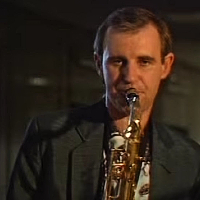
Mark Simmonds
Instrument: Saxophone
Born: July 21, 1955
Died: September 8, 2020