Home » Staff Directory » Member Page
Michael Moss
Member Since: 2011 | Location: New York City | Page Views: 3,591 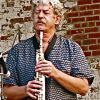 About Me
musician, composer, producer, conductor, psychoanalyst
New York City’s “downtown” well knows the place held by Michael Moss in the annals of jazz, an import extending far beyond the bell of his horn. The reeds player and composer came of age in the 1960s as a witness to John Coltrane’s musical and spiritual expansion, empowered by the visions of liberation, unrest and solidarity so unique to that time. As a saxophonist with numerous doubles, a tenacious improviser, composer, conceptualist, and producer, Moss has serrated and transformed musical barriers on countless stages, doing so in the good company of veterans of the music in the period of its definitive transition. Born March 24, 1944, in Highland Park, Illinois, just outside Chicago, Moss was initiated into the musical arts through his mother’s singing as he still resided in the crib. The family home, however, overflowed with generations of creativity: Mom was a pianist and accomplished visual artist, and father, H. Baron Moss, a concert pianist schooled at Eastman. During post-graduate studies at Julliard, Dad was suddenly called to military service during World War II. Once he was thankfully, safely back home, H. Baron served as Michael’s piano teacher, with rather expansive tutelage through the works of Bach, Rachmaninov and other composers at the forefront of the day. A major turn occurred when, in the fourth grade, Michael made a foray into woodwinds with the B-flat clarinet, however, piano studies were maintained tirelessly (“I’ve never given up”, he recently stated). At the tender age of ten, young Moss, with the help of his father, formed a popular song quintet which performed at children’s parties. And while the senior Moss was what folks once referred to as “legit”--learned and classical--he introduced the boy to improvisation, with Rodgers and Hart’s immortal “Blue Moon” as the jazz Petrie dish. In his teens, Michael Moss auditioned for high school stage band as tenor saxophonist, though he’d never played the ax before (!). Soon, he took over the lead chair, during which time Moss was also playing club dates in combos around town. Moving onto college, Michael had begun experiments in writing arrangements before making a serious foray into composition, completing 43 tunes that first summer. It is important to note that such prolific writing for Moss has rarely wavered. Joining an ensemble led by pianist Ben Sidran, Moss became an in-demand player. “I joined Benny’s band my freshman year.”, he recalled. “He and I played together in multiple jazz groupings and on many gigs.”. Within a few years, however, Moss became active in the most modern trials of the music, composing long-form free jazz works and endeavoring in high levels of improvisation. During this same period, Moss listened closely to the new sounds of Coltrane, Dolphy, Sonny Rollins, Miles, and Max Roach, but remained enamored, too, with classic bop as well as the big band sounds of Artie Shaw and Benny Goodman (it’s damned hard to shake these). “I followed bebop, hard bop, free bop, all the way into the beginning of free jazz as it was just coming up and people were scrambling to name it different things”, Moss recalled. Simultaneously, he learned the standards and session tunes then expected of all working musicians. Moss’s musical palette was amazingly widespread in this ‘shock of the new’ era, with his classical leanings reaching into his new works through the modernist through- composed pieces as well as the electronic music experiments out of Princeton. With the sonic universe widely expanding, possibilities were endless. “Jazz for me was becoming another form of folk music, especially when I heard both Trane and the Beatles copping licks from Indian music”. In the early-mid 1960s, John Coltrane’s Africa/Brass and Live in Seattle opened boundaries for hungry ears as did Eric Dolphy’s Out to Lunch and Iron Man. This generation also sought aural education within the pioneering sounds of Archie Shepp, Ornette Coleman, Cecil Taylor, and Albert Ayler. To the uninitiated, it’s hard to conceive of such seismic change within a music that had fueled dance bands but two decades earlier, however, when any arts discipline courses wholly into the avant-garde, rules become fit for crucifixion. “Once the bonds of 32-bar solos were smashed, we were ALL going out.” Moss even extended these expansive concepts of the free into an R&B band in which he’d been working the bars, where he admits to taking “very strange solos”. Happy Hour, you know, can allow for copious poetic license. Moss, though an increasingly dedicated musician, continued to focus on a career in clinical psychology. While in the grad program at the University of Wisconsin, he took a temporary foray into Manhattan with studies at NYU. The journey, too, offered an opportunity for immersion into the developing Lower East Side free jazz scene. “I can recall listening half the night to Sunny Murray as he took all us young ones on a trip into the mind of the improvising black artist.” Returning to UW- Madison a year later, Moss introduced the burgeoning “New Thing” to the Madison scene, turning round many who’d been unknowingly stuck in the past. Following graduation, a return to New York saw the saxophonist blossom within the avant circle even as he continued post-grad studies at the New School’s Psychology program. But like many of his generation, Moss yet had another moral reason for pursuing a doctorate. “As a full-time student, I avoided going to Viet Nam, all the while exploring the new music scene. The times influenced the music in so many ways. And the anger in free jazz was in part generated by the war, and in part by the civil rights movement and the rise of Black Power.” Fueling his cultural palette, Moss caught timeless concerts including one of Coltrane’s last at the Olatunji Center. Of this, he said, “there must have been 18 drummers on the stage playing every form of hand drum, large and small, with Trane, a full band, and Max Roach and his entourage, and so many others I didn’t yet know in the audience.” In 1970, at the behest of Dave Liebman, Moss joined the musicians’ cooperative Free Life Communications. He recalled: “Free Life was housed first in the Space for International Development owned by the Rubins, the same Rubins who later founded the Rubin Museum of Himalayan Art on West 16th Street. We then moved on to Mike Mahaffay’s Lower East Side loft, Sunrise Studios.” Moss was drafted to become the group’s secretary, later holding the chair of president for a 6-year term. The cooperative’s reach was far, with a direct link to the many jazz lofts of the day. Sam Rivers’ Studio Rivbea was the most celebrated among them, and Michael’s band, Four Rivers, which included Greg Kogan, piano, John Shea, bass, and Michael Mahaffay (drums, percussion), performed there one steaming summer night. As a result, the leader was asked to join Rivers’ all reed ensemble the Winds of Manhattan. Concurrently, Moss began composing for large ensembles of extended woods, brass, strings, and rhythm, crossing into what was then called ‘third-stream jazz’ while embracing improvisation at its most emotive. Even now, while thriving within small group settings, Michael continues to paint the broadest stroke possible, as captured by his Accidental Orchestra of recent times. Comprised of a stellar line-up, the ensemble boasts Jason Kao Hwang, Rosi Hertlein, Fung Churn Hwei (violins), Stephanie Griffin (viola), Lenny Mims and Carol Buck (cellos), Steve Swell (trombone), Vincent Chancey (French horn), and Waldron Mahdi Ricks (trumpet), Richard Keene (oboe), Elliott Levin (flute, tenor saxophone), Ras Moshe Burnett (soprano and tenor saxophones), Michael Lytle (bass clarinet), Michael Moss (Bb clarinet), Steve Cohn (piano), Billy Stein (guitar), Rick Iannacone (ambient guitar), Larry Roland (string bass), Warren Smith (percussion, vibraphone), Badal Roy (tabla), Chuck Fertal (drums), and Michael Wimberly (djembe, African bells and percussion). 4th Stream Records as well as music publishing company ERG, were founded by Moss back in 1972 and both remain active today. Within the label’s catalog are indie recordings dating from 1965. Of special note is a ‘72 session with Annette Peacock and Paul Bley (I’m the One) as well as international titles through the 1990s and 2000s. Bley’s impact on Moss was significant: the two worked in a trio at Catskill hotels (“We weren’t exactly playing avant-garde music!”), but later Bley arranged for 4th Stream releases to be distributed by the Jazz Composers Orchestra Association’s New Music Distribution Service. Moss explains: “In fact, the JCOA commissioned a new work in which I conducted a large group of about 100 stellar musicians at NYU for which I developed my own technique of composition, a technique similar to latter day composers but forty years before them. I soon led a similar group of incredible free jazz musicians, again conducting my own composition, that was commissioned by WBAI-FM. I’d love to see if ‘BAI has a recording of that! It was broadcast live out of their studios. And I guess I could mention here that I very often brought my groups up to WKCR-FM (of Columbia U) to performed live on the air in the ‘60s and ‘70s. They definitely have many 7-inch reels of those performances.” Across the spectrum of recordings, analog and digital, over decades, Moss has been aligned with a prodigal number of titles as leader or side musician. And he, then and now, revels in these sonic journeys as a means to expand visceral knowledge of the music along with the pre-existing culture so central to the sounds. In 1974, while deep into his own musical journey, Moss traveled to Pakistan, India, and Sri Lanka with his wife, the dancer Judith Moss, as she along with the Dan Wagoner and Dancers company embarked on a State Department tour. “In Sri Lanka I was invited to perform on the Ceylon Broadcasting Company radio station with the nation’s premiere violinist, vocalist and composer W. D. Amaradeva. At the time, I had no idea how renowned he was, but Amaradeva totally blew me away.” Of course, the west had fallen under the spell eastern music, particularly Indian, by the time of Ravi Shankar’s 1956 tour; his impact on ‘60s jazz and rock musicians is insurmountable. Moss, whose world music vision, inspired particularly by Coltrane’s own, led him into poly-rhythmic explorations and a mastery of various forms which wildly liberated improvisation: “Within Indian classical music, the tal could be a measure of 16 beats—the tin tal—and measures with 9, 10, 11, 13, 14, 15, and even 17 beats.” In the ensuing years, Moss would not only incorporate South Asian forms but many concepts from African traditions and well beyond. Among his most important global allies was the celebrated tabla player Badal Roy (1939-2022) whose storied career boasted stage and studio work with Miles Davis, Ornette Coleman, John McLaughlin, Pharoah Sanders, Herbie Hancock, Yoko Ono, Bill Laswell, Richie Havens, Herbie Mann and a host of others following his 1968 arrival in NYC. “I loved Badal; he was the only percussionist who could play such complex rhythmic meters”, Moss recalled. “Badal appears on my first LP, Upstream (1976), along with Laurence Cook (drums, wood blocks, percussion), Armen Halburian (dumbeg, percussion), Dan Rose (guitar), Greg Kogan (piano), and John Shea (bass). The last time I played with Badal was when I produced my CD Helix in 2017. He was part of a rhythm section composed of Warren Smith, Michael Wimberly, and Chuck Fertal. I should say I put out two more LPs in the ‘70s, Cross Currents (Kogan, Shea, Mahaffay, Armen, Cook, Bob Stern (violin, viola), and Muruga Sharma (dumbeg, wood blocks, bells, electric talking drum, African snare drum, cymbals, turkey caller, Tibetan human skin drum, shakers); and Live at ACIA with Stern, Shea, Mahaffay, Badal, and Armen.” In addition to the many artists already cited, Moss’s career led him to work with a cross-section of new music heavies including the recently, sadly lost Richie Beirach and Michael Urbaniak. Other important collaborators are prolific free jazz pianist Dave Burrell, visionary drummer Ra Kalam Bob Moses, and bassist William Parker, a vital leader over the generations. Moss first met Parker, who co- produces the annual Vision Festival with Patricia Nicholson-Parker, in raw downtown loft sessions, particularly in that of Mark Hennan. It was in Hennan’s loft that Moss also encountered drummer-percussionists Jackson Krall, renowned for twenty years with Cecil Taylor, and Rashid Bakr/Charles Downs, another giant of the lofts who’d also held the drum chair in Taylor’s Unit. Krall, a monster rhythmatist in any setting, is currently working with Moss in the ROOTS to SHOOTS band, whereas Downs, following past improv sessions with Moss, recruited the saxophonist into his band Centipede. Their gigs back at the original Knitting Factory remain the stuff of legend. Bassist and poet Larry Roland, who passed away unexpectedly in 2023, was another artist that had a lasting impact on Moss. “Larry and I started playing together when pianist Steve Cohn and I put together a group, the New York Free Quartet, with Chuck Fertal on drums. We put out four albums (available on Bandcamp) and played in many venues together. Larry invited me into Vision Festival gigs in several parks as well as the Clemente Soto Velez Cultural and Educational Center along with Michael Wimberly on drums and Waldron Mahdi Ricks on trumpet. He had that old school free jazz improv style and loved Coltrane’s sound, especially late Coltrane. He introduced me to Pursuance and Transitions and was a big influence in my most recent project of playing the entire suite of Coltrane’s “A Love Supreme” with ROOTS to SHOOTS. We really miss him.” The historic recordings in Quantum Butterfly, Moss’ latest project, a spectacular four cd boxed set, encompass a vast spectrum of Michael Moss’s compositions, but in the spirit of free improvisation, the pieces are realized here through live performances. Inasmuch, the selections are perhaps best described as captures, though it’s a veritable challenge to contain sounds burning with liberation. The tapes, designated into four distinct volumes, are drawn from two of Moss’s recent musical encounters. Two of the volumes are dedicated to ROOTS to SHOOTS, with another featuring Ensemble Bows for Strings, Piano and Reeds, and the fourth volume of tracks from electro-acoustic music project Quantum Butterfly for which this boxed set takes its name. Over five decades, Moss has investigated global microtonal and rhythmic systems from Senegal, India, the Middle East, and East Asia, collaborating with icons such as Badal Roy, Dave Liebman, William Parker, and Dave Burrell, and directing the 22-piece Accidental Orchestra. Moss bridges contemporary classical music and free improvisation through Ensemble Bows for Piano, Strings and reeds, an expansive third-stream chamber ensemble. He shifts into electro-acoustic territory on the 25-minute piece “Quantum Butterfly/Adjacent Possibles,” an interactive exploration created in dialogue with the electronic music systems of composer James Dashow in collaboration with ROOTS to SHOOTS with Alexis Marcelo on synthesizer and keys, Adam Lane on bass, Ismael Baiz on drums/percussion, augmented in different settings by Anthony Coleman on piano, Warren Smith on vibes/drums, and Michael Wimberly on African djembe/percussion/piano. After Quantum Butterfly is dropped Michael Moss will release two more cds in 2027, both recorded at the Thirteenth Moon Gravity Well in Portland, Oregon in 2026 which will highlight compositions written over many years dedicated to members of his family.
Articles
Jazz Near You
Your Personal Calendar
✓ Receives Newsletter
Upload Single or Recurring Event
Upload Several Events At Once
Photos
Favorite Musicians / Bands


















My Jazz Story
My House Concert Story
Favorite Places to See Jazz
Favorite Columns
Favorite Writers
 Glenn Astarita
 Jack Bowers
 Maurice Hogue
 Troy Dostert
FAVORITE RADIO SHOW / PODCAST
One Man's Jazz
Title
Camila Nebbia/Exhaust, Michael Moss & Trio ImaginationRun Date
October 19, 2026News Announcements
Theme Song
Playlist
Feedback
KUDO
Thank you for your extensive coverage of the music from different angles, from a variety of perspectives, of new and upcoming artists.SUGGESTION
Include John Pietaro as one of your writers.This page was last updated on 2026-09-30.