Home » Jazz Musicians » George Benson
George Benson

Appreciated as both musician and performer by millions, George Benson has always had the duel personae of expert improviser and vibrant entertainer. He has always placed his keenly discerning art in the service of a rousing good time. Rounding out his singular approach with sly, seductive rhythm and blues, he's earned himself an impeccable reputation as one of music's most enterprising and engaging stars.
Few might have predicted that striking level of stardom some forty years ago, when Benson was a fledgling guitarist working the corner pubs of his native Pittsburgh. That's where his yen to please a crowd was born. "I was an entertainer first," he says proudly "As a kid I sang, danced and played the ukelele in a nightclub. As my career has progressed, I've had the pleasure of playing with the baddest jazz cats on the planet. But that doesn't change my desire to entertain folks. That's really who I am."
It was Wes Montgomery, one of jazz's most creative players, who came across Benson early on; the vet complimented the young guitarist, urging him to continue his already impressive work. In the early 1960s, Benson apprenticed with organist Brother Jack McDuff; he found the organist's gritty swing a fertile ground for the sly, confident and adventurous guitar lines which earned him an early rep as a master.
"Jack turned me on to a lot of stuff," muses Benson. "A lot of the jazz tunes we played together were danceable, and that furthered my understanding of what people wanted. When jazz was danceable, it was king. The intellectual stuff that came later on - Charlie Parker and all that - turned toward a brainier sound. That was good, and I dug it. But I really like when people kick up their heels and go crazy."
Montgomery had called one of his best records Boss Guitar. Benson had both the conviction and chops to nip at his hero's heels; his 1964 debut was released as The New Boss Guitar. It lived up to its title. Benson's tone was juicy, and his blues solos sparkled with a carefully honed logic. A jaunty funk and swing aesthetic prevailed. By the time legendary talent scout John Hammond signed Benson to Columbia, the guitarist's name was bubbling throughout the industry. His work for the label proved Hammond's hunch to be on-target: brains and flash were in perfect synch. "I'd sat down with a great blind pianist from San Francisco name Freddy Gambrel," recalls Benson. "He turned me onto some wonderful ways to get in and out of chord changes and weld harmonies together. Of course I still wanted to be like Charlie Christian, Django Reinhardt, and Hank Garland - my heroes. I've always liked the hot guitar guys."
Read moreTags
Johnny "Hammond" Smith: Wild Horses Rock Steady

by Arnaldo DeSouteiro
Born John Robert Smith on December 16, 1933 (in Louisville, KY), formerly known as Johnny Hammond Smith, and later as Johnnny Hammond, one of the all-time best jazz organists passed away on June 4, 1997, in Chicago, Illinois. For some of his early fans, some of the best albums he recorded were done for Prestige in the Sixties. A younger generation, who grew up listening to the hip-hop influenced jazz sounds of the 1990s, prefers Johnny's over-produced sessions for Milestone ...
Continue ReadingCTI Acid Jazz Grooves by Various Artists

by Arnaldo DeSouteiro
The CD you are holding in your hands is a very special compilation. It's the celebration of CTI as one of the most “sampled" labels on Earth! For the past ten years, many CTI tracks have been cut up, sampled, scratched and looped to create new songs for a new audience. Many of the selections on this album (all of them produced by Creed Taylor and engineered by Rudy Van Gelder) represented the basic inspiration and major influence in the ...
Continue ReadingJean-Luc Ponty: Open Mind

by Peter Rubie
If Individual Choice was the sketchbook of Jean-Luc Ponty's (JLP) decision to take his music in a new direction, Open Mind (1984), released the following year, was a deeper exploration of the emerging world of synthesizers and sequencers and their impact on live (studio) performance. Here, complex rhythmic patterns shift in the background while new sounds appear and disappear on the surface in colorful bursts, and outstanding jazz improvisors create familiar music in new settings. It's almost an audio version ...
Continue ReadingHank Mobley: The Complete Hank Mobley Blue Note Sessions 1963-70

by C. Andrew Hovan
The music world has changed considerably since Michael Cuscuna and Charlie Lourie founded their boutique reissue label Mosaic Records back in 1983. From its inception, vinyl was still the preferred format, shortly to be overtaken by the popularity of the compact disc. At the cusp of vinyl's recent resurgence, Mosaic briefly got back into that format only to find themselves on the brink of closing up shop. Fortunately, the powers that be have forged on and recent CD boxed sets ...
Continue ReadingJazz At Juan 2019

by Martin McFie
Jazz at Juan Opening Weekend Juan Les Pins, South of France July 12-21, 2019 Jazz at Juan-Les-Pins has always been the boutique quality jazz festival of the South of France. The stage beside the blue Mediterranean Sea, was open-backed leaving a view through to the sunset over the Bay of Angels. The audience of 3,000 was all seated in bleachers. Live big screens showed the detail of performances. This year 2019, is the 59th edition ...
Continue ReadingCGI Rochester International Jazz Festival 2019

by Gregory Savage
The CGI Rochester International Jazz Festival, held June 21st thru the 29th, was a huge success. The streets of downtown Rochester, New York, are the perfect venue to host nine straight days (and nights) of jazz. The eighteenth annual festival had a little something for everyone, including perfect weather. From high school bands, to rising stars, to NEA Jazz Masters; every level of jazz was heard and seen. The lineup included jazz greats George Benson, Eddie Henderson, Steve Gadd, Harold ...
Continue ReadingFestival International De Jazz De Montreal 2019

by Wendy Ross
Festival International De Montreal De Jazz Various Venues Montreal June 29-July 1, 2019 Billed as the largest Jazz festival in the world, the International Festival de Montreal de jazz has over its 40 years presented some 16,000 concerts with thousands of artists from all over the world. The aim is to offer a space where new and established artists perform side by side in a confluence of genres and cultures. To pull ...
Continue ReadingJazz Musician of the Day: George Benson

Source:
Michael Ricci
All About Jazz is celebrating George Benson's birthday today!
Appreciated as both musician and performer by millions, George Benson has always had the duel personae of expert improviser and vibrant entertainer. He has always placed his keenly discerning art in the service of a rousing good time. Rounding out his singular approach with sly, seductive rhythm and blues, he's earned himself an impeccable reputation as one of music's most enterprising and engaging stars. Few might have predicted that striking level ...
read more
Legendary Guitarist and Jazz Master George Benson Performs On New Jersey Performing Arts Center Stage June 2nd
Source:
AMT Public Relations
Friday, June 2, 2023 at 8:00 p.m. ET George Benson is simply one of the greatest guitarists in jazz history,” writes music critic Richard S. Ginell, yet jazz guitar is only the beginning for George. A relentless shapeshifter, he’s equally imaginative playing pop, R&B and soul—and equally talented as a vocalist, composer and songwriter. No fan will want to miss this evening with the NEA Jazz Master, 10-time GRAMMY winner and creator of too-many-to-count albums. Now in the seventh decade ...
read more
Jazz Musician of the Day: George Benson
Source:
Michael Ricci
All About Jazz is celebrating George Benson's birthday today!
Appreciated as both musician and performer by millions, George Benson has always had the duel personae of expert improviser and vibrant entertainer. He has always placed his keenly discerning art in the service of a rousing good time. Rounding out his singular approach with sly, seductive rhythm and blues, he's earned himself an impeccable reputation as one of music's most enterprising and engaging stars. Few might have predicted that striking level ...
read more
Jazz Musician of the Day: George Benson
Source:
Michael Ricci
All About Jazz is celebrating George Benson's birthday today!
Appreciated as both musician and performer by millions, George Benson has always had the duel personae of expert improviser and vibrant entertainer. He has always placed his keenly discerning art in the service of a rousing good time. Rounding out his singular approach with sly, seductive rhythm and blues, he's earned himself an impeccable reputation as one of music's most enterprising and engaging stars. Few might have predicted that striking level ...
read more
Jazz Musician of the Day: George Benson
Source:
Michael Ricci
All About Jazz is celebrating George Benson's birthday today!
Appreciated as both musician and performer by millions, George Benson has always had the duel personae of expert improviser and vibrant entertainer. He has always placed his keenly discerning art in the service of a rousing good time. Rounding out his singular approach with sly, seductive rhythm and blues, he's earned himself an impeccable reputation as one of music's most enterprising and engaging stars. Few might have predicted that striking level ...
read more
Jazz Musician of the Day: George Benson
Source:
Michael Ricci
All About Jazz is celebrating George Benson's birthday today!
Appreciated as both musician and performer by millions, George Benson has always had the duel personae of expert improviser and vibrant entertainer. He has always placed his keenly discerning art in the service of a rousing good time. Rounding out his singular approach with sly, seductive rhythm and blues, he\'s earned himself an impeccable reputation as one of music\'s most enterprising and engaging stars... Read more.
Place our Musician of the ...
read more
Lineup Announced For 2019 CGI Rochester International Jazz Festival 18th Edition
Source:
Dalmath Associates Inc.
Producers John Nugent and Marc Iacona today announced the full lineup for the 2019 nine-day CGI Rochester International Jazz Festival. Now in its 18th year, the festival will be held June 21 to 29 and present more than 320+ shows including a record 100+ free shows and 1500+ artists from around the world performing in 20 diverse venues in downtown Rochester, New York. Headlining this year's festival are George Benson, Steve Gadd Band, Patti LaBelle, Jeff Goldblum & the Mildred ...
read more
Mascot Label Group announces signing of jazz legend George Benson
Source:
All About Jazz
Mascot Label Group/Provogue are thrilled to announce the signing of soul and jazz guitar legend George Benson, with a new album scheduled for a Spring 2019 release. The 10 time Grammy Award winner and NEA Jazz Master is one of the greatest guitarists in jazz history and has released 35 studio albums, including the multi-platinum Billboard #1 Breezin. He has also had a string of hits to his name including “Give Me The Night", “Never Give Up On A Good ...
read more
Jazz Musician of the Day: George Benson
Source:
Michael Ricci
All About Jazz is celebrating George Benson's birthday today!
Appreciated as both musician and performer by millions, George Benson has always had the duel personae of expert improviser and vibrant entertainer. He has always placed his keenly discerning art in the service of a rousing good time. Rounding out his singular approach with sly, seductive rhythm and blues, he\'s earned himself an impeccable reputation as one of music\'s most enterprising and engaging stars... Read more.
Place our Musician of the ...
read more
Jazz Musician of the Day: George Benson
Source:
Michael Ricci
All About Jazz is celebrating George Benson's birthday today!
Appreciated as both musician and performer by millions, George Benson has always had the duel personae of expert improviser and vibrant entertainer. He has always placed his keenly discerning art in the service of a rousing good time. Rounding out his singular approach with sly, seductive rhythm and blues, he\'s earned himself an impeccable reputation as one of music\'s most enterprising and engaging stars... Read more.
Place our Musician of the ...
read more

Emmett North Jr.
guitar
Jacques Lesure
guitar
Darrell Looney
violin
Marcus Jefferson
guitar
Vinny Valentino
guitar
Luchito Munoz
producer
Bob Sabellico
guitar
Peter Bernstein
guitar
Allan Harris
guitar and vocals
Matt Ingeneri
guitar
Ronny Smith
guitar
Richie Robinson
guitar
Piers Lawrence
guitar
Henry Johnson Jazz
guitar and vocals
Neil C. Young
guitar
Andy Rothstein
guitar
Tahina Rahary
guitar
Ron Jackson
guitar
Jamey Arent
guitar
Steve Hall
multi-instrumentalistJames Hammel
vocals
Gio Guido
guitar
Sol Roots
guitar
David Laborier
guitar
Jim Josselyn
guitar
John Shannon
guitar
Jas Miller
guitar
Victor Samalot
guitar, acoustic
Chris Montgomery
guitar
Paul Colombo
guitar, electric
Ron Carlson
guitar
Bilal Karaman
guitar
Andres Marcos Revellado
producer
Tony Song
guitar
Ricardo Grilli
guitar
Mike Freedman
guitar
Dave Quick
synthesizer
Arie Salma
piano
Stefanos Tsourelis
guitar
Lorenzo Petrocca
guitar
Samuel Bonnet
guitar, acoustic
Groove Producer
drums
Clarence Conover
band / ensemble / orchestra
Louie Moon
guitar
Mark Schuster
guitar
T.S.B.G.
band / ensemble / orchestra
Sergio Pereira
guitar and vocals
Eric Zolan
guitar, electric
Dan Waldman
guitar
Romeo Velluto
guitar
Tim Fitzgerald
guitar
Christophe Goze
guitar
Mark Haskins
guitar
Geovane Santos
guitar
BARRY E. FRY
guitar
Dion Berardo
guitar
Richie Love
saxophone
Sergio Fulqueris
guitar
Olalekan Oduntan
vocals
Luis Casado
guitar
The Gardenia Society
various
Steve Shurack
guitar
Oli Astral
guitar
Leon Brenko
piano
Beat Baumli
guitar
Daniel Latorre
organ, Hammond B3
Yulia
piano
Rick Peralta
guitar
Crystal Clulee
vocals
Cecil Alexander
guitar
Pedro Henry
bass
Guy Lee
guitar
Jazzcrusader
live sampling
Zock Organ Trio
band / ensemble / orchestra
Adam Friedman
guitar
David Andish
guitar
Arnab Sengupta
piano and vocals
Lee Meehan
guitar
Matt Jardim
guitar
Alberto Massidda
vocals
Dave Lynch
guitar
Steve Girardi
guitar
King Llama
band / ensemble / orchestra
Kyle Cervantes
saxophone, baritone
Darren Leonidas
guitar
David Margam
guitar
The Frost Duo
piano and vocals
Danny Gatton
guitar
James Zito
guitar
Stanley Cooper
guitar, acoustic
The Inter Section
band / ensemble / orchestra
Nacho Valenciaga
bass
Alessandro Florio
guitar
Diego Dominguez Pacheco
guitar
Kentaro Saito
guitar
Hazen Wang(王浩臻)
guitar, electric
Valerio Marino
vocalsPhotos
Music


Similar

Pat Metheny
guitar
Wes Montgomery
guitar
Jimmy Smith
organ, Hammond B3
Grover Washington, Jr.
saxophone
Al Jarreau
vocals
Quincy Jones
arranger
Earl Klugh
guitar, acoustic
Spyro Gyra
band / ensemble / orchestra
Lee Ritenour
guitar
Larry Carlton
guitar
Fourplay
band / ensemble / orchestra
Gerald Albright
saxophone, alto
Patti Austin
vocals
Norman Brown
guitar
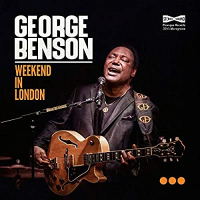
George Benson
Instrument: Guitar
Born: March 22, 1943
Management: Apropos Management